

When you start searching for "oil change near me prices," you'll quickly see that the cost isn't one-size-fits-all. A lot depends on your car. For a straightforward conventional oil change, you can expect to pay somewhere between $35 to $55. If your car needs high-performance full synthetic oil, the price usually lands in the $50 to $80 range, sometimes more.
How Much You Can Expect to Pay for an Oil Change
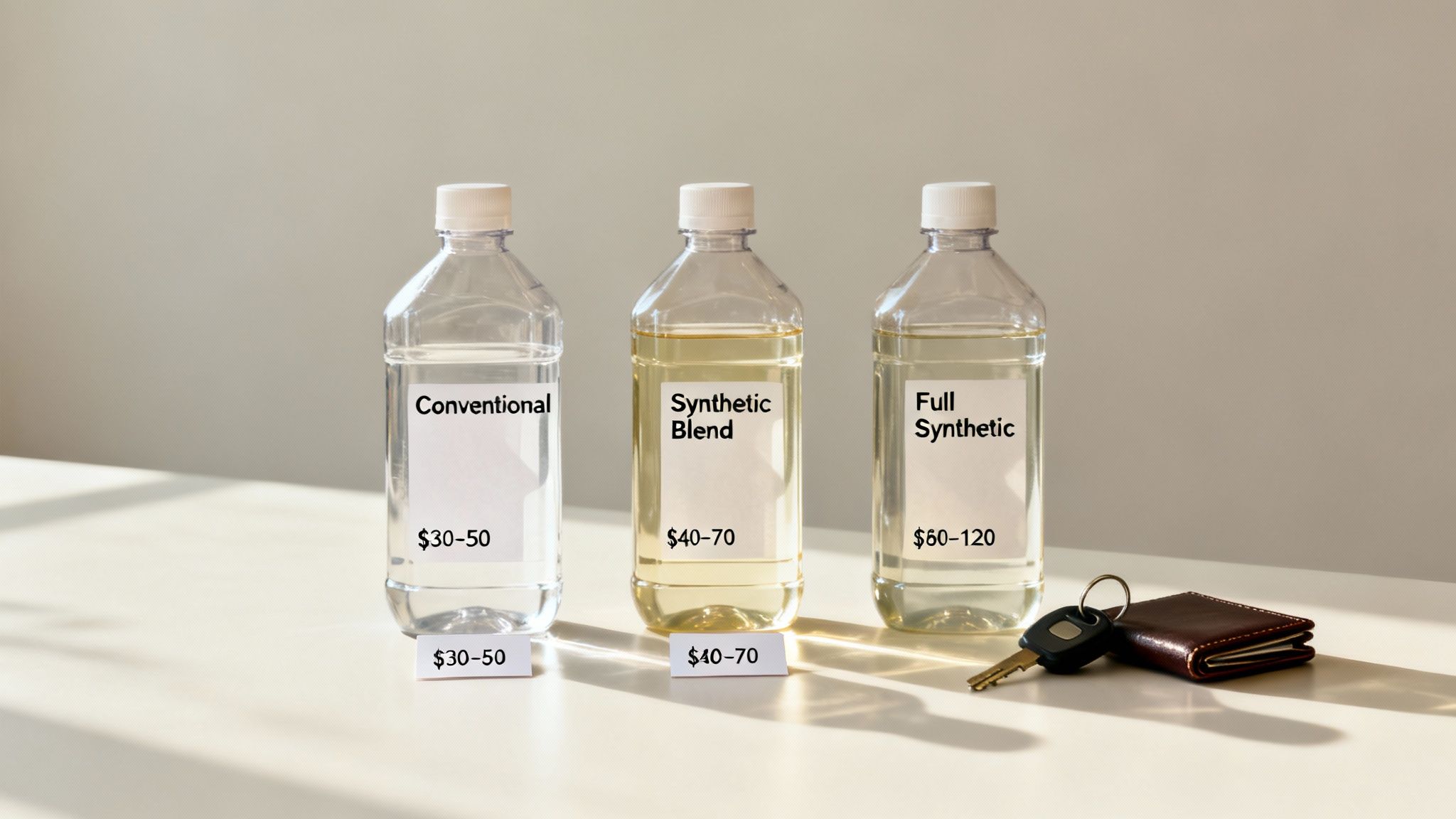
Getting a handle on the typical cost of an oil change is the first step. Think of it like buying coffee—a simple drip brew is always going to be cheaper than a fancy latte with all the extras. It's the same with motor oil. The type of oil your car needs is the biggest driver behind that final number on the invoice.
You'll also notice that dedicated quick lube shops often have better prices, sometimes 15-25% lower than what you'd pay at a big dealership or a general repair shop. That's because they're specialized and built for high-volume, efficient service.
A Quick Price Reference Guide
To give you a clearer idea, here's a breakdown of the general price ranges you'll run into. These are good ballpark figures, but keep in mind that things like needing extra quarts of oil or local price differences can shift the final cost.
If you're curious about how maintenance costs stack up more broadly, our guide on auto repair cost comparison is a great resource.
Here’s a simple table to help you see what you might pay.
Typical Oil Change Price Ranges
This table outlines the average cost for conventional, synthetic blend, and full synthetic oil changes to give you a quick price reference.
| Oil Type | Average Price Range | Best For |
|---|---|---|
| Conventional Oil | $35 – $55 | Older vehicles with simple engine designs and low mileage. |
| Synthetic Blend Oil | $45 – $70 | Drivers looking for better protection than conventional at a moderate price. |
| Full Synthetic Oil | $50 – $80+ | High-performance, turbocharged, or newer engines requiring maximum protection. |
At the end of the day, the "best price" isn't just about finding the lowest number. It's about getting the right service for your car to keep its engine healthy for the long haul.
These price points give you a great starting point for budgeting your next service. Now, let’s dig into exactly what goes into that final bill.
Breaking Down Your Oil Change Bill
Ever looked at an oil change receipt and wondered what, exactly, you're paying for? It's not just a single item. Think of it like a simple meal: you have the main course (the oil), a side dish (the filter), and the service (the technician's labor).
Each of those parts has its own impact on the final price. The oil itself is usually the biggest factor. A high-performance full synthetic oil is going to cost more than a basic conventional oil simply because it’s engineered to offer better protection and last longer. The same goes for the oil filter. A premium filter that catches more gunk might add a few bucks, but it's a smart investment for your engine's health.
The Key Cost Components
When you search for "oil change near me prices," you're really asking about the price of three things rolled into one. Knowing what they are helps you see where the value is.
- Motor Oil: This is the lifeblood of your engine and the biggest piece of the cost. The price tag changes depending on whether you choose conventional, a synthetic blend, or a full synthetic oil.
- Oil Filter: This little part is crucial for keeping your oil clean by trapping dirt and sludge. A standard filter is usually included in the base price, but some cars need a more specialized (and pricier) cartridge-style filter.
- Labor and Expertise: You’re paying for a skilled technician to do the job right—draining the old oil, swapping the filter, and pouring in the new stuff. This also covers the proper, environmentally-safe disposal of the used oil and filter.
Your bill isn't just for parts and labor; it's for professional service. Getting the installation and fluid disposal done correctly is just as important as the quality of the oil itself.
Beyond the Basics: What Else Is Included?
A really good oil change service is more than just swapping fluids. Many shops, including Express Lube & Car Care, throw in complimentary checks to give you a full picture of your vehicle's health.
This is where you can find a lot of hidden value. A technician might perform a quick multi-point inspection, checking your tire pressure, looking at your wiper blades, and topping off other essential fluids like coolant or washer fluid. Catching something simple like low coolant early on can save you from a massive, expensive headache down the road.
This full-service approach is part of a huge global industry. The oil change service market was valued at an incredible USD 164.76 billion and is only expected to grow. That growth is driven by people wanting convenient, expert service from ASE-certified technicians—a real alternative to typical dealership markups that can be 25-40% higher. You can learn more about these market trends and how they affect drivers.
Once you understand all these pieces, you can compare quotes more effectively. You’ll be able to see when a slightly higher price actually means you're getting better parts, a more thorough service, and a lot more peace of mind.
Conventional vs. Synthetic Oil: Which Is Right for You?
When you’re trying to figure out oil change prices, one of the biggest forks in the road is choosing between conventional and synthetic oil. It’s a lot like deciding between a solid, reliable pair of work boots and a pair of high-tech running shoes. Both get the job done, but one is specifically engineered for higher performance and tougher conditions.
Conventional oil is the classic, old-school choice. It's refined straight from crude oil and has been the trusty workhorse lubricating engines for decades. For many older cars with simpler engine designs or vehicles used for basic commuting, it’s a perfectly good and budget-friendly option.
Synthetic oil, on the other hand, is created in a lab. Scientists break down and rebuild petroleum molecules to create a much purer, more uniform product. This process strips out impurities and allows them to fine-tune its performance, making it the top-tier athlete for your engine.
Understanding the Performance Differences
The real magic of synthetic oil shows up when things get tough. It stands up much better to extreme heat, which is a lifesaver for today's high-revving and turbocharged engines. It also flows more easily in the cold, protecting your engine's vital parts from the second you turn the key on a chilly morning.
Because of its engineered structure, synthetic oil provides more consistent lubrication, keeps your engine cleaner by reducing sludge and deposits, and can seriously extend the time between your oil changes—often to 7,500 or even 10,000 miles.
This flowchart gives you a quick visual guide to see how your choice of oil and filter directly adds up to the final price.
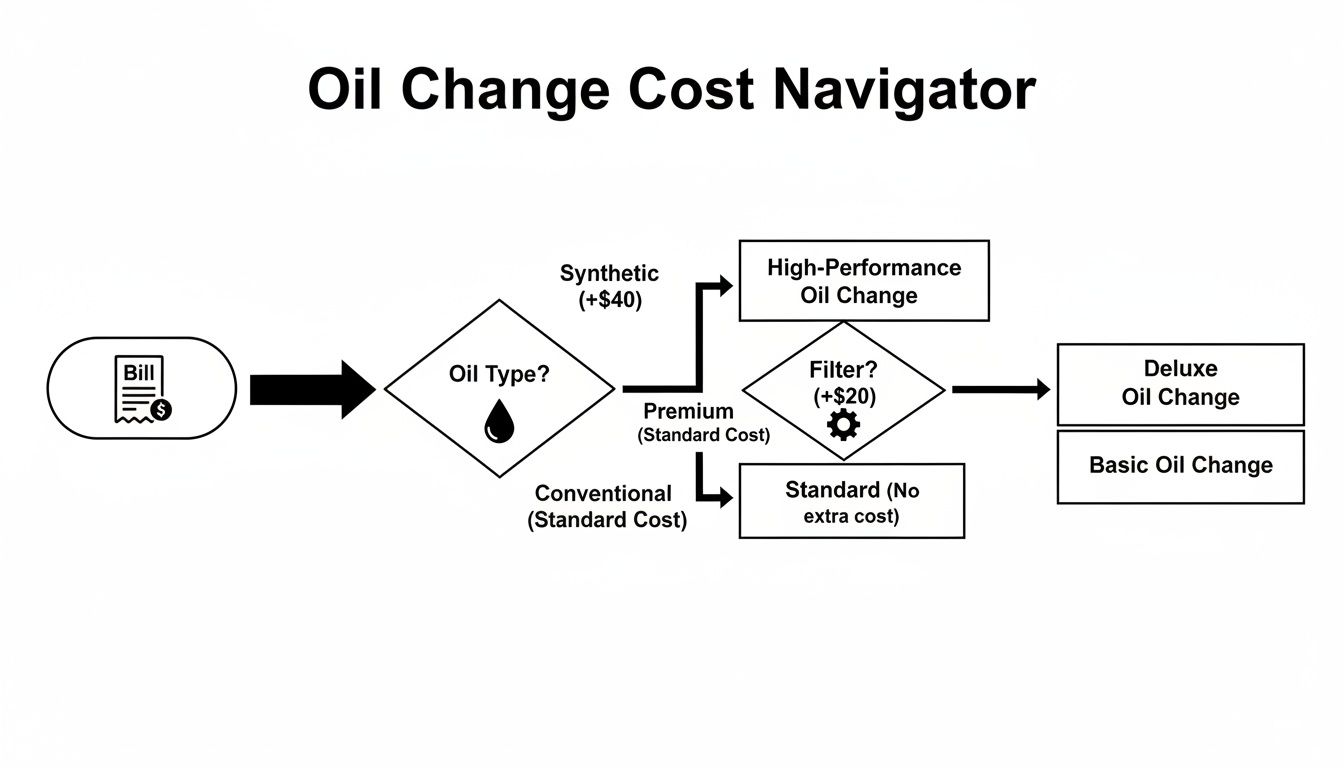
As you can see, opting for a better oil or a premium filter are the main decisions that increase the cost but also give your engine much better protection.
Which Oil Makes More Financial Sense?
It’s true that synthetic oil costs more upfront, but it often wins the long game. Since it lasts so much longer, you'll be visiting the shop less frequently throughout the year, which can save you both time and money. For a deeper dive, our guide on whether synthetic oil is better really breaks down the cost-per-mile benefits.
Here’s a direct comparison to help you weigh the options for your vehicle:
Conventional vs Full Synthetic Oil at a Glance
This side-by-side comparison should help you decide which oil type offers the best value for your vehicle's needs and your budget.
| Feature | Conventional Oil | Full Synthetic Oil |
|---|---|---|
| Source | Refined from crude oil | Chemically engineered in a lab |
| Protection | Good, standard protection | Superior protection against wear |
| Performance | Adequate for normal conditions | Excels in extreme heat and cold |
| Change Interval | Shorter (3,000-5,000 miles) | Longer (7,500-10,000+ miles) |
| Engine Cleanliness | Prone to sludge over time | Resists deposits, keeps engine cleaner |
| Upfront Cost | Lower | Higher |
| Best For | Older, low-mileage cars; light driving | Modern, high-performance, or turbo engines |
Ultimately, the best choice really boils down to your car manufacturer’s recommendation, how you drive, and what your budget looks like. If you have a modern, turbocharged, or high-performance engine, synthetic is almost always the right call. But for an older car that just gets you around town, conventional oil is still a solid, economical choice.
Finding the Best Local Oil Change Deals
When you start searching for "oil change near me prices," it's easy to get drawn to the lowest number. But the cheapest deal isn't always the best value. A super low price can often hide extra fees or mean the shop is using bottom-barrel parts that won't protect your engine.
To shop smart, you have to know what to ask. Calling a local shop and just asking, "How much is an oil change?" isn't enough. A savvy car owner digs a little deeper to find out what that price actually gets them. That rock-bottom quote might not even include a new filter or could have hidden disposal fees that show up on the final bill.
Key Questions to Ask for an Accurate Quote
Getting a clear, all-in price upfront is the only way to avoid surprises. Before you commit to an appointment, make sure you ask these questions to compare shops fairly:
- Does the price include a new oil filter? A new filter is a must for any proper oil change, but you’d be surprised how many bargain-basement prices don't include one.
- Are there any shop or disposal fees? Environmental fees for old oil are normal, but they should be mentioned upfront, not tacked on at the end.
- Is that for conventional or synthetic oil? Make sure the oil type matches what your car needs. The last thing you want is to pay for an unexpected upgrade at the counter.
- Do you include a multi-point inspection? A good shop will give your vehicle a quick once-over for free. This adds huge value by catching small problems before they become big ones.
Asking these simple questions helps you compare apples to apples. You'll quickly see who's offering a genuinely good deal versus who's just advertising a low price that will balloon later.
Why Reviews and Certifications Matter
Price is just one piece of the puzzle. The quality of the service is what really protects your car. A quick look at a shop's Google reviews will tell you a lot about their honesty and workmanship. Look for comments about fair pricing and professional service.
The most important factor in any car service is trust. A shop with highly-rated, ASE-certified technicians demonstrates a commitment to quality and expertise, ensuring your vehicle is in capable hands.
Seeing that ASE certification means the mechanics have passed tough industry tests and know how to work on modern cars. That peace of mind is worth a lot. If you're looking for verified deals from a trusted local shop, you can always check out current oil change specials to get reliable service at a great price.
Get a Fair Price Without the Wait
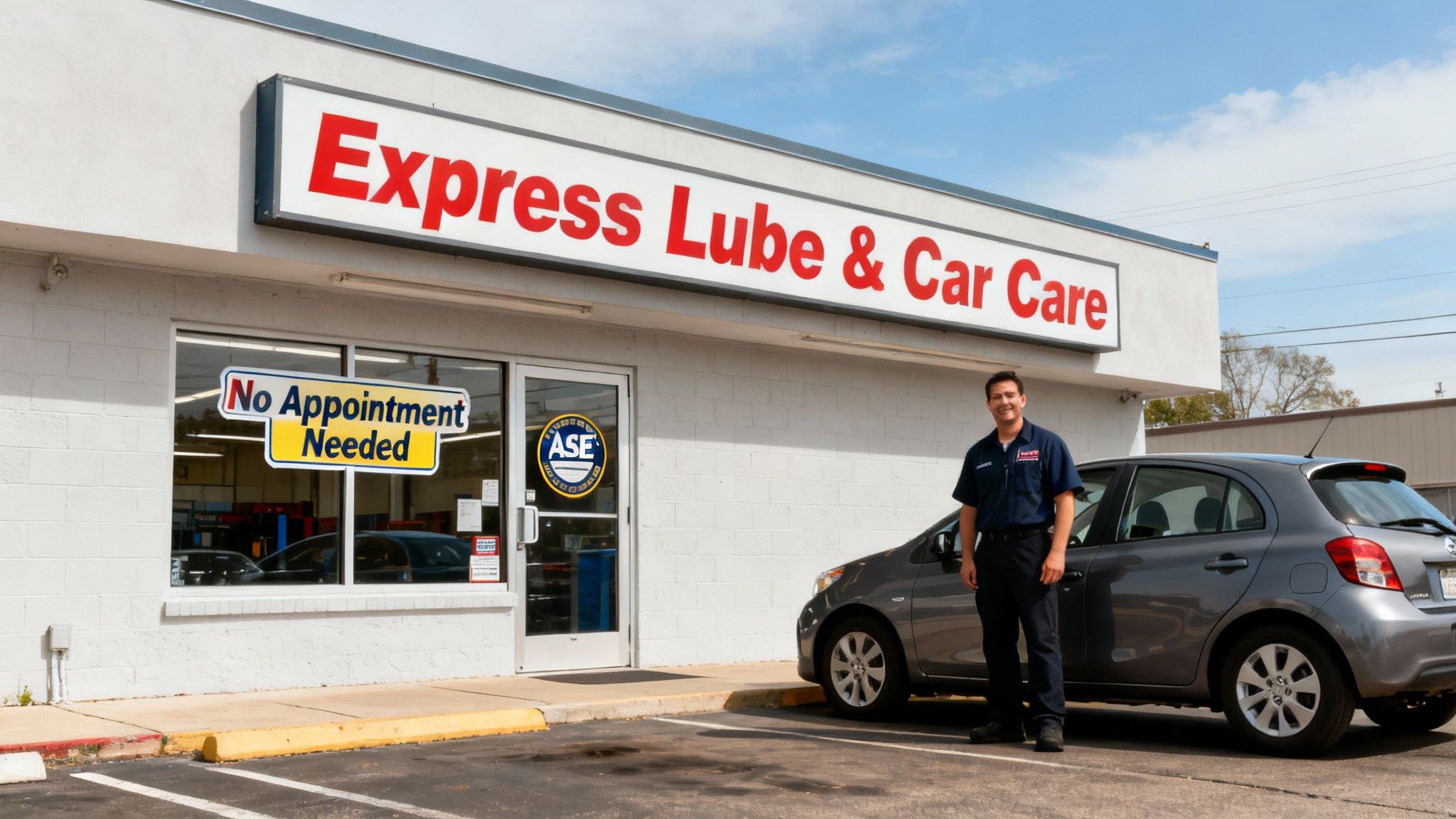
Once you've weighed the costs, the next step is finding a shop that respects your wallet and your time. It’s one thing to get a good deal, but it’s another to find quality work and convenience all in one place. That’s what separates a great local auto shop from the rest.
At Express Lube & Car Care, we’ve built our entire service around that idea. We know your day is packed, and scheduling car maintenance weeks out just isn’t realistic. That's why we’re a no-appointment-needed shop. Just pull in when it works for your schedule, and we'll take care of you.
Transparent Pricing and Trusted Technicians
Searching for "oil change near me prices" is a good start, but trust is what really matters. There’s nothing worse than getting a bill with a surprise charge you never saw coming. We promise total transparency—we explain what your car needs and give you a clear, upfront cost before we even touch a wrench. No hidden fees, no last-minute add-ons.
More importantly, your vehicle is always in the hands of ASE-certified technicians. That certification isn't just a framed piece of paper; it’s your guarantee that the person under your hood has proven expertise. It’s peace of mind knowing the job is done right, protecting your engine and keeping you safe.
At Express Lube & Car Care, we believe fair pricing and expert service should come standard. Our goal is to provide a service that is not only quick and convenient but also builds lasting trust with every customer who drives into our bay.
Community Savings and Special Offers
As a proud part of the Richland Hills community, we believe in giving back to those who serve all of us. We’re honored to offer special discounts as a small thank you for their dedication.
We have ongoing savings for:
- Military Personnel: For active duty members and veterans.
- First Responders: For the police, firefighters, and EMTs who keep us safe.
- Healthcare Workers: For the nurses, doctors, and medical staff who care for our community.
We also celebrate the women in our community with our popular Ladies Day special every Wednesday. These offers are our way of saying thanks and making essential car care a little more affordable for our neighbors.
By combining walk-in convenience with the assurance of expert technicians and fair, honest pricing, we make getting an oil change simple. Drive in today and see what a difference a dedicated local shop can make. We’re here to get you back on the road quickly and safely, without the hassle.
Your Top Questions About Oil Change Costs, Answered
Even when you know the basics, it's natural to have a few questions about "oil change near me prices." Car care can feel overly complicated sometimes, but we believe in keeping things simple.
To help you feel 100% confident next time you pull into the shop, we’ve put together straight-to-the-point answers to the questions we hear most often from drivers just like you.
How Often Do I Really Need an Oil Change?
The old "every 3,000 miles" rule is probably the most persistent myth in the auto world. That was great advice back when cars had carburetors, but modern engines and advanced oils have completely changed the game.
Sticking to that outdated schedule usually just means you're wasting money and time.
Your vehicle's owner's manual is your best friend here. Carmakers spend a ton of time and money figuring out the ideal service interval for their engines. Today, you'll commonly see recommendations of 5,000 to 7,500 miles for conventional oil and 10,000 miles or more for full synthetic.
But your personal driving habits matter just as much.
- Lots of City Driving? Stop-and-go traffic and short trips are tough on your engine, so you might need changes a bit more often.
- Mostly Highway Miles? Long, steady drives are much easier on your oil, letting you safely extend the time between services.
- Towing or Extreme Temps? Hauling heavy loads or driving in the Texas heat can also shorten your oil's life.
A good technician can tell a lot by looking at your oil and talking to you about how you drive, helping you find that sweet spot for your specific car.
Is Expensive Synthetic Oil Always Worth It?
This is a great question, and for most cars on the road today, the answer is a definite "yes." The upfront cost is higher, but you absolutely get what you pay for. Think of it like a high-quality work boot versus a cheap one—the better boot costs more but offers far superior protection and lasts seasons longer.
For any engine that's turbocharged, high-performance, or just built with the tight tolerances of modern cars, synthetic oil is less of an upgrade and more of a necessity.
Synthetic oil's engineered molecules create a stronger, more stable layer of protection. This dramatically cuts down on engine wear, helps your engine run better in extreme heat and cold, and fights off damaging sludge buildup in a way conventional oil just can't match.
The long-term savings really add up. Since you can go much further between oil changes, you're making fewer trips to the shop each year. Over the life of your car, that saves you real money and time—not to mention it's the best thing you can do to keep your engine running strong for years to come.
What Should Be Included in the Advertised Price?
This is key to avoiding an unexpected bill. If you see a rock-bottom advertised price for an oil change, you should always ask what’s actually included. A reputable shop will be upfront about it.
A standard, full-service oil change price should always cover these essentials:
- Motor Oil: The correct type and amount for your vehicle (usually up to five quarts).
- New Oil Filter: A quality replacement filter is a must-have for any real oil change.
- Labor: The technician's time and expertise.
- Disposal Fees: Environmentally safe disposal of your old oil and filter.
Most good shops, including ours, also throw in a complimentary multi-point inspection. This quick check of your fluids, belts, and tires is a huge value-add, as it can spot a small issue before it turns into a major repair. Always ask if shop fees and taxes are included to get the true "out-the-door" price.
What Happens If I Wait Too Long for an Oil Change?
Honestly, putting off an oil change is one of the worst things you can do for your car. Oil is your engine's lifeblood. When it gets old, it breaks down and gets contaminated with dirt, tiny metal particles, and sludge.
This gunk-filled oil can't lubricate and cool your engine's moving parts properly. That leads to more friction and more heat—an engine's two biggest enemies.
The result? You’ll start seeing worse gas mileage and performance. From there, it can cause premature wear on critical components, leading to expensive repairs. In a worst-case scenario, severe neglect can cause total engine failure—a repair that can cost thousands. A timely oil change is easily the single most cost-effective maintenance you can do.
Ready for a fast, honest oil change with no hidden fees? At Express Lube & Car Care, our ASE-certified technicians provide reliable service with no appointment needed. Stop by today and see why local drivers trust us for their auto care. Learn more at https://www.expressluberichlandhills.com.