

It’s a feeling every Richland Hills driver dreads: you’re cruising down I-820, and suddenly, the temperature gauge starts creeping into the red. Panic is a natural first reaction. Is this a minor hiccup, or is your engine about to give up the ghost?
Knowing the difference comes down to recognizing the specific warning signs. Catching a cooling system problem early is the best way to prevent catastrophic engine damage, which can save you from a massive repair bill later on.
Is Your Car Overheating Or Just Running Hot?
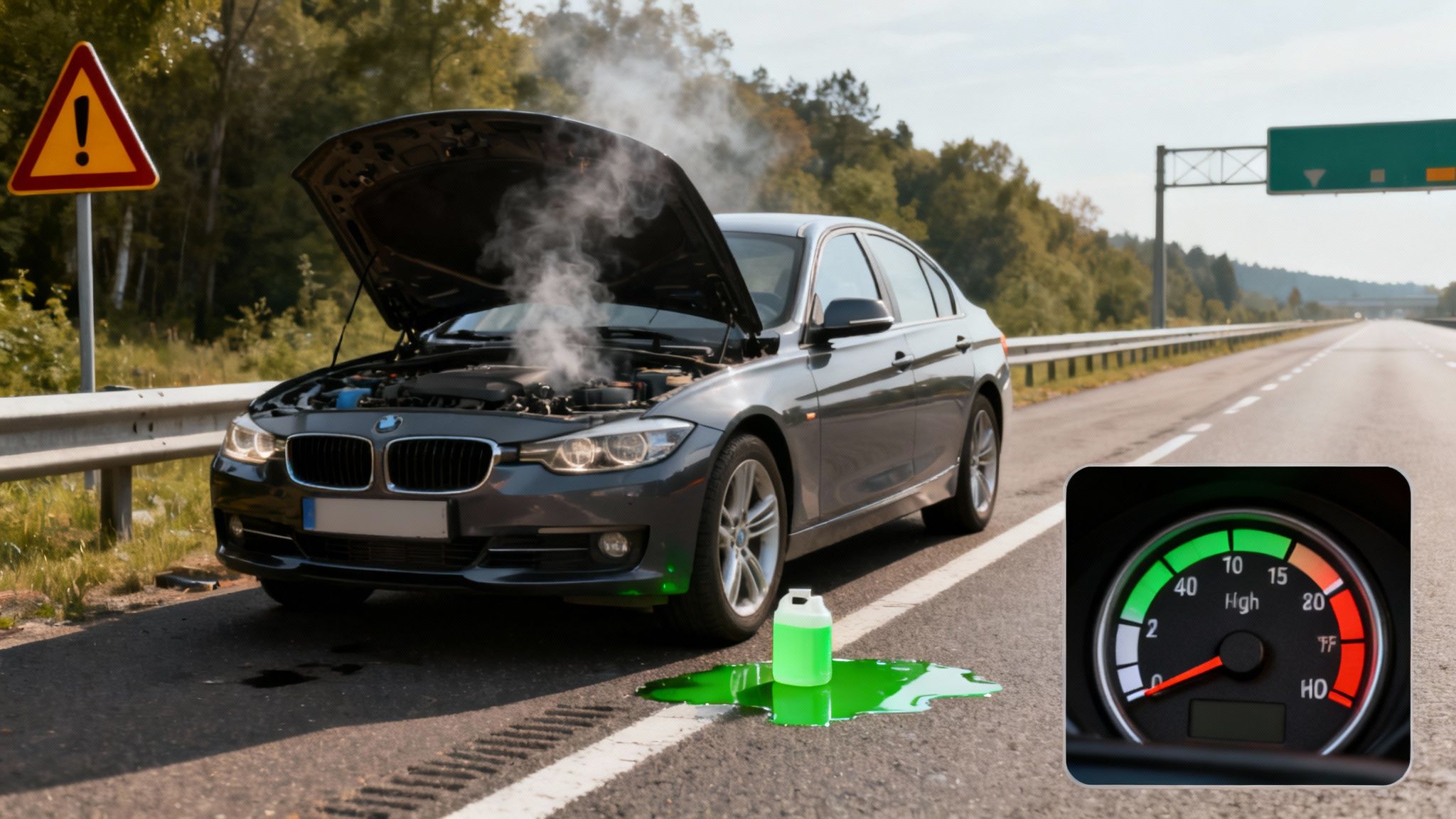
It’s easy to get stressed when you see that needle inching past its normal spot. But a hot-running engine isn’t always on the verge of a meltdown. You need to look for the undeniable symptoms that tell you it’s time to find a professional for a radiator repair. Ignoring them can turn a simple fix into a complete engine replacement.
To help you figure out what's going on, here’s a quick guide to the most common symptoms we see.
Quick Guide To Radiator Problem Symptoms
| Symptom | What It Likely Means | Recommended Action |
|---|---|---|
| White Steam from Engine | A serious coolant leak hitting hot engine parts and vaporizing. This is a critical issue. | Pull over safely and shut off the engine immediately. Call for a tow. |
| Bright Puddle Under Car | You have an active coolant (antifreeze) leak. The fluid is often green, pink, or orange. | Don't drive. Check coolant level (when cool) and schedule a repair. |
| Sweet, Syrupy Smell | Usually a sign of a heater core leak inside your car’s cabin. | Get the cooling system inspected. This can also pose a health risk. |
| Gurgling/Hissing Sounds | Air is trapped in the system or coolant is boiling. Both signal a major problem. | Shut off the engine and let it cool completely before seeking an inspection. |
| Fluctuating Temp Gauge | Could be a faulty thermostat, air pockets, or low coolant causing erratic readings. | Monitor closely and have the system checked before it gets worse. |
This table covers the big ones, but let's break down what you should be looking for in more detail.
Visible Signs of Radiator Trouble
The most obvious clues are often the ones you can see. If you pop the hood and white steam is billowing out, it's a clear sign of a severe leak—hot coolant is hitting hotter engine parts and turning to vapor. This is an emergency.
Another dead giveaway is a puddle of brightly colored fluid under your car after it’s been parked. Antifreeze is usually green, pink, or orange and has a distinct sweet smell. Any leak, big or small, compromises the cooling system's ability to hold pressure, which is essential for keeping your engine cool.
What Your Senses Can Tell You
Sometimes, your nose and ears will pick up on trouble first. A sweet, syrupy odor inside the car often points to a leaky heater core, which is like a mini-radiator for your cabin’s heat.
You should also listen for strange sounds. A gurgling or hissing noise after you shut the engine off can mean air is trapped in the system or that coolant is actually boiling—both are red flags for an impending failure.
Pro Tip: Don't dismiss a temperature gauge that bounces around. If it jumps from normal to hot and back again, it could signal a failing thermostat or low coolant causing weird readings. It's a subtle but critical warning sign.
These symptoms all point to a problem with your car's cooling system. The fluids that keep your car running are vital, and a leak is never a good sign. You can learn more in our guide to knowing when to change car fluids. The sooner you catch these issues, the better your chances of avoiding being stranded on the side of the road.
What To Do When Your Engine Overheats On The Road
It’s a sight no driver wants to see: steam billowing from under the hood while you’re cruising down Grapevine Highway. It's a stressful situation, but a calm, quick response can be the difference between a simple radiator fix and a catastrophic engine failure. The absolute first priority is your safety and the safety of everyone else on the road.
The second you see that temperature gauge shoot into the red or spot that first wisp of steam, flip on your hazards. Start looking for a safe place to pull over immediately—a wide shoulder, the next exit ramp, or an empty parking lot. Get your car completely out of the flow of traffic, shift into park, and kill the engine.
Immediate Steps For Safety
With the engine off, take a breath. The most important thing now is to let everything cool down. Here’s exactly what to do next to protect yourself and your car from further damage:
- Do Not Open The Hood Right Away: The cooling system is under intense pressure. Popping the hood too soon can blast you with scalding steam and boiling coolant. You need to wait at least 15-20 minutes for things to cool down.
- Never Touch The Radiator Cap: Seriously, don't even think about it. Touching, let alone trying to open, a hot radiator cap is a recipe for severe burns. It can erupt with incredible force.
- Try This Heater Trick: If you’re in a safe spot and have a moment before shutting the car off completely, crank the heater to full blast and turn the fan on high. This little trick actually uses your car's heater core as a mini-radiator, pulling some of that dangerous heat away from the engine block and into the cabin.
Crucial Safety Warning: Your only job right now is to prevent more damage and keep yourself safe. An overheating engine is a major mechanical problem. Do not try to "limp" it home or to a shop, even if the temperature gauge seems to drop after it rests for a few minutes.
What To Do Next
Once you're safely off the road and the engine is cooling, it's time to call for backup. This isn't the time for a roadside DIY fix—it's too risky and rarely works.
Pull out your phone, search for a "radiator repair near me," and get a tow truck on the way. Trying to drive even a short distance on an overheated engine can warp the cylinder head or crack the block, turning a potentially manageable repair into a multi-thousand-dollar engine replacement. A professional diagnosis from a trusted shop is the only way to know for sure what went wrong and get you back on the road safely.
What a Professional Radiator Repair Actually Involves
When you bring your car into the shop with a cooling system problem, you deserve to know what’s happening behind the service bay doors. A radiator repair isn't just about finding a leak; it's a careful, step-by-step diagnosis to uncover the real source of the trouble.
The first thing our ASE-certified technicians almost always do is a cooling system pressure test. We attach a special tool to the radiator or coolant reservoir and gently pump air into the system. By bringing it up to its normal operating pressure, even the smallest, most hidden leaks become obvious. This simple test can reveal a failing hose, a tiny crack in the radiator, or even just a bad radiator cap that can't hold pressure anymore.
Finding the Exact Point of Failure
Once the system is pressurized, the technician performs a meticulous inspection, looking for any signs of escaping coolant and listening for audible hisses. This detective work is absolutely critical because one symptom, like a small puddle on your driveway, can point to several different causes.
The results of that pressure test tell us exactly what to do next:
- A Minor Fix: If it's just a loose hose clamp or a small crack in a hose, the fix can be quick and simple.
- Component Replacement: Sometimes, the problem is a failing water pump, a thermostat that's stuck open or closed, or a crack in the radiator itself. In these cases, we'll need to replace the bad part.
- A Full System Flush: We often recommend a coolant flush alongside a repair. This gets rid of all the old, contaminated fluid and any gunk or debris that could clog up the system down the road.
Before any of that diagnostic work can happen, your safety comes first. This flowchart breaks down the immediate steps to take if your engine ever overheats.
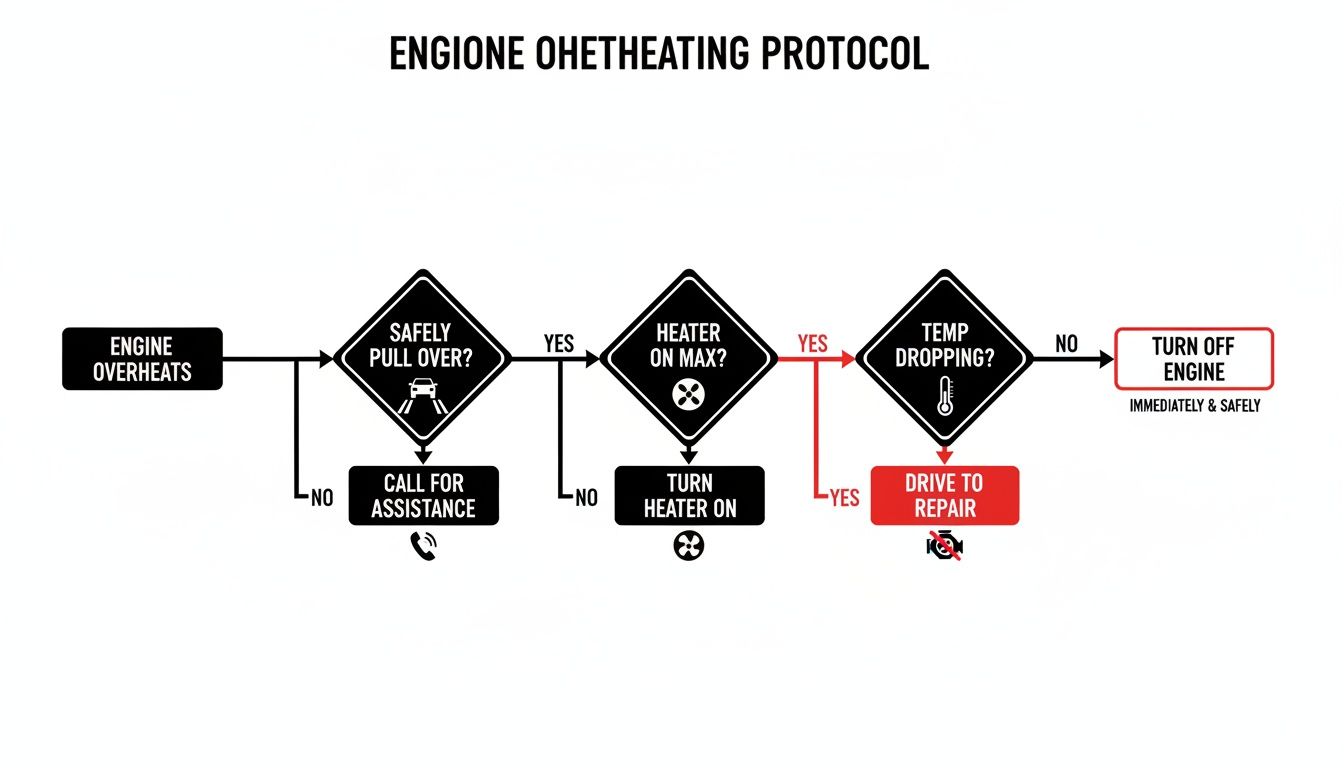
As the chart shows, pulling over safely and letting the engine cool down is non-negotiable. It's the best way to prevent catastrophic damage before a mechanic can even lay a hand on it.
How Modern Cars Change the Game
Cooling systems aren't as simple as they used to be. With so many hybrid and electric vehicles on the road, the "radiator" is now part of a much larger thermal management system that has to cool sensitive battery packs and electronics.
This shift means modern cooling systems are more complex, and lightweight aluminum is now the standard material to improve efficiency. For shops like ours, staying ahead means constantly investing in new diagnostic tools and ensuring our technicians have the latest ASE certifications to handle these advanced systems. You can read more about how the automotive radiator market is evolving and what it means for drivers.
Understanding the diagnostic process shows why just searching "radiator repair near me" isn't enough. You need a shop that invests in both the right tools and the right training. A proper repair isn't a guess—it's a precise procedure.
This methodical approach ensures we fix the real problem the first time. It’s the difference between patching a symptom and providing a lasting solution that keeps you driving safely on Richland Hills roads.
How To Choose The Right Auto Shop In Richland Hills
When you're staring down a potential radiator issue, the last thing you need is the extra stress of finding a mechanic you can trust. A quick search for "radiator repair near me" will flood you with options, but how do you know which one won't take you for a ride?
Picking the right shop isn't just about finding someone who can turn a wrench. It's about finding a team that's transparent, communicates clearly, and helps you understand what went wrong in the first place. You want a partner, not just a repair bill.
Check For ASE Certifications
The first thing I always look for is proof of real expertise. In our industry, the gold standard is an ASE (Automotive Service Excellence) certification. This isn't just some plaque on the wall—it means the technicians have passed tough exams and have verifiable, hands-on experience.
Shops that invest in keeping their mechanics ASE-certified show a real commitment to quality work. It’s a huge green flag that they have the know-how to properly diagnose and fix complex cooling systems on modern cars.
Scrutinize Recent Customer Reviews
Online reviews are your best look into how a shop actually operates day-to-day. Don't just glance at the star rating; dig into the comments from the last few months and look for patterns.
- Communication: Do people say the shop called them with updates or explained the problem clearly?
- Pricing: Are customers mentioning fair and transparent pricing without a bunch of surprise fees tacked on at the end?
- Timeliness: Does the shop actually get cars back when they promise?
These details give you the real story about the customer experience you're likely to have.
Key Takeaway: A trustworthy shop won't hesitate to provide a detailed, written estimate before any work begins. If a mechanic is vague about costs or pressures you into an immediate decision, it's a major red flag.
Ask The Right Questions Before Committing
Once you have a shortlist, a simple phone call can tell you almost everything you need to know. Be ready with a few direct questions to get a feel for their professionalism.
- Do you offer a warranty on parts and labor? Any shop worth its salt will stand behind its work. Look for a warranty of at least 12 months or 12,000 miles.
- Can you provide an itemized estimate? This is non-negotiable. You need to see exactly what you’re paying for—parts, labor, and shop fees.
- Do you use OEM or quality aftermarket parts? The quality of the parts they use will determine how long your repair actually lasts.
- Are your technicians ASE-certified for my car's make? This confirms they have specific knowledge for your vehicle.
Making an informed choice is critical. For an even deeper look, check out our guide on how to find a good mechanic for more tips. The goal is to find a reliable partner for all your car care needs, not just a quick, one-time fix.
Why Local Drivers Trust Express Lube And Car Care
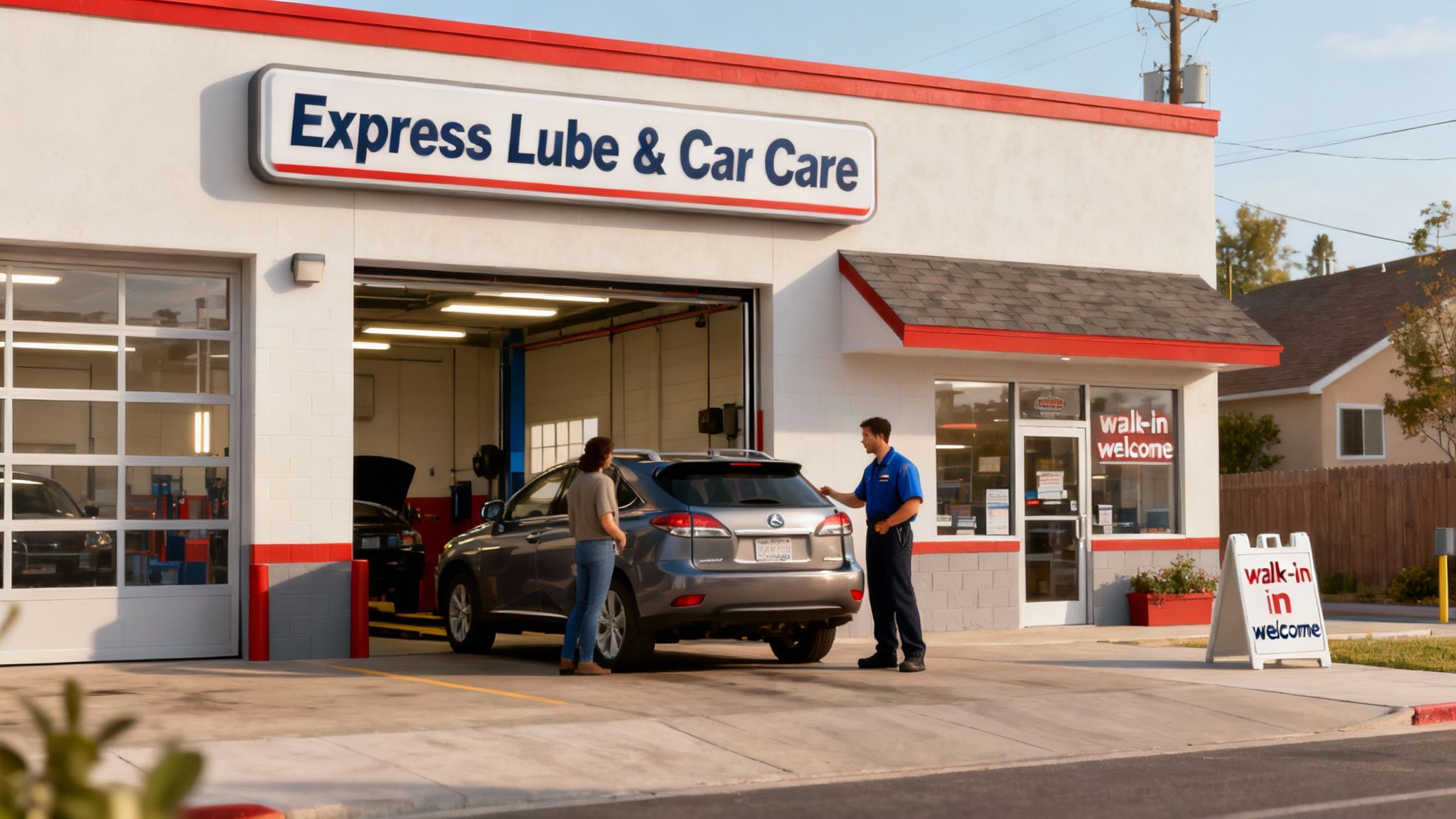
When your car starts overheating and you’re searching "radiator repair near me," you need more than just a quick fix. You need a local shop you can actually count on. Here in Richland Hills, we’ve built our reputation at Express Lube & Car Care on honesty, real expertise, and simply treating our neighbors right.
We get it—car trouble never happens at a good time. A surprise coolant leak can ruin your commute, mess up family plans, or derail your whole workday. That's exactly why our no-appointment, walk-in model is so important to us. Just bring your vehicle in when you need to, without the headache of booking a time slot days from now.
Expertise You Can See And Trust
Our commitment to you starts with the technicians working on your car. Every single one of our techs is ASE-certified, meaning they’ve proven their skills through tough testing and hands-on work. It’s not just a piece of paper on the wall; it’s your guarantee that a true professional is handling your vehicle's complex cooling system.
That level of expertise is more crucial than ever. With vehicle technology getting more advanced, the global automotive radiator market is projected to hit $14.94 billion by 2033. For us, that means staying on top of our training and using the right diagnostic tools for every car that pulls into our bay. You can see more on how the radiator market is expanding and why professional service is so critical.
We believe car care should be straightforward. Our promise is simple: clear, honest communication. We’ll explain the problem in plain English, show you what’s wrong, and give you a transparent, itemized estimate before a single wrench is turned.
More Than Just A Repair Shop
Being part of the Northeast Tarrant County community means everything to us. We’re not just a business; we’re your neighbors, and our job is to keep you and your family safe on the road. We know that trust has to be earned.
To show our gratitude for those who serve our community, we proudly offer special savings for:
- Military personnel
- First responders
- Healthcare professionals
It's just our small way of saying thank you. Our goal has always been to be the one shop you can rely on for everything from a fast oil change to an urgent radiator repair. We combine the speed of a quick-lube with the know-how of a full-service garage to get you back on the road safely and without delay.
Common Questions About Radiator Repair
When your car is acting up, you just want straight answers. We get it. Over the years, we've heard just about every question there is about cooling systems, so we've put together some honest, no-nonsense answers to help you figure out what's next.
How Long Does A Radiator Repair Take?
This really comes down to what needs fixing. If it’s something simple like a loose clamp or an easy-to-reach hose, we can often have you back on the road in an hour or two. Those are the kinds of jobs we can usually handle the same day you come in.
But if the job is bigger—like swapping out the entire radiator or replacing a buried water pump—it’s going to take more time. For most cars and trucks, a full radiator replacement usually takes 3 to 5 hours, assuming we can get the part quickly. We’ll always give you a solid time estimate after we’ve had a look under the hood.
Is It Cheaper To Repair Or Replace A Radiator?
That's the million-dollar question, isn't it? If the leak is tiny and in a spot we can easily get to, a patch might be a cheap, quick fix. The catch is that modern radiators are mostly aluminum and plastic, and they just don't patch up reliably for the long haul.
More often than not, replacing the whole radiator is the smarter move. A patch might stop one leak, but it does nothing for the rest of the aging unit. A brand-new radiator gives you peace of mind that the whole component is solid. It's why we usually recommend a replacement for any serious leaks or damage.
Important Takeaway: Think beyond the initial repair bill. You have to weigh that against the risk of a patch failing when you're miles from home, which could leave you stranded and facing a much bigger repair bill for engine damage.
Can I Drive My Car If It Has A Coolant Leak?
Our advice? Don't risk it. Driving with a coolant leak is a huge gamble. Your cooling system needs to be a sealed, pressurized loop to work right. A leak breaks that seal and cripples its ability to keep your engine from overheating.
Even a slow drip can turn into a big problem fast, causing you to lose enough coolant to cook your engine. The cost of a tow is nothing compared to the cost of a warped cylinder head or a cracked engine block. The smartest and safest thing to do is call for a tow. To get a better idea of the numbers involved, you can learn more about the typical costs associated with radiator leak repairs.
At Express Lube & Car Care, our job is to give you honest answers and service you can count on. If you think you have a cooling system problem, just stop by. Our ASE-certified team will give you a professional diagnosis, no appointment needed. Visit us at https://www.expressluberichlandhills.com.