

That sinking feeling when you spot a puddle under your car is all too familiar. When it comes to a radiator leak repair cost, you can generally expect to pay between $150 and $600. The final number really depends on your specific vehicle and just how bad the leak is.
Ignoring that small drip is a bit like ignoring a tiny crack in a dam—it’s a recipe for a much bigger, more expensive disaster down the road.
Your Quick Guide To Radiator Leak Repair Costs
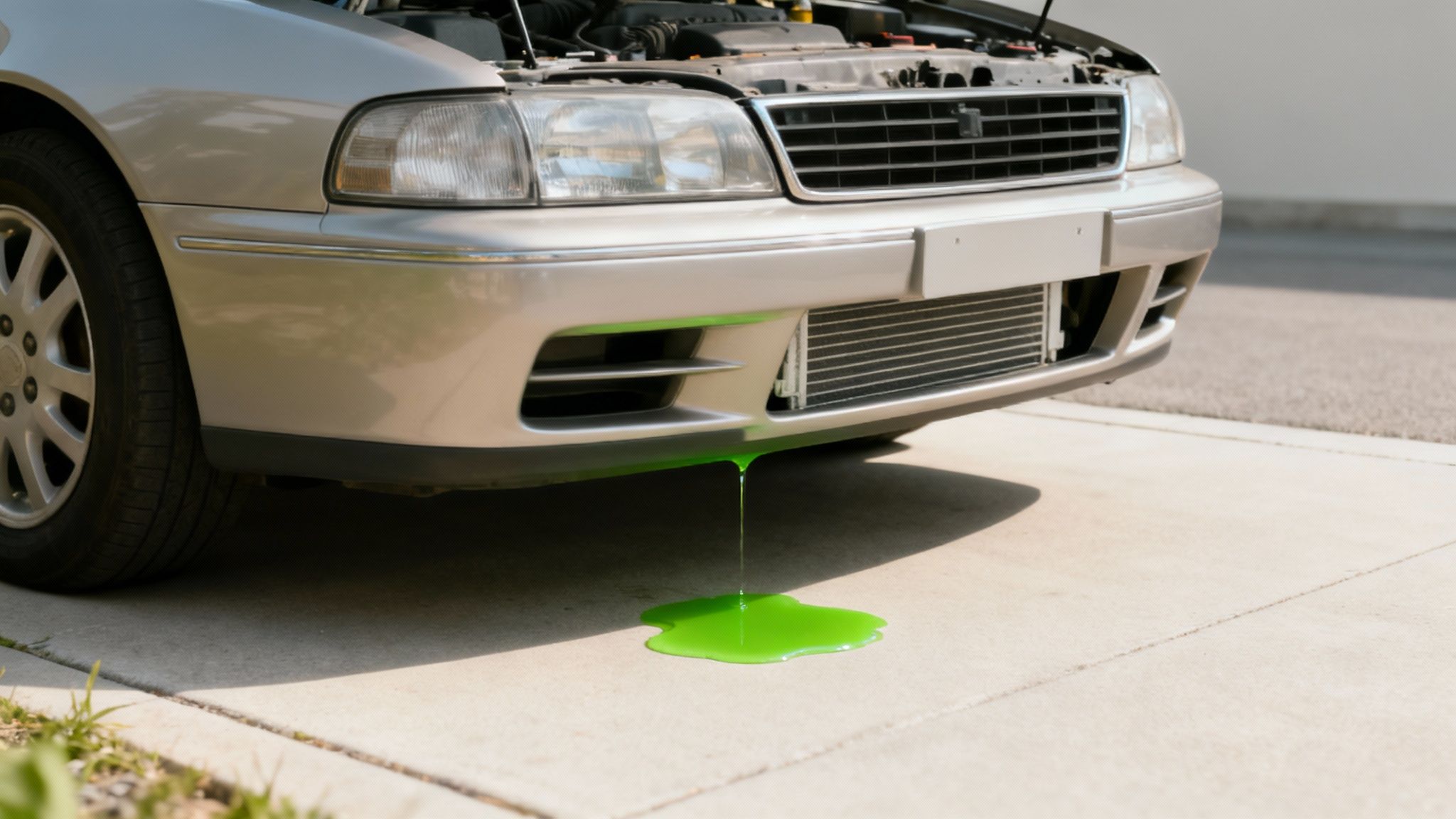
That bright green or orange puddle on your driveway isn’t just an ugly stain. It’s a clear signal from your car that something’s wrong. Your radiator is the heart of the cooling system, and any leak means it can't do its job of preventing your engine from overheating. Catching it early is the best way to avoid catastrophic engine damage.
Think of the radiator leak repair cost as an investment in your car's long-term health. The final bill is always a mix of a few key factors, and understanding them will help you know what to expect when you bring your car into the shop.
Understanding the Price Tag
So, what makes that price swing so much? Let's say you're driving your SUV around Richland Hills and suddenly see the temperature gauge spike. On average, a repair will run you about $350. But that could be as low as $100 for a simple fix or jump to over $600 if a major part, like a radiator pipe, has failed.
For a clearer picture, here’s a quick breakdown of what you might expect to pay for different types of radiator services.
Estimated Radiator Leak Repair Costs at a Glance
| Type of Repair | Average Cost Range |
|---|---|
| Minor Hose or Clamp Fix | $100 – $250 |
| Patching a Small Crack | $200 – $400 |
| Radiator Flush & Unclogging | $200 – $450 |
| Full Radiator Replacement | $400 – $900+ |
As you can see, the scope of the problem really dictates the final cost. The main things that will influence your repair bill are:
- Vehicle Make and Model: It’s no surprise that parts for a luxury or European car are going to cost more than for a standard domestic sedan.
- Severity of the Leak: A loose hose clamp is a quick, inexpensive fix. A crack in the radiator core itself? That's a much more involved and costly repair.
- Parts and Labor: The total cost is a combination of the replacement parts and the technician's time to properly diagnose the issue and perform the repair.
A radiator leak is the classic example of a small problem that can turn into a massive one. A timely, affordable repair today can easily save you from a multi-thousand-dollar engine replacement tomorrow.
This guide will walk you through these factors so you understand why an "average" cost is just a starting point. We want to arm you with the knowledge to get a fair price and make the best decision for your vehicle.
What Really Determines Your Final Repair Bill?
Ever get a repair quote and wonder why it’s so different from what your buddy paid for a similar problem? When it comes to radiator leak repair cost, there’s no single price tag. Think of it like a restaurant bill—the final total depends entirely on what you ordered.
A few key factors mix together to create your final invoice. Once you understand them, the whole process starts to make a lot more sense.
The biggest variable is often the car you drive. Fixing a leak on a finely-tuned European import will almost always cost more than on a common domestic sedan. This isn't about the brand name; it's about the engineering. Luxury and high-performance cars often have complex cooling systems squeezed into tight engine bays, which means it takes a technician longer to get to the problem.
On top of that, parts for these vehicles usually come directly from the manufacturer (OEM) and carry a premium price. They’re a perfect fit, but they definitely add to the bill.
Vehicle Type and Radiator Material
Your car’s make and model really set the stage for repair costs. But it goes deeper than just luxury vs. domestic—the type of radiator in your car plays a huge part, too.
Most modern cars use lightweight aluminum radiators with plastic tanks. They're great for efficiency and keeping manufacturing costs down, but they’re often impossible to repair if the main body cracks. On the other hand, older vehicles might have heavier copper-brass radiators. You can patch those up more easily, but replacing one entirely is a much bigger expense.
- Luxury & European Models: Expect higher labor rates (anywhere from $100 to over $150 per hour) and pricier OEM parts. It all adds up.
- Domestic & Common Models: These usually have more affordable aftermarket part options and simpler designs, which helps keep the repair bill down.
- Aluminum/Plastic Radiators: Cheaper to replace as a whole unit, but don't count on repairing a damaged core.
- Copper/Brass Radiators: Much more durable and repairable, but a full replacement will cost you a pretty penny.
The Leak Itself: Minor vs. Major Damage
The size and location of the leak are just as important as the car it's on. A small drip from a loose hose clamp is a quick, simple fix that can often be done for under $100. It’s the mechanical equivalent of tightening a loose screw.
But a crack in the radiator core or a failing water pump? That's a different story. These are major issues that require a lot of work to access and replace parts, easily pushing the cost into the several hundred dollar range.
Your final repair bill is a balance between parts and labor. While a new hose might only be $20, the real value comes from an ASE-certified technician's time to properly diagnose the issue, perform the repair, and pressure-test the system to guarantee a lasting solution.
Understanding this balance helps you see exactly what you’re paying for. You're not just buying a part off a shelf; you're investing in the expertise needed to install it correctly and make sure your car runs safely for miles to come. That knowledge gives you the confidence to look at any repair quote and know what you're getting.
So, you’ve got a radiator leak. Now you're at a classic fork in the road: do you go for a targeted repair, or is it time to bite the bullet and get a full replacement? The right call really comes down to a cost-benefit analysis. You have to weigh the immediate savings of a quick fix against the long-term peace of mind that a brand-new radiator brings.
It’s a lot like deciding whether to patch a leaky tire or just buy a new one. A small nail in the tread? A patch is a perfectly sensible and budget-friendly choice. But if the sidewall is shredded or the tread is bald, a new tire is the only safe and logical move. The same thinking applies to your radiator.
When a Targeted Repair Makes Sense
For many common issues, a simple, targeted repair is absolutely the smartest way to go. If the problem is isolated and the rest of your cooling system is in good shape, there's really no reason to throw out the whole radiator. This approach will save you a good chunk of change on both parts and labor.
Here are a few scenarios where a repair is usually the best option:
- Leaking Hoses or Loose Clamps: These are often the real culprits behind a leak and are typically simple, inexpensive fixes.
- A Single, Small Puncture: If a stray rock or piece of road debris pokes a minor hole, a professional can often seal it up without any trouble.
- Faulty Radiator Cap: A worn-out cap can't hold pressure correctly, which can look like a leak but is actually an easy, cheap fix.
This flowchart gives you a good idea of how your car's type, the radiator's material, and the size of the leak all play a role in the final repair bill.
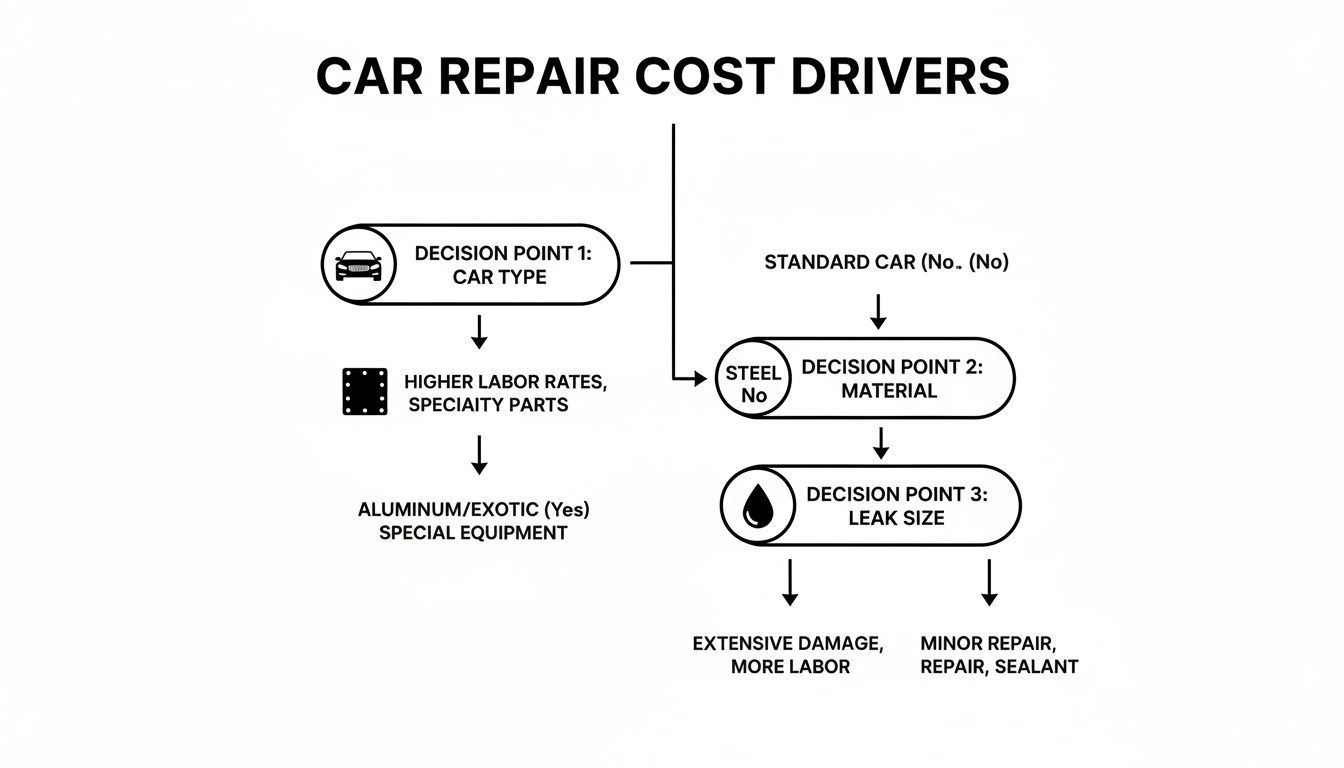
As you can see, a small leak on a standard vehicle is a perfect candidate for a cost-effective repair. On the other hand, major issues on luxury models can send costs climbing fast.
Red Flags That Point to a Full Replacement
Sometimes, the symptoms are clear signs that a simple patch-up just isn't going to do the job. Trying to repair a radiator with widespread internal damage is like putting a small bandage on a broken bone—it’s a temporary fix for a problem that needs a much more serious solution.
Choosing between a repair and a full replacement can be a tough call, but we've put together a quick table to help you decide.
Repair vs Replace: When to Choose Each Option
| Scenario | Recommended Action | Why It Is Recommended |
|---|---|---|
| Single small puncture or hole | Repair | A simple patch or sealant is a cost-effective and reliable fix for minor, isolated damage. |
| Leaking hose or loose clamp | Repair | The radiator itself is fine; the issue is with a connected part that's easy and cheap to replace. |
| Widespread rust or corrosion | Replace | Internal corrosion compromises the entire unit. A repair is just a temporary fix for a failing system. |
| Multiple leaks or cracks | Replace | Numerous weak points indicate the radiator is at the end of its life. New leaks will keep popping up. |
| Cracked plastic tanks/housings | Replace | Cracks in the plastic components often worsen over time and are very difficult to seal permanently. |
This table should give you a clearer picture, but a professional inspection is always the best way to know for sure.
The bottom line is that widespread corrosion, multiple persistent leaks, or cracks in the plastic end tanks are all tell-tale signs that the radiator's structural integrity is shot. In these situations, a full replacement is the only way to guarantee a reliable, long-lasting solution and avoid a catastrophic failure on the road.
Recent data shows the average radiator leak repair cost for things like faulty hoses is around $286 to $725. That’s a huge difference compared to the $765 to $1,826 average for a full replacement. If you want to dive deeper, you can explore the full analysis from ConsumerAffairs, which breaks down why parts often make up 50-60% of those replacement bills. Taking a comprehensive look at your vehicle's heating and cooling system is the key to making a choice you feel confident about.
The True Cost of Ignoring a Small Radiator Leak
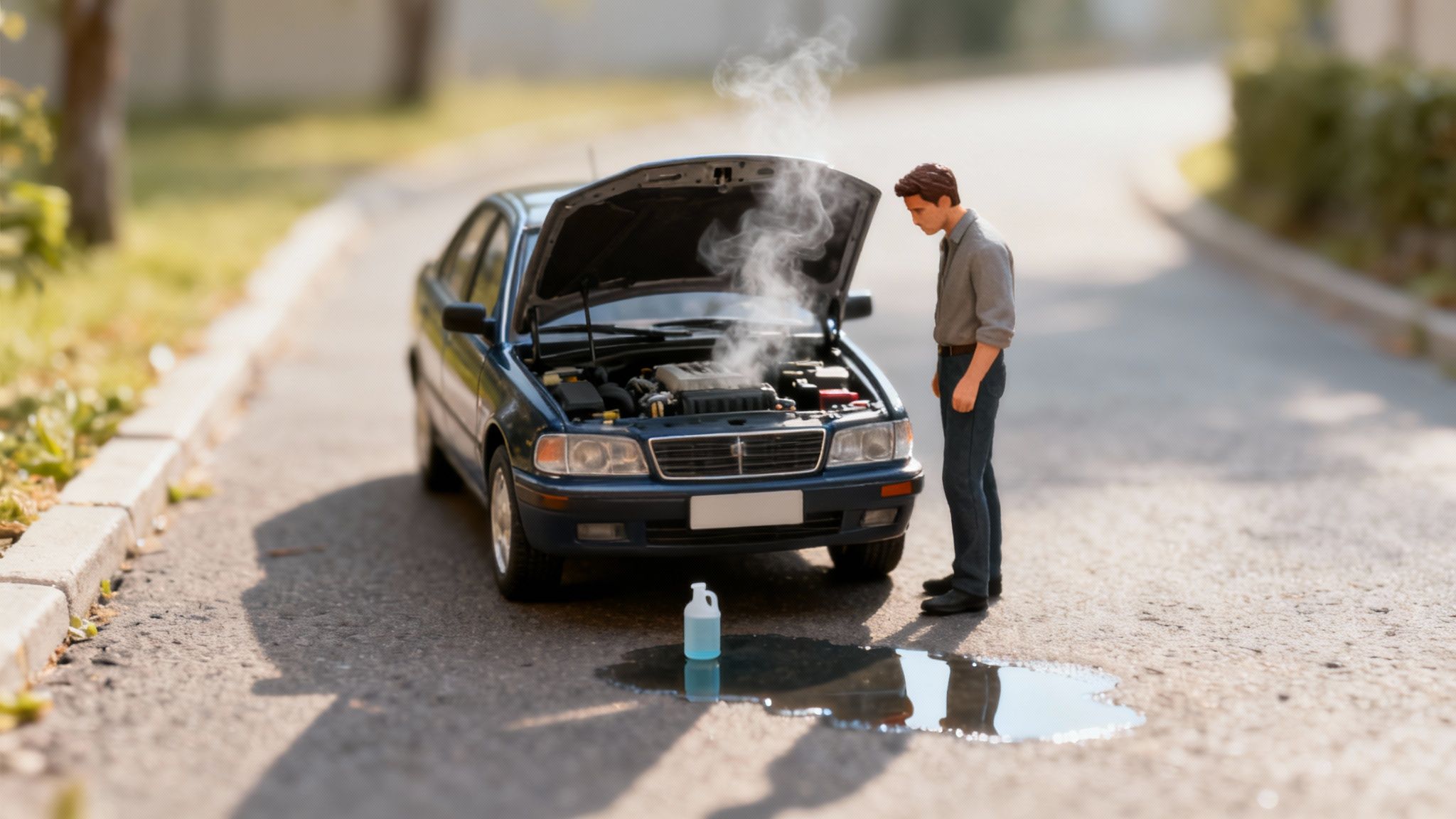
It’s easy to write off that tiny puddle of coolant under your car. You see it on the garage floor and think, "I'll get to it later." But in the world of car maintenance, that small drip is a major warning sign—a ticking time bomb that can set off a catastrophic chain reaction.
Ignoring a radiator leak is a lot like ignoring a small leak in your roof. At first, it's just a minor bother. But before you know it, that little drip leads to massive structural damage. When your car slowly loses coolant, your engine is forced to run hotter than it was ever designed to, and that’s where the real trouble begins.
The Slippery Slope to Engine Failure
An engine that’s constantly overheating is an engine under incredible stress. The extreme temperatures can cause critical metal parts to warp, expand, and crack. This cascade of damage can quickly turn a simple leak into every car owner's worst nightmare.
When an engine severely overheats, here’s what can happen:
- A Blown Head Gasket: This is when the seal between the engine block and cylinder head fails, letting coolant and oil mix. It’s a messy, complicated, and very expensive repair.
- A Warped Cylinder Head: The intense heat can physically bend the cylinder head, which leads to poor compression and, eventually, total engine failure.
- A Seized Engine: This is the absolute worst-case scenario. The heat gets so bad that metal components literally fuse, locking the engine up solid and turning it into a giant paperweight.
Think of proactive maintenance as financial protection for your vehicle. A manageable radiator leak repair cost today is what prevents a devastating engine replacement bill tomorrow.
A Stark Financial Comparison
Let's break down the numbers. The cost to fix a minor radiator leak, like replacing a bad hose or patching a small crack, usually lands somewhere in the $150 to $400 range. It’s a reasonable expense that protects the single most important part of your vehicle.
Now, let’s look at the alternative. If that leak is ignored, you’re gambling with catastrophic engine failure, where a full replacement can easily soar past $5,000. Taking quick action not only saves your car's performance but also gives you invaluable peace of mind.
Properly maintaining all your vehicle's liquids is key, and you can learn more by checking out our guide on when to change car fluids. The financial difference between these two paths is staggering. It proves that fixing a small leak right away is one of the smartest moves you can make as a car owner.
DIY Fixes vs. Professional Service: A Reality Check
When you spot that dreaded green or orange puddle under your car, it’s tempting to reach for a quick fix. That $10 bottle of "stop-leak" at the auto parts store seems like a magic bullet—a cheap, fast solution to a potentially expensive problem. But before you pour it in, you need to understand what’s really happening under your hood.
Think of your cooling system as your car's circulatory system, full of narrow, winding passages. Stop-leak products are designed to flow through these passages and then harden when they're exposed to air at the site of the leak. The big problem? They aren't very smart. They can't tell the difference between a pinhole in a radiator hose and the tiny, critical channels inside your heater core.
The Hidden Dangers of a Quick Fix
Using one of these sealants is a bit like pouring glue into your engine's arteries. Sure, it might plug the leak you can see, but it also risks clogging up the entire system. This can quickly snowball a minor leak into a major mechanical nightmare, leading to overheating, a heater that won't work in the winter, or even a failed water pump.
What starts as a $10 DIY solution can easily spiral into a $1,000+ professional repair needed to flush out the gunk and replace the components it damaged.
A professional mechanic, on the other hand, acts more like a surgeon than someone just slapping on a bandage. They don't just treat the symptom; they diagnose and fix the root cause with precision.
The Professional Diagnostic Approach
When you bring your car into a shop like ours, we use specialized tools and years of experience to get the job done right. It’s not just about stopping the leak; it’s about making sure your entire cooling system is healthy and reliable.
Here’s what a professional repair process actually looks like:
- Pressure Testing: First, a technician uses a special tool to pressurize the entire cooling system. This makes even the tiniest, most hidden leaks reveal themselves, so there’s no guesswork involved.
- Thorough Inspection: We don’t just stop at the leak. We'll examine all the related parts—hoses, clamps, the radiator itself, and the water pump—for signs of corrosion, aging, or other problems waiting to happen.
- Targeted Repairs: The fix is specific. If a hose is cracked, we replace the hose. If the radiator is damaged, we repair or replace the radiator. We never introduce foreign, system-clogging materials into your engine.
- System Flush and Refill: After the repair, we’ll often perform a complete coolant flush to remove any old, contaminated fluid and debris. Then we refill it with the exact type of coolant your vehicle's manufacturer recommends.
While the upfront radiator leak repair cost is obviously more than a bottle of sealant, you’re investing in your vehicle’s long-term health and your own peace of mind. A proper repair ensures the problem is solved correctly the first time, protecting your engine and saving you from much bigger headaches and expenses down the road.
Finding Trustworthy Radiator Repairs in Richland Hills
Let's be honest, dealing with car trouble is a headache. But for folks here in Richland Hills and Northeast Tarrant County, finding a shop you can trust shouldn't be part of the problem. When you're staring down a potential radiator leak, your first move should be finding a local expert who values honesty.
The right shop won’t just hit you with a surprise bill. They'll take the time to walk you through what’s wrong, show you the leaky part, and give you a clear, upfront estimate on the radiator leak repair cost. That kind of transparency takes the guesswork out of the equation and builds real trust.
What to Expect from a Top-Tier Local Shop
A great mechanic doesn’t just replace parts; they solve problems. That takes a mix of modern tools and old-school experience. Here at Express Lube & Car Care, we know that a solid diagnosis is the foundation for a fair and effective repair.
Here’s what really sets a quality local shop apart:
- Advanced Diagnostic Equipment: Today's cooling systems are complicated. A shop with modern pressure testers and diagnostic gear can find the exact source of a leak fast, which saves you both time and money.
- ASE-Certified Technicians: You want to know your car is in good hands. ASE certification is the gold standard in our industry, proving a technician has the skills to get the job done right.
- Clear Explanations: A good mechanic will break down what needs to be fixed, explain why it failed, and lay out your options. They give you the information you need to make a smart decision, no pressure.
Choosing a local mechanic is about more than just convenience. It’s about finding a partner you can count on for honest advice and quality work. A transparent process means you never have to sweat hidden fees or unnecessary repairs.
Finding a mechanic you can rely on makes all the difference. If you want to dig deeper, check out our guide on how to find a good mechanic you can trust. When you look for shops that prioritize transparency and expertise, you can tackle any radiator issue with confidence and get back on the road safely.
Got Questions About Radiator Repair? We've Got Answers.
When you're staring at a puddle of coolant under your car, a lot of questions pop into your head. It’s totally normal. Knowing what to expect can make the whole process less stressful when you talk to a mechanic. Let's tackle some of the most common concerns drivers have about radiator leaks and repair costs.
First up: how long is this going to take? For the simple stuff, like swapping out a cracked hose or putting on a new radiator cap, a good technician can have you back on the road in under an hour. But if the whole radiator needs to be replaced, you're looking at a more involved job. That can take anywhere from two to four hours, depending on how complicated your car's engine bay is.
A lot of people assume a coolant flush is always part of a leak repair. While it’s definitely good for your engine's health, it’s not always necessary for a small, straightforward fix.
Is It My Radiator or the Water Pump?
Another big question is figuring out what's actually leaking. Seeing that green or orange puddle doesn't automatically point to the radiator. The water pump, which is basically the heart of your cooling system, can also spring a leak and look very similar.
So, how can you play detective before you even get to the shop?
- Where's the Drip? A leak coming from the front and center of the engine is a classic sign of a failing water pump. Radiator leaks, on the other hand, can show up just about anywhere on the radiator itself.
- Any Weird Noises? If you hear a high-pitched whining or a grinding sound from under the hood, that often points to a bad bearing in the water pump.
- Overheating at a Standstill? Does your car's temperature gauge climb when you're idling at a red light but cool down once you get moving? That could mean the water pump isn't circulating coolant properly.
At the end of the day, the only way to know for sure is with a professional pressure test. This quick diagnostic step pinpoints the exact source of the leak, so you only pay to fix what's actually broken. No guesswork, no unnecessary parts.
For a clear diagnosis and a fair, transparent quote on your radiator repair, trust the ASE-certified team at Express Lube & Car Care. Visit us for fast, dependable service you can count on. https://www.expressluberichlandhills.com