

When you get a quote for a brake job, you can generally expect the brake repair cost estimate to fall somewhere between $300 and $800 per axle. The final number really depends on your specific vehicle and exactly what needs to be done. This price covers the critical parts like new pads and rotors, plus the skilled labor to get them installed safely.
What to Expect in Your Brake Repair Cost Estimate
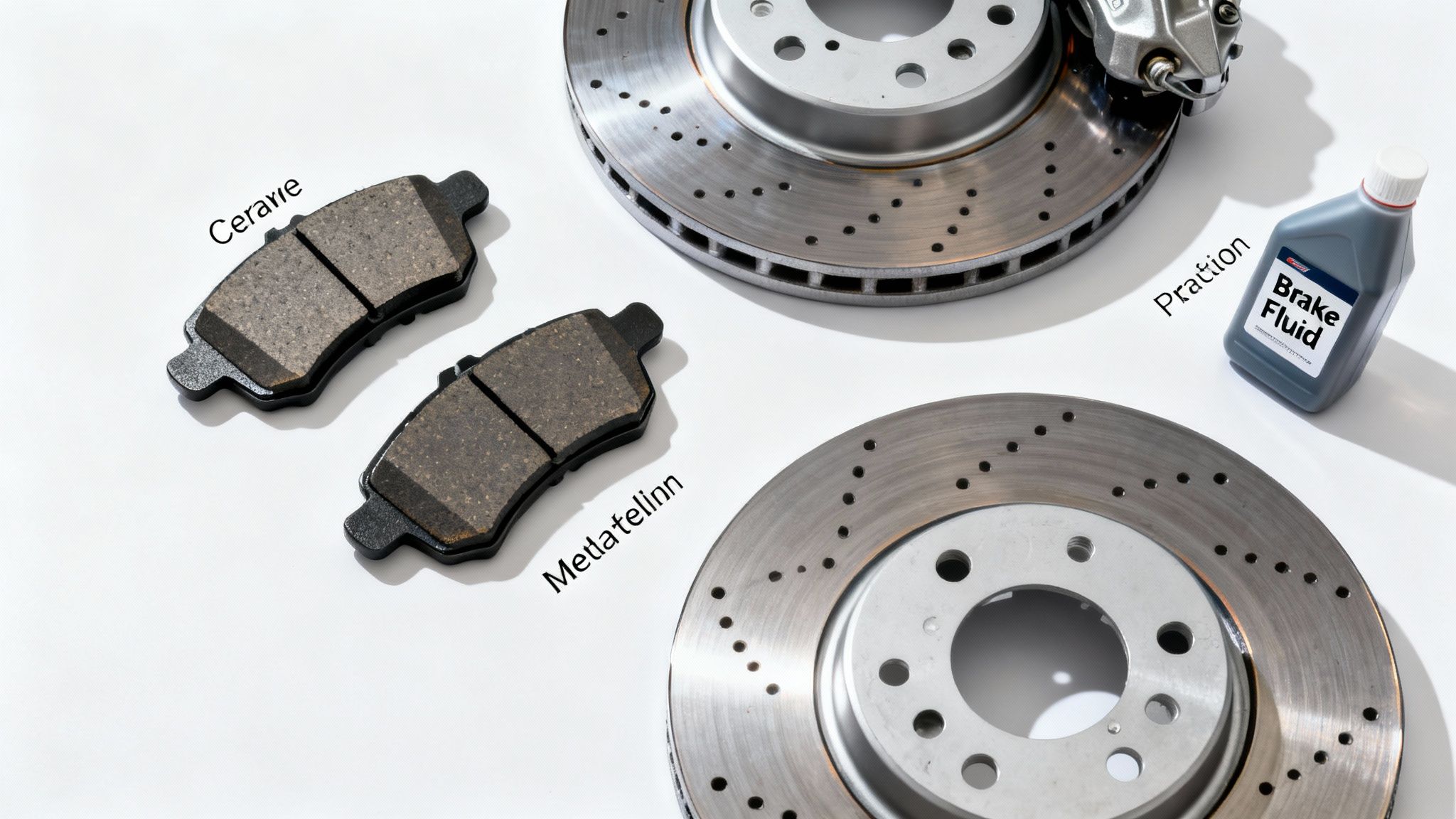
Looking at a brake repair estimate can feel a little confusing. You'll see a list of parts, a charge for labor, and maybe a few other fees, but what does it all really mean? I like to compare it to a restaurant bill: you’ve got the ingredients (parts), the chef’s time and skill to cook your meal (labor), and maybe a small service charge (shop fees). Each piece is essential for the final result—in this case, making sure your car can stop on a dime.
Here at Express Lube & Car Care, we make sure our estimates are totally transparent. We want you to understand every line item before we even think about touching your vehicle. No hidden fees, no last-minute surprises—just honest, upfront pricing to keep you safe.
The Three Core Components of Your Estimate
No matter if you're getting a simple pad swap or a full brake system overhaul, the quote will always boil down to three key things. Getting a handle on these will help you understand the price and feel more confident asking questions.
- Parts Cost: This is the price for all the physical components—new brake pads, rotors, calipers, brake fluid, you name it. The cost can shift based on the quality of the parts (like choosing ceramic over semi-metallic pads) and what your specific car or truck requires.
- Labor Cost: This covers our technician's time and expertise. Labor is usually billed at an hourly rate, which accounts for the skill of our ASE-certified pros, the specialized tools we use, and the time needed to do the job right.
- Shop Fees and Taxes: This is a smaller slice of the pie that handles miscellaneous but important things. It covers the environmentally safe disposal of old brake fluid and worn parts, shop supplies, and of course, local sales tax.
This chart gives you a good visual of how those three things typically break down in a final bill.
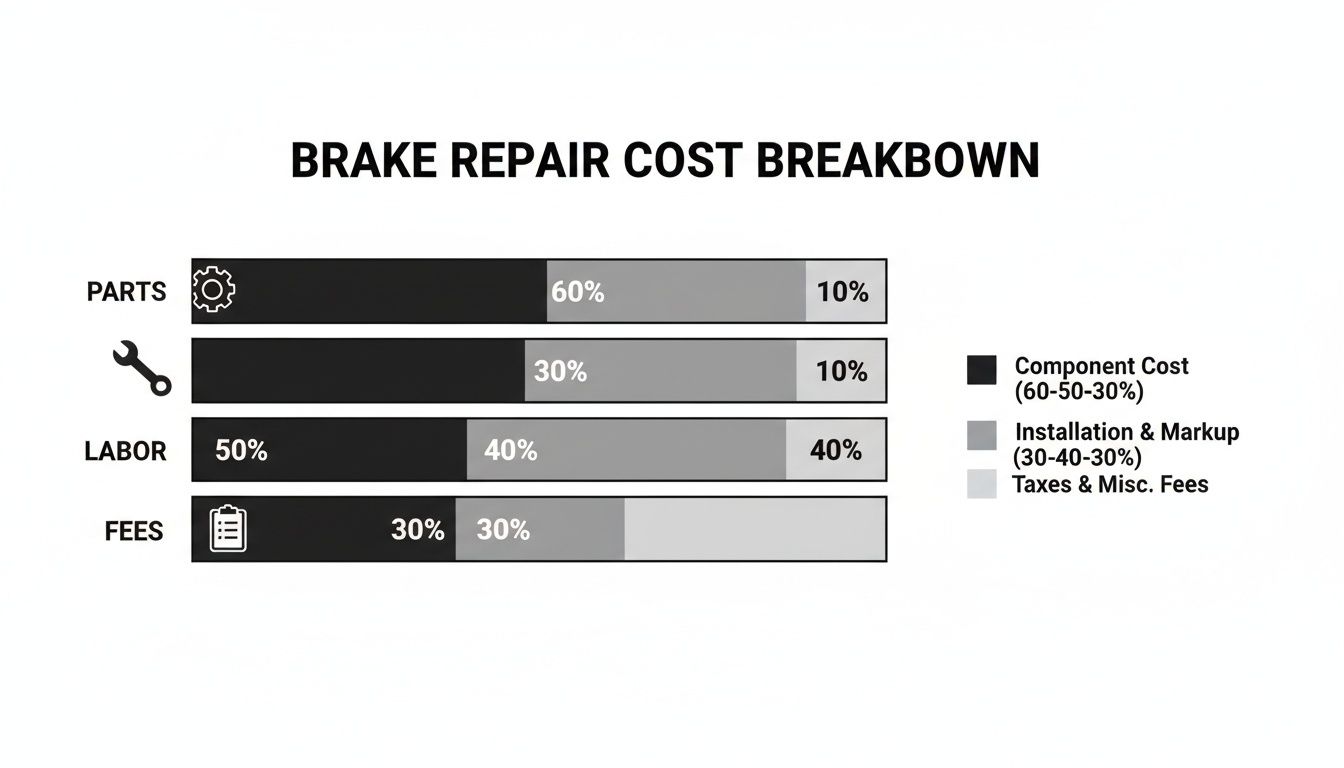
As you can see, the parts and the labor are the biggest chunks of the cost. It really drives home how important it is to use quality components and have them installed by a skilled technician.
A Quick Look at Local Pricing
To give you a clearer picture, I've put together some typical price ranges you might see for common brake jobs right here in the Richland Hills area. Just remember, these are ballpark figures. The only way to get a perfectly accurate quote for your car is to have us take a look at it in person.
Quick Brake Repair Cost Estimate Ranges
This table provides a summary of estimated costs for common brake repair jobs, helping you quickly find a price range relevant to your needs.
| Brake Service Type | Vehicle Type | Estimated Cost Range (Per Axle) |
|---|---|---|
| Brake Pads & Rotor Resurfacing | Sedan / Compact Car | $250 – $450 |
| Brake Pads & Rotor Replacement | Sedan / Compact Car | $350 – $600 |
| Brake Pads & Rotor Replacement | SUV / Light Truck | $450 – $800 |
| Caliper Replacement (Each) | All Vehicles | $200 – $400+ (Includes Labor) |
These figures should give you a solid starting point for budgeting.
A detailed, line-by-line estimate isn't just a courtesy; it's a mark of a trustworthy auto shop. It shows that the shop stands behind its pricing and is committed to ensuring you know exactly what you are paying for and why.
Decoding the Parts That Drive Your Brake Job Cost
Think of your car's brakes like a team of specialists working together. It’s not just one part doing all the work; it’s a whole crew of components that have to sync up perfectly to bring your car to a safe stop. When you get a brake repair cost estimate, you’re really just looking at the price tag for each player on that team.
Knowing what each part does makes it much clearer why some are more expensive than others and why skimping on quality is never a good idea. The total on your estimate is a direct reflection of what your specific car needs. A family minivan navigating constant stop-and-go traffic in Richland Hills is going to need tougher, heavy-duty parts than a lightweight sedan that mostly sees the open highway.
Let's break down the key components that add up on your final bill.
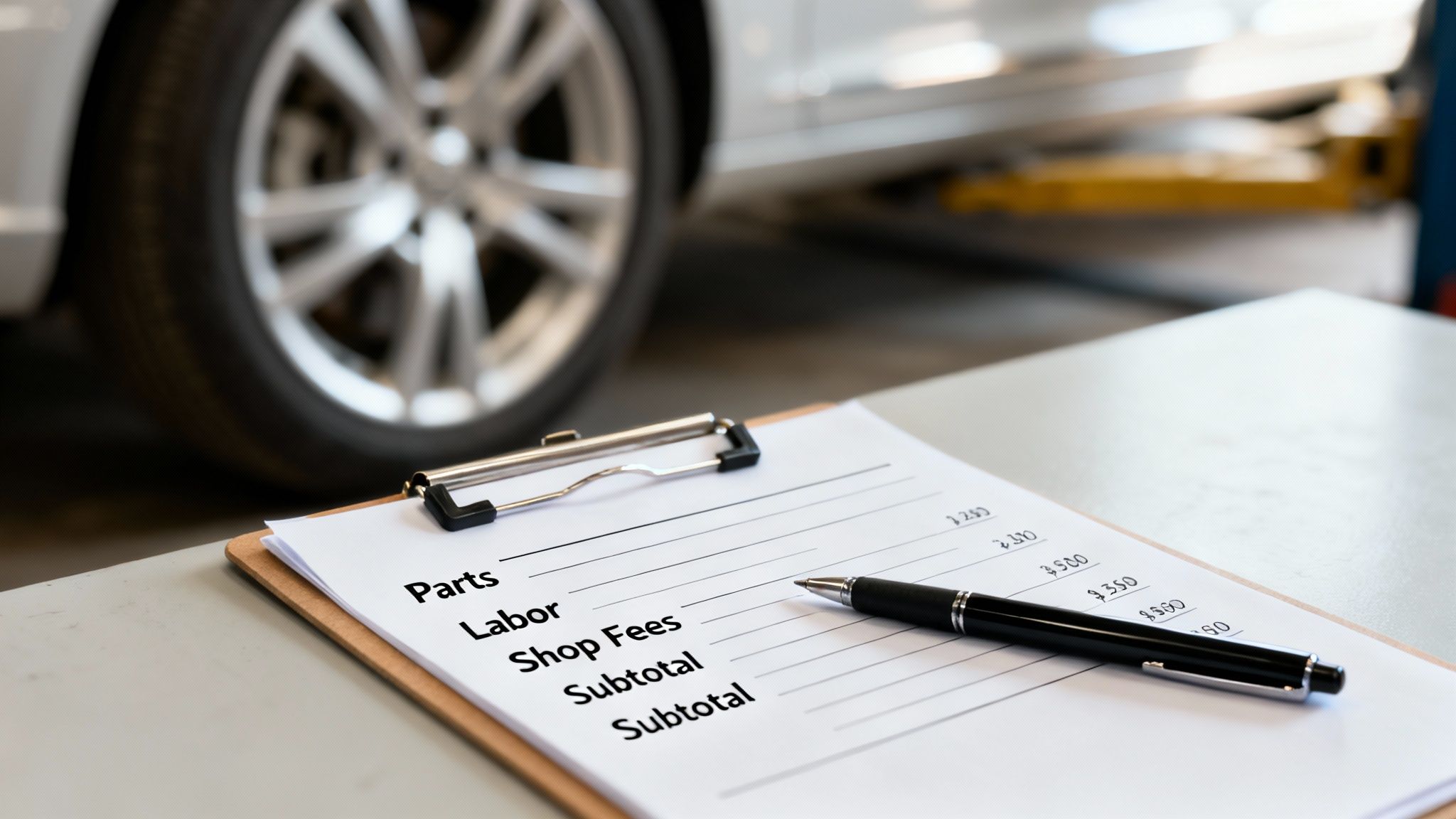
Brake Pads: The Workhorses of Your System
Brake pads are the friction material that literally does the heavy lifting, pressing against the rotors to slow you down. They're designed to wear out over time, making them the most common replacement item in the system. But here’s the thing: not all pads are created equal, and their material directly impacts performance and price.
- Semi-Metallic Pads: These are a very common, budget-friendly choice made from a mix of metals. They stop the car just fine but tend to be a bit noisier and create more of that ugly black dust on your wheels.
- Ceramic Pads: Made from ceramic fibers and other non-metallic materials, these are the premium option. They’re much quieter, produce less dust, and offer more consistent stopping power, especially under heavy use. They do have a higher upfront cost, though.
Choosing the right pad is a balancing act between your budget and your driving habits. For a closer look, you can learn more about our brake pad services and options to see what fits your vehicle best.
Rotors: The Foundation of Stopping Power
Your brake rotors (or discs) are the big, heavy metal discs that your wheels are bolted onto. When you hit the brakes, the pads clamp down hard on these rotors, and that friction is what stops the car. After thousands of miles of this intense heat and pressure, rotors can wear down, warp, or get deep grooves.
When a rotor is worn out, you generally have two options, each with a different effect on your estimate:
- Rotor Resurfacing: If the rotor is still thick enough to be safe and isn't badly warped, a technician can machine the surface to make it perfectly smooth again. This is the cheaper fix, but it's only possible if the rotor has enough metal left to work with.
- Rotor Replacement: If rotors are too thin, warped, or damaged beyond repair, they have to be replaced. This costs more because you're buying brand-new parts, but it’s a non-negotiable for safety and ensures your new brake pads last as long as they should.
Calipers and Brake Fluid: The Supporting Cast
Pads and rotors get all the attention, but other components are just as crucial for a complete and safe brake job. If they're in bad shape, they can definitely add to the final cost.
The brake caliper is the hydraulic clamp that holds the pads and squeezes them against the rotor. Sometimes, calipers can get stuck ("seize") or develop leaks, which means your pads can't engage or release correctly. A caliper replacement is a more involved repair and will add a noticeable amount to your bill.
Brake fluid is the unsung hero. It's the hydraulic liquid that turns the force from your foot on the pedal into clamping force at the wheels. Over time, it absorbs moisture from the air, which can cause internal corrosion and lower its boiling point—making your brakes feel spongy and less effective. A brake fluid flush is a key maintenance task that protects the whole system from the inside out.
Remember, the parts in your braking system are wear items, just like the soles on your shoes. Investing in quality components from the start means they'll last longer, perform better, and ultimately give you a safer ride.
How Your Car and Driving Style Impact the Final Price
One of the first questions we always get is, "Why does a brake job on a big truck cost so much more than on a small car?" It’s a great question, and the answer has nothing to do with quality—it's all about physics. The specific make and model of your vehicle, and even how you drive it around town, are two of the biggest factors that shape your final brake repair cost.
Think of it this way: you wouldn't use the same brakes on a Ford F-150 that you would on a Honda Civic. A heavy truck needs a ton more stopping power than a compact car. Those differences show up in the size, weight, and complexity of every single part in the brake system.
Vehicle Size and Weight Matter
The single biggest factor is the sheer weight of your vehicle. It takes a lot more force to stop a 5,000-pound SUV than it does to stop a 3,000-pound sedan.
This basic fact has a domino effect on the entire brake system.
- Larger, Thicker Rotors: To handle the intense heat without warping, trucks and SUVs need massive, heavy-duty rotors. More metal simply costs more to make.
- Bigger, Stronger Calipers: The calipers—the clamps that squeeze the pads against the rotors—have to be much more powerful. Many heavier vehicles use multi-piston calipers for extra clamping force, which are more complex and expensive.
- Heavy-Duty Brake Pads: The pads themselves have more surface area and are made from tougher materials to survive all that pressure and heat.
It’s pretty simple: a heavier vehicle needs beefier, more expensive parts to stop safely. That’s why we always start with a custom inspection—to see the exact hardware your vehicle was built with.
The Role of Advanced Brake Technology
Modern cars are loaded with safety tech, and the brake system is no exception. These features are fantastic for keeping you safe, but they also add a layer of complexity to the repair job, which can affect the cost.
Two common systems that can influence your estimate are:
- Anti-lock Braking Systems (ABS): This is what keeps your wheels from locking up in a panic stop. The system uses wheel speed sensors and a complex control module. If an ABS sensor fails, we need specialized diagnostic tools to pinpoint the problem and replace it, adding to the labor time.
- Electronic Parking Brakes (EPB): Gone are the days of the old handbrake lever. Many new cars use a button that activates electric motors to engage the rear brakes. To replace the rear pads on these cars, a technician has to use a scan tool to put the system into a special "service mode." It’s an extra step that isn't needed on older cars and can add a little to the labor cost.
These technologies are great, but they show why brake work isn't just about turning a wrench anymore. Our techs have to be experts in both mechanics and electronics.
The bottom line is simple: Your vehicle’s weight dictates the size of its brake parts, and its technology dictates the complexity of the repair. Both elements play a crucial role in shaping the final cost.
How Your Driving Habits Affect Brake Wear
Finally, how you drive has a direct impact on how long your brakes last. Your daily commute plays a huge role in the lifespan of your pads and rotors.
Just think about driving in DFW traffic versus cruising down a quiet country road.
- Stop-and-Go City Driving: This is the absolute worst for your brakes. Constant acceleration and hard braking at traffic lights generates a ton of heat, wearing down pads and rotors fast.
- Highway Cruising: Long drives with minimal braking are much easier on the system. Your brakes get plenty of time to cool down, which makes them last significantly longer.
Your personal driving style matters, too. If you're an aggressive driver who brakes late and hard, you're going to burn through brake pads much faster than someone who coasts to a stop. This is another reason why a personalized inspection is always better than a generic online quote.
The True Value of Professional Labor Costs
When you look over a brake repair cost estimate, the labor charge is usually the part that makes you pause. It's easy to understand the value of a physical part like a new rotor, but what exactly are you paying for with "labor"?
It’s about a whole lot more than just the time a technician spends with a wrench in their hand.
Think of it like hiring a surgeon. You aren't just paying for the minutes they spend in the operating room. You're paying for their years of training, specialized tools, diagnostic skills, and the professional, sterile environment they work in. Professional auto repair is no different.
What Goes Into an Hourly Labor Rate
That hourly rate on your estimate is a comprehensive number that covers the massive investment it takes to run a top-notch auto shop. It’s the backbone of safe, reliable service.
This rate covers crucial things like:
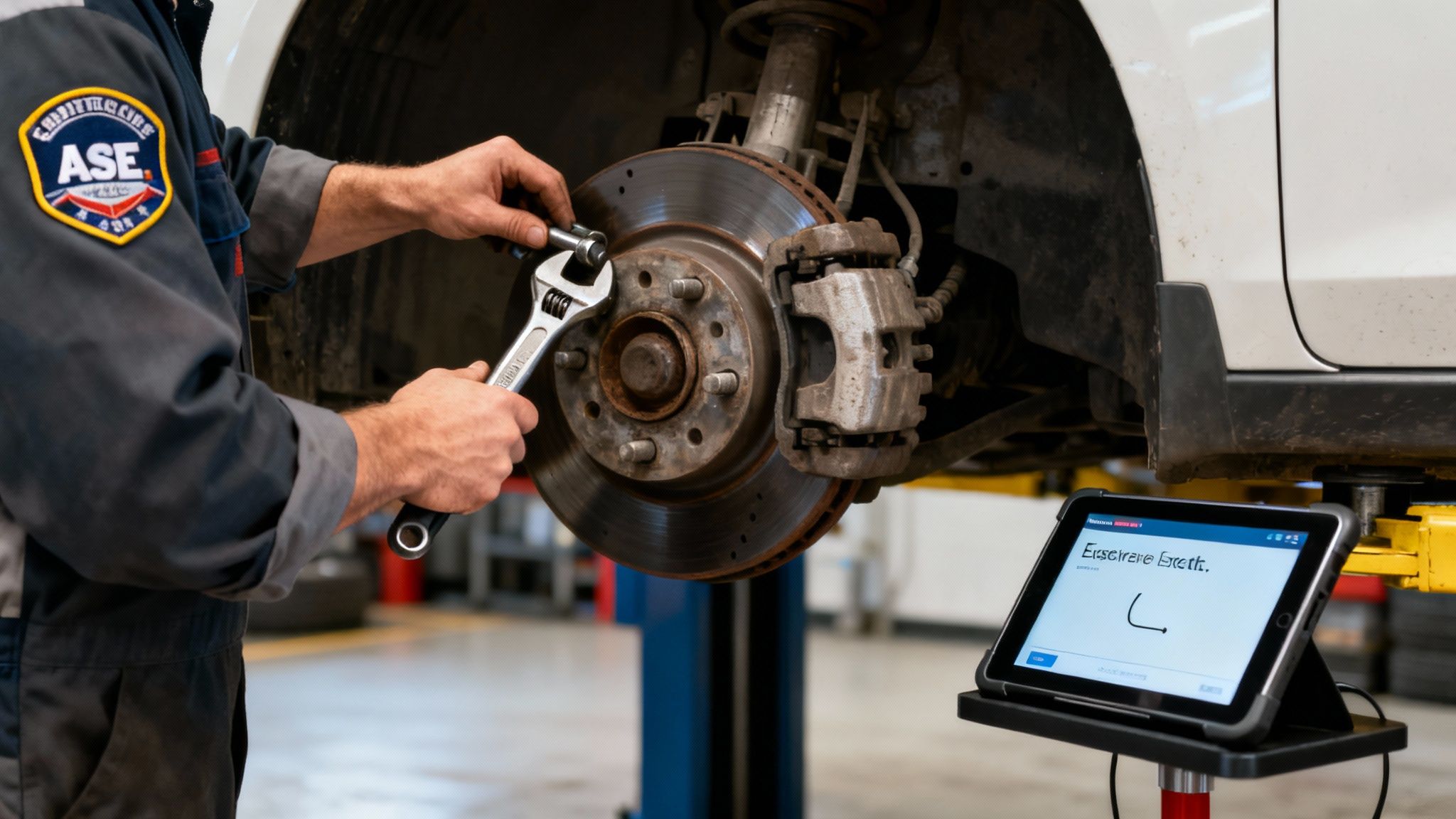
- Technician Expertise and Training: Our technicians are ASE-certified. That means they’ve passed tough exams and have to keep up with ongoing training to stay sharp on ever-changing vehicle technology.
- Specialized Diagnostic Equipment: Modern cars are packed with complex electronics. Servicing systems like ABS and electronic parking brakes requires advanced scan tools and software, and that equipment is a serious investment.
- Facility and Operational Costs: This bucket includes everything from the shop's rent and insurance to the hydraulic lifts and specialized tools needed to do the job safely and efficiently.
In short, the labor cost ensures a trained professional is handling one of your vehicle's most critical safety systems, using the right gear in a proper facility.
Paying for professional labor is an investment in safety and precision. It's the peace of mind that comes from knowing the job was done right by an expert—preventing more dangerous and expensive failures down the road.
When Simple Repairs Get Complicated
Labor hours on an estimate are based on industry-standard times for a specific job on a specific vehicle. But the real world often throws a curveball, introducing problems that take more time and skill to solve.
For example, what seems like a simple brake pad replacement can get involved fast. A technician might find a seized caliper pin, which stops the new pads from moving correctly. Freeing that pin without damaging the caliper bracket takes extra time and care.
Or maybe an ABS warning light points to a bad wheel speed sensor. Figuring out which sensor failed and then carefully replacing it without damaging the wiring harness adds to the total labor. These are the kinds of issues an experienced tech knows how to handle, but they show why a simple "pad slap" isn't always so simple.
Trusting an expert ensures these problems are caught and fixed correctly. That’s a key part of what you get when you find a good mechanic. To learn more about spotting a quality shop, our guide on how to find a good mechanic offers some great tips.
The Value of Experience and Safety
At the end of the day, the labor charge on your brake repair estimate buys you certainty.
You're paying for a technician's experience—not just to swap out worn parts, but to inspect the entire brake system for hidden problems you can't see. This preventative mindset is what separates a professional brake service from a parts-swapping job, and it's your best defense against future brake failure.
Getting an Accurate Brake Repair Quote in Richland Hills
Trying to get a firm brake repair cost estimate shouldn't feel like a shot in the dark. While you can find online calculators that give you a ballpark figure, a truly reliable quote takes more than just your car’s make and model. The only way to know the real cost is to have a professional get their eyes—and hands—on your vehicle.
Think of it this way: you wouldn't want a doctor to diagnose you over the phone. That squealing noise or vibrating pedal could point to a few different problems, from simple worn-out pads to a dangerously warped rotor. Without a physical exam, any price is just a guess. A technician needs to see the condition of your pads, measure your rotor thickness, and check for any hydraulic leaks to give you a real diagnosis.
Key Questions to Ask Any Auto Shop
Once a mechanic has actually inspected your brakes, they'll hand you an estimate. Before you give the green light for any work, it's smart to ask a few questions to make sure there are no surprises when you get the final bill. Being an informed customer is your best defense against unexpected charges.
Arm yourself with these critical questions:
- Is this estimate for one axle or both? Brake jobs are almost always priced per axle (front or rear). Asking this simple question can prevent your final bill from being double what you thought it would be.
- Does this price include new rotors or resurfacing? As we've covered, replacing rotors costs a lot more than just resurfacing them. Make sure you know exactly which service you're being quoted for.
- What's the warranty on the parts and labor? A good shop will always stand behind its work. Knowing the warranty terms gives you peace of mind down the road.
- Did you notice any other potential issues? This is a great way to uncover related problems, like a sticking caliper, that might need attention soon. It helps you plan ahead.
Asking these questions helps you get a crystal-clear picture of the repair and the value you're getting.
A transparent auto shop will welcome your questions and provide clear, direct answers. If a shop seems evasive or can't explain the charges in simple terms, it's a major red flag.
The Express Lube Advantage: No Appointment Needed
We get it—you're busy, and car trouble is always an unwelcome surprise. That’s why at Express Lube & Car Care in Richland Hills, we've made getting a professional brake inspection totally hassle-free. You never need an appointment to have one of our ASE-certified technicians take a look.
Just walk in whenever it’s convenient. Our team will perform a thorough, hands-on inspection to accurately figure out what's going on. Afterward, we’ll give you a clear, written estimate that breaks down exactly what your vehicle needs and why. We believe in total transparency, so you can make an informed decision about your safety without any pressure. Stop by today and see what a difference fast, expert, and honest service makes.
Smart Ways to Manage Your Brake Repair Costs
Keeping your final brake repair bill in check isn't about cutting corners on safety. It's about making smart, informed decisions that save you money in the long run. When you understand where the real value is, you can control costs without ever compromising on your car's most important safety system.
The first step? Stop looking at parts as just a line item on an estimate. It's tempting to grab the cheapest brake pads or rotors to lower the upfront cost, but that strategy almost always backfires. Think of quality parts as an investment. They’re built to last longer, perform better when you need them most, and protect other components from wearing out too soon.
Proactive Maintenance Beats Reactive Repairs
Honestly, the most effective way to keep brake repair bills from getting out of hand is to stay ahead of problems. Waiting until you hear that awful grinding sound or feel a vibration in the pedal means the fix is going to be more expensive. Regular check-ups are your best defense.
One of the most overlooked services is a brake fluid flush. Over time, brake fluid soaks up moisture from the air, which can cause rust inside the system and give you a spongy, unreliable pedal. A simple fluid exchange every couple of years can literally save expensive parts like your calipers and ABS module from failing.
A well-maintained brake system is a predictable one. Consistent inspections and timely fluid service are your best tools for avoiding the sticker shock of a sudden, major repair.
This proactive approach lets our technicians spot wear and tear early on, giving you more options and more control over the repair process.
Finding Savings With a Trusted Local Partner
Building a relationship with a local auto shop you trust is a huge part of managing costs. A shop that knows your car and your driving habits can give you better advice and help you figure out what needs to be done now versus what can wait. Here at Express Lube & Car Care, our goal is to provide real value for our neighbors in Richland Hills.
We know car repairs can pop up when you least expect them, so we offer a few ways to help:
- Community Discounts: We are proud to offer special discounts for military personnel, first responders, and healthcare professionals as a small thank you for everything they do.
- Monthly Specials: Our specials change all the time to help you save on common services. Check out our current brake service coupon to see how you can save on your next visit.
At the end of the day, combining quality parts, regular maintenance, and a local team you can count on is the best way to get fair pricing and total peace of mind.
Common Questions About Brake Repair Costs
When you get a brake repair cost estimate, it's natural to have a few questions. To clear things up, we've pulled together the answers to the most common things we hear from drivers right here in Richland Hills. Our whole goal is to give you honest, straightforward information so you feel completely in control of your car's maintenance.
Think of this as your practical guide—we're here to bust some common myths and give you the knowledge you need to make smart, safe decisions for your vehicle.
How Often Should I Get My Brakes Inspected?
As a solid rule of thumb, we recommend a complete brake inspection at least once a year or every 12,000 miles. The easiest way to remember is to just have us check them every time you're in for an oil change. It's a simple habit that pays off.
This proactive approach lets our ASE-certified technicians spot the early signs of wear on your pads or rotors. Catching these problems before they get serious can save you from a much bigger, more expensive repair down the road. But if you hear squealing, feel a grinding sensation, or your brake pedal feels spongy, get it checked immediately—no matter when you last had it done.
Can I Just Replace the Brake Pads and Not the Rotors?
That's a super common question, and the answer really boils down to the condition of your rotors. If your rotors are still thick enough to meet the manufacturer's safety specs and they aren't warped or scored with deep grooves, then yes, they can often be resurfaced. Resurfacing just shaves a very thin layer off the metal to make it perfectly smooth again.
However, if the rotors are too thin or badly damaged, they must be replaced. There's no way around it for safety. Slapping new pads on bad rotors is not only dangerous, but it's a total waste of money. You'll get awful noise, a shaky steering wheel, and your new pads will get shredded in no time. Our techs always measure your rotors to give you an honest, safety-first recommendation.
An honest mechanic will always prioritize your safety. The decision to resurface or replace rotors is based on precise measurements and manufacturer guidelines, not guesswork.
Why Was My Brake Repair Estimate So High?
Several things can drive up the cost of a brake job. For starters, heavier vehicles like trucks and SUVs, along with many European cars, need bigger, more robust brake components to stop them safely, and those parts cost more.
The price will also naturally go up if the repair involves more than just pads and rotors. Things like new calipers, brake lines, or ABS sensors all add to the final bill. Here at Express Lube, we hate sticker shock as much as you do. That's why we give you a detailed, line-by-line estimate and walk you through exactly what’s needed—and why—before we pick up a single tool. You are always in control.
Do You Offer Financing for Major Brake Repairs?
Yes, we absolutely do. We know that a sudden car repair can put a real strain on your budget. Express Lube & Car Care offers flexible financing options to help you manage the cost without putting off essential safety work.
This means you can get the critical repairs your vehicle needs right now and pay over time with payments that fit your budget. Just ask one of our service advisors for the details when you get your estimate. We're here to help you stay safe out there.
Your safety is our priority. For a fast, no-appointment-needed brake inspection and a transparent estimate you can trust, stop by Express Lube & Car Care in Richland Hills today. Visit us online to learn more about our services at https://www.expressluberichlandhills.com.