

Think of a professional fuel system cleaning as a deep-cleanse for your car’s engine. It’s a maintenance service designed to remove all the gunk—carbon buildup, grime, and other deposits—from the critical components that deliver fuel to your engine. The whole point is to clear out these tiny blockages to get your power back, smooth out your ride, and boost your gas mileage.
What Is Fuel System Cleaning And Why It Matters
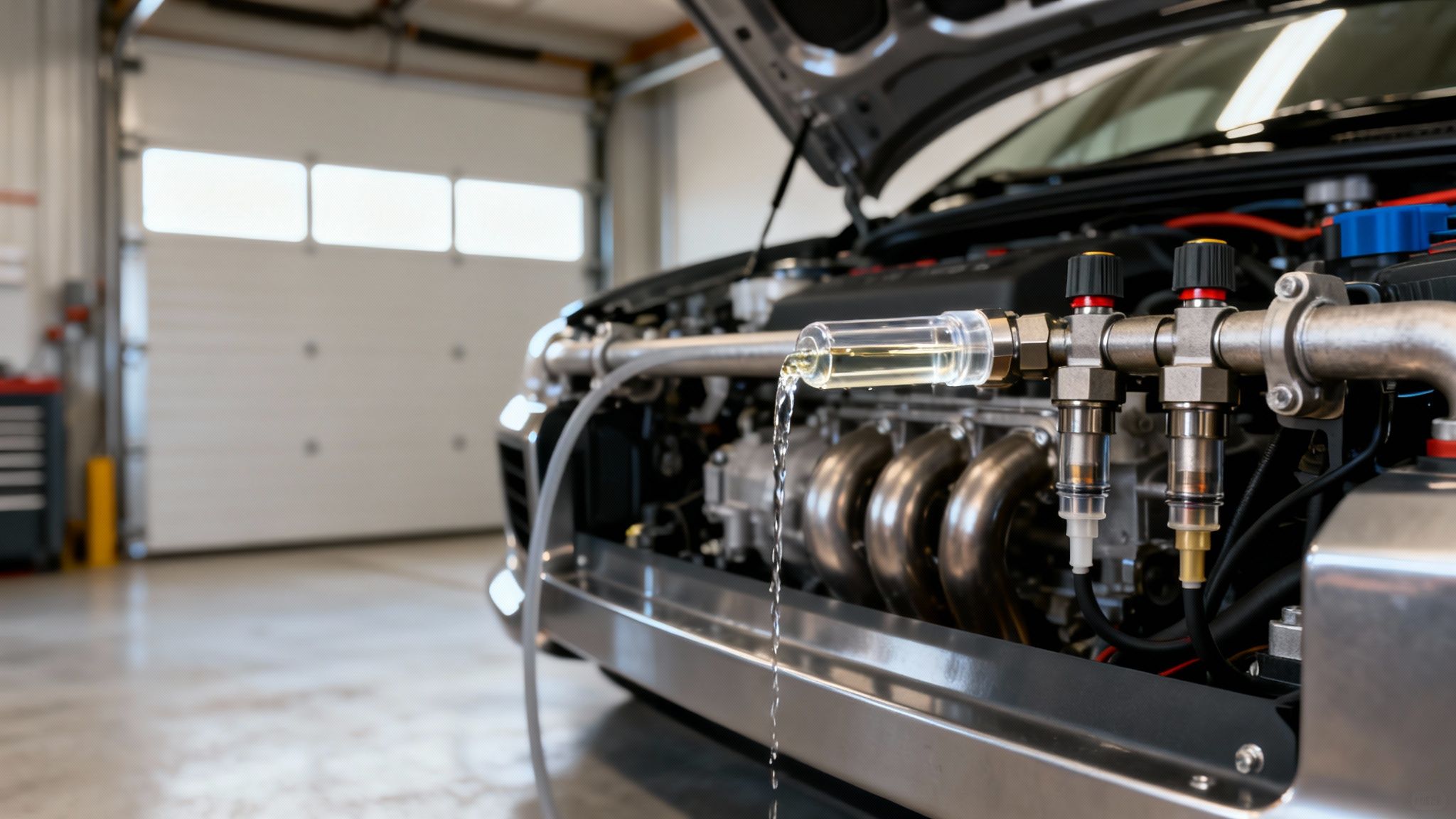
Your car's fuel system is like its circulatory system, pumping gasoline—the lifeblood—to the engine. But over thousands of miles, the unavoidable byproducts of burning fuel start to build up. Think of it like plaque in an artery; tiny particles of carbon and other impurities create a sticky, restrictive gunk on essential parts.
This buildup slowly chokes off the flow of fuel and air. A professional fuel system cleaning uses specialized tools and powerful, pro-grade solvents to dissolve and flush out these stubborn deposits from the entire network, getting things flowing freely again.
Key Components Cleaned During The Service
A thorough cleaning targets several key areas where that gunk causes the most trouble:
- Fuel Injectors: These are tiny nozzles that spray a super-fine mist of fuel. Even a microscopic clog can mess up the spray pattern, which wastes gas and kills performance.
- Intake Valves: These open and close to let the air and fuel mixture into the engine. When carbon cakes onto them, they can't seal properly, leading to power loss.
- Throttle Body: This is a little valve that controls how much air gets into your engine. When it gets grimy, it can stick, causing a rough idle or making your car hesitate when you hit the gas.
- Combustion Chambers: This is where the real action happens. A clean chamber means you get a more complete, powerful burn every time.
A clean fuel system isn't just about fixing something that's broken—it's proactive maintenance. It keeps today's high-tech engines running as efficiently as the manufacturer intended, directly impacting your car's power, fuel economy, and long-term health.
To give you a quick summary of the service, check out the table below.
Fuel System Cleaning at a Glance
| Aspect | Description |
|---|---|
| What It Is | A professional service that removes carbon, grime, and other deposits from your fuel system. |
| Why It's Done | To restore lost power, improve fuel efficiency, and ensure a smoother-running engine. |
| Key Parts Cleaned | Fuel injectors, intake valves, throttle body, and combustion chambers. |
| Main Goal | To clear blockages and restore the precise fuel and air delivery required for modern engines. |
This overview helps put the service into perspective before we get into the nitty-gritty of how your system gets dirty.
More and more drivers are catching on to how important this service is. The global market for fuel system cleaners hit USD 2.34 billion in 2024 and is expected to jump to USD 3.59 billion by 2033. That growth shows a clear understanding that letting these clogs build up can tank your fuel economy by a shocking 10-15%. You can learn more about these market trends from recent industry reports, which highlight just how much a dirty system can cost you at the pump.
How Your Car's Fuel System Gets Clogged
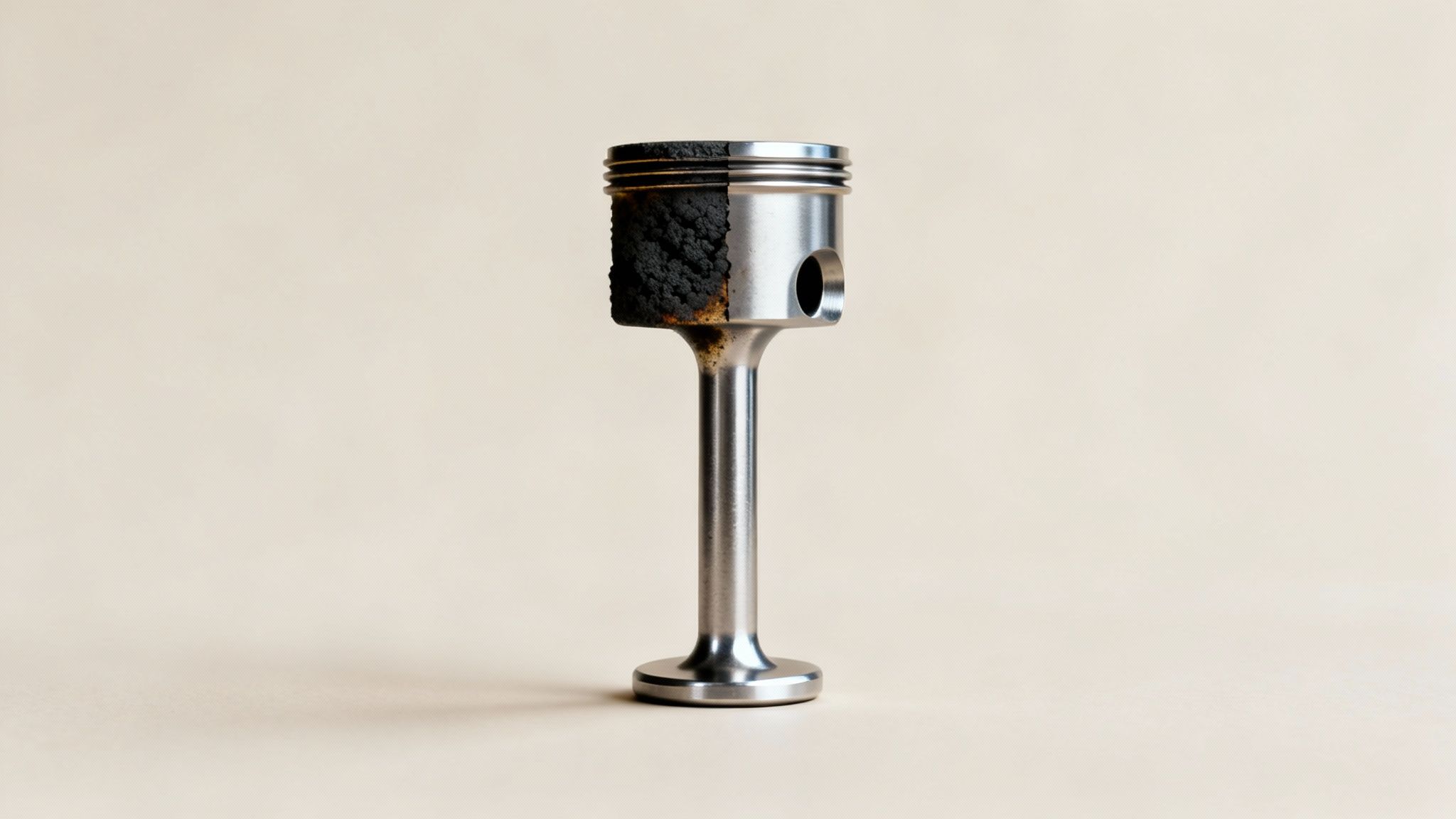
So where does all this performance-robbing gunk even come from? It’s not from a bad tank of gas or a single missed oil change. The truth is, it’s an unavoidable side effect of just… driving your car.
Every time your engine fires up, the combustion process creates tiny, unburnt particles of carbon. Think of it like microscopic soot. Over thousands of miles, these particles start sticking to hot metal surfaces inside the engine, building up layer by tiny layer. It's a slow, sneaky process that turns clean, efficient components into rough, sluggish ones.
The Main Culprits Behind The Buildup
The biggest source of these deposits is the fuel itself. Even the best gasoline has additives and impurities that don't burn away completely. Over time, they leave behind a sticky, varnish-like residue that gums up the works.
A few driving habits can make this buildup happen a lot faster:
- Short Trips: If most of your drives are just quick runs around town, your engine rarely gets hot enough to burn off these deposits. Cooler engine temps are the perfect environment for gunk to accumulate.
- Stop-and-Go Traffic: The constant idling and revving of city driving leads to less efficient combustion, which is a perfect recipe for creating more carbon.
- Fuel Quality: While all gas has to meet certain standards, some lower-quality fuels simply have more impurities that contribute to faster deposit formation.
This isn't a problem that stays in one spot. It’s a system-wide issue that slowly chokes the precise flow of fuel and air your engine needs, strangling its performance from the inside out.
From A Little Grime To A Major Problem
At first, the buildup is microscopic and you'd never notice it. But after thousands and thousands of miles, those tiny layers become thick, hardened carbon deposits. This is especially bad news for your fuel injectors, where the nozzles have openings finer than a human hair.
Even a tiny bit of carbon can mess up the injector's delicate spray pattern, causing it to dribble fuel instead of atomizing it into a fine mist. This wastes gas and kills power. On your intake valves, this carbon crust acts like a sponge, soaking up fuel and preventing the valves from sealing properly.
The whole process degrades your car’s performance so gradually that you might not even realize what you’ve lost until a proper what is fuel system cleaning service brings it back to life.
Signs Your Car Needs a Fuel System Service

Your car has its own way of telling you something’s wrong. When it comes to a dirty fuel system, the warnings are often subtle at first, but they’re definitely there if you know what to look for.
Catching these signs early can save you from much bigger headaches—and repair bills—down the road. Think of it as your car sending up a flare, signaling that the vital flow of fuel and air is getting choked off by gunk and buildup. Ignoring it is like letting a small crack in your windshield spread; it only gets worse.
Performance and Efficiency Red Flags
The first clues usually show up in how your car drives and how often you're stopping for gas. If any of these sound familiar, your fuel system is probably asking for a little TLC.
- Worse Fuel Economy: This is the big one. Are you hitting the pump more often than usual? That's a classic sign your engine is burning extra fuel to overcome internal clogs.
- Rough Idling: When you’re stopped at a light, does your car shake, shudder, or sound uneven? That’s often caused by a dirty fuel system messing with the air-fuel mixture, making the engine sputter.
- Hesitation When Accelerating: You hit the gas, but the car stumbles or hesitates before picking up speed. That lag often means clogged injectors aren't delivering the quick burst of fuel your engine needs.
These issues aren't just in your head. Industry data shows that performance-robbing deposits can impact 80-90% of vehicles after just 30,000-50,000 miles. In fact, the market for fuel injector cleaners has grown into a $1.4 billion industry—a clear sign of how common this problem really is.
More Serious Warning Signs
If you let those early symptoms slide, they’ll eventually escalate into more obvious and worrying problems. These are signs that the buildup has gone from bad to worse and needs immediate attention.
The dreaded 'Check Engine' light is your car's most direct cry for help. While it can mean a lot of things, a fuel system problem—like a cylinder misfiring because of a clogged injector—is a very common trigger.
You might also feel a serious loss of power, especially when trying to merge onto the highway or climb a hill. This happens when the engine is literally being starved of fuel and can't generate the power you're asking for.
Since many of these issues can overlap with other engine problems, it's always a good idea to understand all the critical signs your car needs a tune-up to get the full picture.
The Real Benefits of a Professional Cleaning
Dealing with a dirty fuel system isn't just about getting rid of a rough idle or sluggish acceleration. It's about bringing your car back to life and making a smart investment in its future. The results are real, and you'll often feel them the second you pull out of the shop—a professional cleaning delivers a punch that bottled fuel additives just can't land.
The first thing most drivers notice is restored fuel efficiency. By flushing out all the gunk and carbon deposits that choke off fuel flow, your engine can finally breathe and work the way it was engineered to. It stops burning extra gas just to get by, which means you start saving real money at the pump.
Experience Better Performance and Power
Beyond saving cash, you'll feel a massive difference in how your car drives. A professional fuel system service can restore that sharp, responsive feel you probably forgot you were missing.
Here’s what you can expect:
- Smoother Idling: No more embarrassing shakes and vibrations at stoplights.
- Quicker Throttle Response: When you hit the gas, the car just goes—no more frustrating delays.
- Confident Acceleration: Merging onto the highway or passing traffic feels safe and effortless again.
A deep cleaning of the fuel system is one of the fastest ways to get back lost horsepower and torque. It makes sure the engine gets the perfect air-fuel mix for a powerful, efficient burn, turning every last drop of fuel into forward motion.
Protect Your Investment and the Environment
Today's engines rely on high-tech, sensitive parts. The market for these advanced fuel injection systems is expected to balloon to US$171.7 billion by 2031. The problem is, these precise components get gummed up easily, and a dirty system can force your engine to guzzle 10-20% more fuel. A proper cleaning can bring it back to factory specs, potentially saving a driver $200-400 a year. You can explore more insights into these market dynamics to see why keeping these systems clean is so crucial.
On top of that, a clean system means a cleaner burn and lower emissions. That helps your car pass state inspections and reduces your environmental footprint. In the long run, this service protects expensive parts like fuel injectors and sensors from premature failure, saving you from a much bigger repair bill down the road.
DIY Fuel Additives vs. Professional Service
You've seen them lining the shelves at the auto parts store: dozens of bottles all promising a quick and easy fuel system cleaning. They're cheap, accessible, and a popular choice for many drivers. But how do they actually compare to having a professional do the job?
Think of it this way: using a DIY fuel additive is a lot like brushing your teeth.
It's a fantastic maintenance habit. For a newer car or as a preventative step, pouring a bottle in your tank every few thousand miles can definitely help slow down new carbon deposits from forming. It keeps things generally clean and running smoothly.
But when you're dealing with stubborn, baked-on gunk that's been accumulating for 50,000 miles? That little bottle just doesn't have the muscle.
When Maintenance Just Isn't Enough
A professional fuel system service is the equivalent of going to the dentist for a deep cleaning. This isn’t about maintenance anymore; it's a full-on restoration. We’re not just passively mixing a cleaner with your fuel and hoping for the best. We're actively targeting and blasting away that heavy buildup.
At a shop, technicians use pressurized tools and professional-grade solvents that are far more potent than anything you can buy off the shelf. That powerful combination dissolves and flushes out years of caked-on carbon from your injectors, valves, and combustion chamber.
This direct, aggressive approach is what makes a professional cleaning so effective at fixing problems that are already there. If your car is already idling rough or getting terrible mileage, a DIY additive is like trying to fix a cavity with a toothbrush—the problem is already too advanced. A pro-level cleaning is the only real way to get that lost performance back.
To give you a clearer picture, let's break down the key differences between these two approaches.
DIY Additives vs Professional Cleaning Service
| Feature | DIY Fuel Additives | Professional Service |
|---|---|---|
| Effectiveness | Best for light maintenance and preventing new buildup. | Highly effective at removing heavy, baked-on deposits. |
| Strength | Mild, consumer-grade formula. | Potent, professional-grade solvents. |
| Application | Poured directly into the fuel tank. | Applied directly to components with pressurized tools. |
| Best For | Newer vehicles or between professional cleanings. | Vehicles with symptoms or over 50,000 miles. |
| Cost | $10 – $25 per bottle. | $100 – $200+ per service. |
| Results | Subtle improvement, mostly preventative. | Noticeable restoration of power, MPG, and smoothness. |
Ultimately, while DIY additives have their place for keeping a clean system clean, they can't reverse the effects of long-term buildup. For that, you need the tools and expertise of a professional service.
That’s why it’s smart to bundle this job with other routine work. For example, getting it done at the same time as an oil and filter change service is a great way to take a comprehensive approach to keeping your engine healthy and happy.
Your Partner for a Healthy Fuel System
When it comes to something as vital as your car's fuel system, you need a shop you can trust. It’s not just about a quick fix; it’s about finding a long-term solution that keeps your vehicle running right. At Express Lube & Car Care, we’ve built our reputation on providing expert service with the convenience and transparency you deserve.
We know you can't hand your keys over to just anyone. That's why our shop is staffed exclusively by ASE-certified technicians. These are pros who have the training and real-world experience to pinpoint what’s actually causing your performance problems, not just take a wild guess.
The Right Tools for the Job
Our technicians use professional, pressurized equipment to deliver a deep clean that you’ll feel the moment you drive away. This isn’t like pouring a bottle of additive into your tank; our service is designed to aggressively break down and flush out years of baked-on carbon deposits from your injectors, valves, and the entire system.
We don't just clean parts—we restore performance. Our aim is to get your engine running as close to factory-fresh as possible, boosting its power, efficiency, and smoothness.
We also respect your time. Life is busy, so we’ve made our service as convenient as possible with our no-appointment-needed model. Just swing by when it works for you, and we’ll get you back on the road without the hassle.
You can see the difference between a simple DIY approach and a professional service in the graphic below.
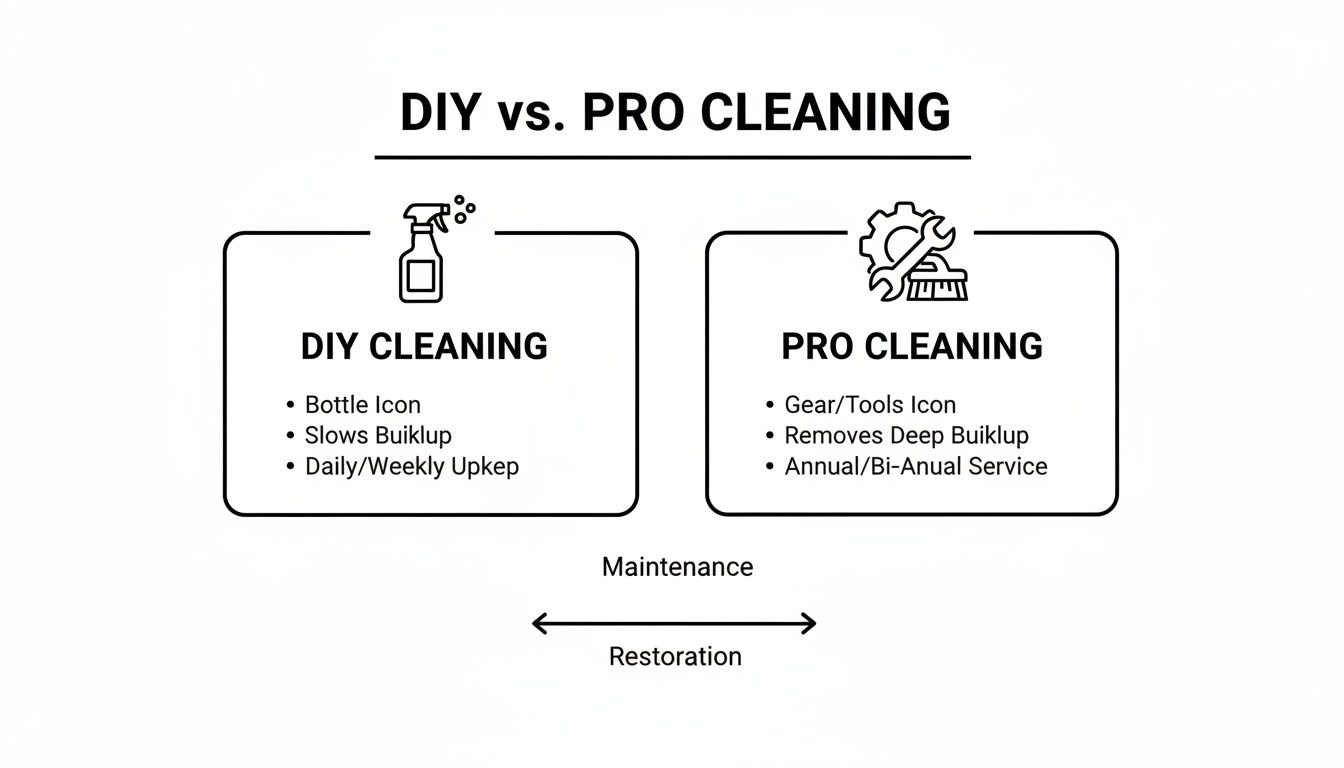
As the visual shows, while fuel additives can help maintain a clean system, only a professional service can truly reverse heavy buildup.
Honest Advice, No Surprises
Finally, we believe in clear communication and honest pricing. Before we touch your car, we’ll show you what we found, explain what your vehicle needs and why, and give you a straightforward quote. No jargon, no hidden fees, and no upselling—just solid advice to keep your car running strong for years.
Ready to feel the difference a professional clean can make? Learn more about our fuel system cleaning process and how we can bring your car’s performance back to life.
Fuel System Cleaning: Your Questions Answered
Even after getting the rundown, it's normal to have a few more questions pop up. Let's tackle the most common ones we hear from drivers so you can feel confident about what your car needs.
How Often Should I Have My Fuel System Cleaned?
There's no single magic number, but a great rule of thumb is to get a professional fuel system cleaning every 30,000 miles or so. Think of it as a checkup every couple of years.
That said, how you drive really matters. If your daily routine involves lots of short trips or you’re constantly stuck in stop-and-go traffic, that gunk can build up faster. In that case, you might want to consider it sooner. When in doubt, your owner’s manual is always the best place to check for your car's specific needs.
Does Every Car Really Need This Service?
Yep, pretty much any car with a gasoline engine will benefit from it, especially the newer ones. Modern engines, particularly those with gasoline direct injection (GDI), are notorious for carbon buildup on the intake valves. Because the fuel gets shot straight into the cylinder, it never gets a chance to wash over the valves and clean them off, letting deposits pile up quickly.
So whether you’re driving a brand-new performance car or a trusty older commuter, a clean fuel system is key to keeping it running strong and efficient.
A lot of people think that just using premium gas means you can skip a cleaning. While high-octane fuel definitely helps slow down deposit formation, it won't magically scrub away the stubborn gunk that’s already there. A professional service is the only way to really get the job done right.
What Should I Expect to Pay for a Professional Cleaning?
The cost can shift a bit depending on your vehicle and what exactly is included, but you can typically expect a professional fuel system cleaning to run between $100 and $200. It's certainly more than a bottle of additive from the auto parts store, but the results are on a completely different level—and they last.
Think of it less as a cost and more as an investment. When you restore your car's fuel economy, the service can start paying for itself at the pump. Plus, you'll be helping prevent much pricier repairs down the road from things like clogged-up fuel injectors or failing sensors.
Ready to get your car’s performance and efficiency back where it belongs? The ASE-certified pros at Express Lube & Car Care are ready to help, and you never need an appointment. Stop by today for a professional fuel system service that makes a real difference!