

Modern vehicles are marvels of engineering, built for durability and efficiency. Yet, even the most advanced cars require periodic attention to maintain peak performance. While the classic "tune-up" has evolved from its carburetor-adjusting roots, its modern equivalent-a comprehensive service of your engine's key components-remains essential for your vehicle's health, safety, and longevity. Ignoring the early warnings your car sends can lead to a cascade of problems, from poor fuel economy and frustrating performance issues to expensive, unexpected repairs down the line.
So, how can you tell when your car is asking for help? It communicates through a series of distinct signals. A sputtering engine, a sudden drop in gas mileage, or a new and unusual noise are all classic signs your car needs a tune up. This guide is designed to help you decode those messages. We will detail the eight most critical symptoms that indicate it's time for professional service.
For each sign, we'll explain the potential causes, what the symptom might feel or sound like from the driver's seat, and what you can do to investigate further. By understanding these warnings, you can take proactive steps to address minor issues before they become major headaches. This not only keeps your vehicle running smoothly but also protects your investment and ensures you and your family are safe on the roads of Richland Hills and beyond. Let's dive into the signals your car is sending and learn how to respond.
1. The Check Engine Light or Other Warning Indicators Are On
Think of your vehicle's dashboard as its primary communication tool. Among all the gauges and symbols, the Check Engine Light (CEL) is the most direct signal that your car's brain, the onboard diagnostic (OBD-II) system, has detected a problem. This amber icon is a clear sign your car needs a tune up, as it indicates an issue within the engine, emissions, or transmission systems.
Ignoring this warning is a significant risk. While the cause can sometimes be minor, like a loose gas cap, it often points to issues that directly impact performance and longevity. A solid, steady light requires prompt attention, but a blinking check engine light signals a severe problem, like a major engine misfire that could quickly damage expensive components like the catalytic converter.
What Triggers the Light?
The OBD-II system monitors hundreds of parameters. When a sensor reading falls outside its normal operating range, it stores a Diagnostic Trouble Code (DTC) and illuminates the CEL. Common culprits that a tune-up can address include:
- Worn Spark Plugs or Wires: This is a classic tune-up item. Failing plugs can't ignite the fuel-air mixture efficiently, causing misfires that trigger the light and harm fuel economy.
- Faulty Oxygen (O2) Sensor: This sensor measures unburned oxygen in the exhaust. If it fails, the system can't properly adjust the fuel mixture, leading to reduced MPG and increased emissions.
- Failing Catalytic Converter: Often a consequence of ignoring other issues (like misfires), a clogged converter restricts exhaust flow, severely impacting engine performance.
Actionable Steps to Take
When that light appears, don't panic, but don't delay. The first step is to identify the source of the problem with a diagnostic scan. At Express Lube & Car Care, our ASE-certified technicians use professional-grade scanners to retrieve the specific DTCs from your vehicle's computer. This eliminates guesswork and allows us to pinpoint the exact component that needs attention, ensuring you only pay for the necessary repairs. A comprehensive automobile tune-up is often the solution, addressing the root cause before it escalates into a more complex and costly failure.
2. Rough Idle or Engine Stumbling
When you're stopped at a traffic light, your engine should run so smoothly that you barely notice it. If you feel excessive shaking, hear sputtering sounds, or see the tachometer needle bouncing erratically, you're experiencing a rough idle. This is one of the most common signs your car needs a tune up, as it directly points to an imbalance in the delicate combustion process that powers your vehicle.

Ignoring a rough idle is a mistake because the underlying issue rarely fixes itself. This symptom indicates that your engine isn't running efficiently, which wastes fuel and places undue stress on critical components. What starts as a minor annoyance can escalate into more severe problems, including stalling, poor acceleration, and even long-term engine damage if left unaddressed.
What Causes a Rough Idle?
A smooth idle depends on a precise combination of fuel, air, and spark. When one of these elements is compromised, the engine stumbles. A comprehensive tune-up is designed to service the very systems responsible for these issues. Common causes include:
- Fouled or Worn Spark Plugs: The most frequent culprit. Old spark plugs struggle to create a strong enough spark to ignite the fuel mixture consistently, leading to misfires that you feel as vibrations.
- Dirty Fuel Injectors: Over time, carbon deposits can clog fuel injectors, preventing them from delivering the correct amount of fuel into the combustion chamber. This creates an unbalanced fuel-air ratio.
- Clogged Air Filter: A dirty air filter restricts airflow to the engine, choking it and disrupting the combustion process. This is a simple but critical tune-up component.
- Vacuum Leaks: Cracked or disconnected hoses can allow unmetered air to enter the engine, leaning out the fuel mixture and causing an unstable idle.
Actionable Steps to Take
If your car is shaking or stumbling at a stop, it's time to act. While you can visually inspect the air filter, diagnosing the exact cause often requires professional tools and expertise. At Express Lube & Car Care, our technicians can quickly diagnose the root of the problem, whether it's performing a fuel injector cleaning, replacing worn-out spark plugs, or identifying a hidden vacuum leak. Our walk-in service means you don't need an appointment to get answers. Addressing a rough idle promptly with a professional automobile tune-up not only restores your driving comfort but also improves fuel economy and prevents more costly repairs down the road.
3. Reduced Fuel Economy or Poor Mileage
Think of your car's fuel efficiency as a key vital sign for its overall health. If you find yourself visiting the gas station more frequently than usual, it's a strong indicator that your engine is no longer running at peak performance. This gradual or sudden drop in miles per gallon (MPG) is one of the most common signs your car needs a tune up, as it means the engine is working harder and burning more fuel to produce the same amount of power.
Ignoring poor fuel economy directly costs you money with every mile you drive. What begins as a minor inefficiency can signal an underlying problem that, left unaddressed, could lead to more significant engine wear and costlier repairs. It's an early warning that critical components are no longer doing their job correctly, and prompt attention is required to restore your vehicle's efficiency and reliability.
What Triggers Poor Mileage?
An engine is a complex system of interconnected parts, and a decline in the performance of any one of them can impact fuel consumption. A professional tune-up is designed to inspect and service these exact components. Common culprits behind a drop in MPG include:
- Dirty Air Filter: A clogged engine air filter restricts the flow of clean air into the combustion chamber. This forces the engine to burn more fuel to compensate, potentially reducing MPG by 5-10%.
- Worn Spark Plugs: As a primary tune-up item, fouled or worn spark plugs create an incomplete fuel burn. This inefficiency can lead to a significant 10-15% loss in fuel economy and cause misfires.
- Faulty Oxygen (O2) Sensor: This sensor provides critical data for the engine's fuel mixture. When it fails, the computer may inject too much fuel, causing a drastic drop in MPG, sometimes as much as 20%.
Actionable Steps to Take
When you notice your fuel budget shrinking, it’s time to act. The first step is to confirm the issue by tracking your mileage over a few fill-ups. At Express Lube & Car Care, our transparent and honest technicians can perform a comprehensive inspection to pinpoint the source of the inefficiency. We check everything from tire pressure and air filters to the condition of your spark plugs and ignition system. Our goal is to address the specific problem, whether it's a simple filter replacement or a more detailed engine service, ensuring you get back on the road with restored performance and optimal fuel economy. You can explore other factors affecting your vehicle's efficiency, and find out how synthetic oil impacts mileage to further improve your car's performance.
4. Difficulty Starting or Slow Engine Cranking
The sound of your engine turning over is something you take for granted until it changes. If you find yourself turning the key and hearing a slow, labored "chug-chug-chug" instead of a crisp start, it’s a clear indication your car needs a tune-up. This symptom suggests that one or more key systems responsible for starting the engine are struggling to perform their job correctly, a problem that often worsens in cold weather and can eventually leave you stranded.
Ignoring a slow start is a gamble. The underlying issue rarely resolves itself and almost always escalates. What begins as a minor inconvenience can quickly become a no-start situation, forcing you to deal with towing and emergency repairs. A complete failure to start is often preceded by weeks of slow cranking, making this one of the most important warning signs your car needs a tune up before a major inconvenience occurs.
What Triggers Starting Issues?
A successful engine start requires a perfect harmony between the ignition, fuel, and electrical systems. A tune-up is designed to inspect and service these very components. Common culprits behind slow or failed starts include:
- Weak Battery or Corroded Terminals: The battery provides the initial jolt of electricity to the starter motor. If the battery is weak or the terminals are covered in corrosion, it can't deliver enough power to crank the engine effectively.
- Worn Spark Plugs: Old spark plugs have a wider gap, requiring more voltage to create a spark. A struggling electrical system may not be able to provide this extra power, leading to a delayed start or a complete failure to ignite the fuel.
- Failing Fuel Pump or Clogged Filter: The engine needs fuel to start. If the fuel pump is weak or the filter is clogged, it can't deliver the necessary amount of fuel to the cylinders, causing the engine to crank without firing up.
Actionable Steps to Take
When your car hesitates to start, a systematic diagnosis is key. Instead of guessing, let our professionals pinpoint the problem. At Express Lube & Car Care, our ASE-certified technicians can quickly determine if the issue lies with your battery, ignition components, or fuel delivery system. We offer complimentary battery testing to immediately rule out or confirm one of the most common causes. This diagnostic approach ensures you're not replacing parts unnecessarily. By addressing the root cause, whether it's new spark plugs or a simple battery terminal cleaning, we restore your vehicle's reliability and your peace of mind. To better understand the signs, you can learn more about how to know if your battery is failing and prevent being caught by surprise.
5. Unusual Engine Noises (Knocking, Pinging, or Squealing)
Your car's engine should operate as a smooth, harmonious machine, but when it starts making sounds like a garage band practice, it's a clear cry for help. Unusual noises such as knocking, pinging, clicking, or squealing are auditory clues that something is amiss. These sounds are more than just an annoyance; they are often early warnings of problems that, if left unaddressed, can lead to significant and expensive engine damage.
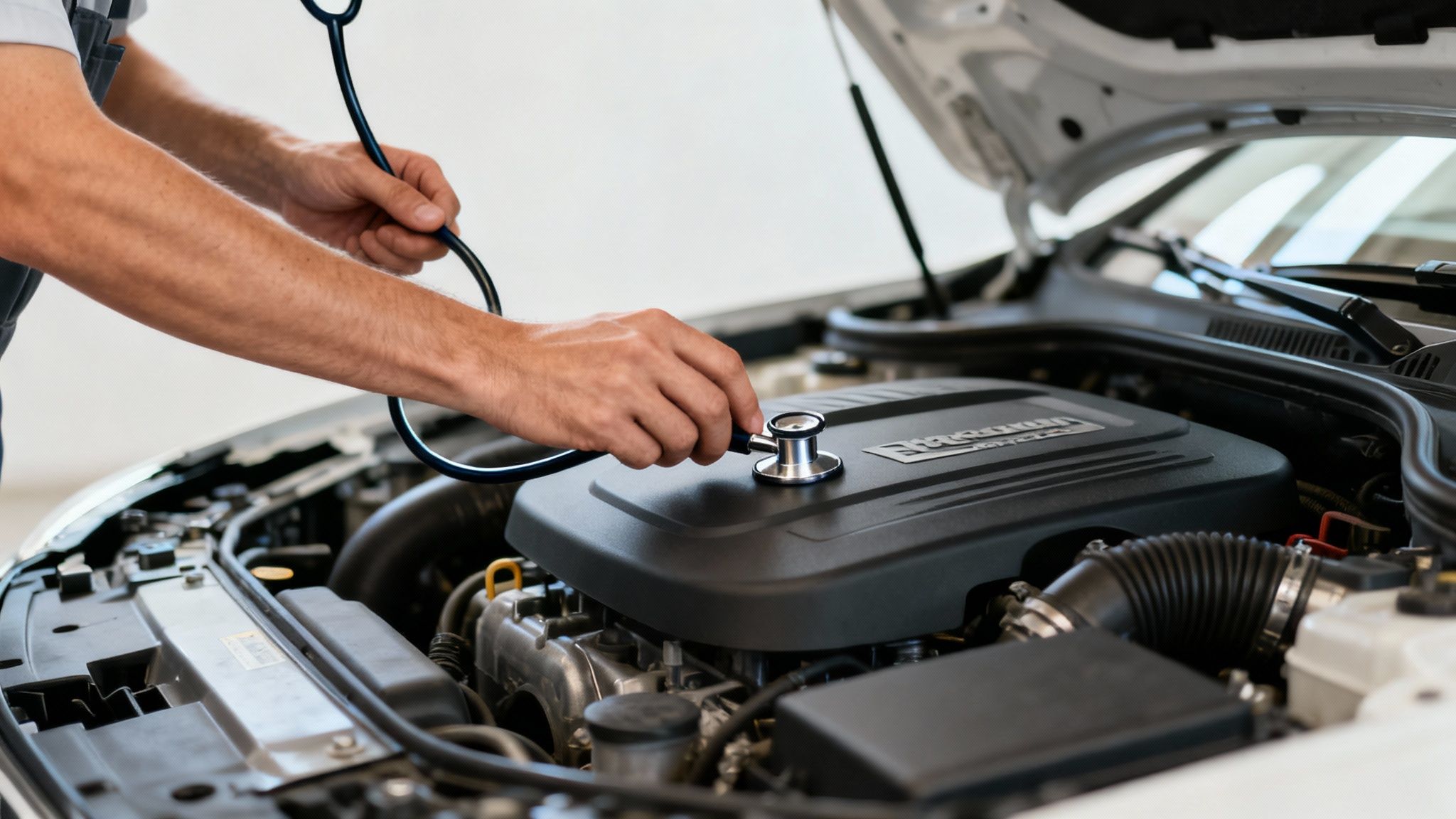
Paying attention to these new sounds is a critical part of vehicle ownership and one of the most common signs your car needs a tune up. A rhythmic squealing or chirping that changes with engine speed often points to a worn serpentine belt or a failing tensioner. A sharp, metallic knocking or pinging sound, especially during acceleration, can signal pre-ignition, a dangerous condition where fuel ignites too early in the combustion cycle.
What Triggers the Noise?
Different sounds point to different problems, many of which can be resolved during a routine tune-up. A professional diagnosis is key to distinguishing a minor issue from a major one. Common causes for these noises include:
- Engine Knock (Pinging): Often caused by using low-octane fuel in a vehicle that requires higher-octane gas. It can also result from carbon buildup on cylinder walls or worn spark plugs that are not firing correctly, leading to pre-detonation.
- Valve Train Ticking: A light, rhythmic clicking sound can indicate low engine oil or worn valve lifters. Proper oil levels are crucial for lubricating these components, and ignoring this sound can lead to severe top-end engine wear.
- Belt Squealing: A high-pitched squeal, particularly when you first start the engine or turn on the air conditioning, is a classic sign of a worn or loose serpentine belt. This belt powers essential accessories like the alternator, power steering pump, and water pump.
Actionable Steps to Take
Never ignore a new engine noise; it will not fix itself. Start by checking your engine oil level, as low oil is a frequent cause of ticking sounds. Also, ensure you are using the fuel octane level recommended in your owner's manual. For squealing or knocking, a professional inspection is the safest course of action. At Express Lube & Car Care, our experienced technicians are trained to be automotive detectives, using both advanced diagnostic tools and a well-trained ear to pinpoint the source of troubling sounds. We can inspect your belts, spark plugs, and other engine components to address the root cause, preventing a small noise from turning into a major repair bill.
6. Black Smoke or Excessive Emissions from Exhaust
Your car’s exhaust system is designed to release relatively clean, nearly invisible gases. When you notice thick, black smoke billowing from your tailpipe, it's a visual alarm. This is a classic sign your car needs a tune up because it means the engine is "running rich," or burning too much fuel and not enough air. This imbalance wastes gas, creates excessive pollution, and can cause significant long-term engine damage.

Ignoring black smoke is not an option, especially with state emissions inspections. The issue will not resolve itself and will almost certainly lead to a failed test. More importantly, the rich fuel mixture can foul spark plugs, overwhelm the catalytic converter, and leave behind damaging carbon deposits throughout the engine and exhaust system. Addressing the root cause promptly prevents this cascade of failures.
What Triggers the Smoke?
A precise air-to-fuel ratio is critical for clean combustion. When this ratio is thrown off and becomes too fuel-heavy, black smoke is the result. A tune-up is designed to inspect and correct the very components that regulate this mixture. Common culprits include:
- Clogged Air Filter: This is the simplest cause. If the engine can't breathe in enough air, the fuel mixture naturally becomes too rich.
- Faulty Oxygen (O2) Sensor: A malfunctioning O2 sensor can send incorrect data to the engine's computer, causing it to inject more fuel than necessary.
- Leaking or Malfunctioning Fuel Injectors: An injector stuck open will continuously dump fuel into the cylinder, leading to incomplete combustion and black smoke.
- Defective Fuel Pressure Regulator: If this component fails, it can send fuel to the injectors at a much higher pressure than required, flooding the engine.
Actionable Steps to Take
When you see black smoke, it’s time for immediate action to avoid more extensive repairs and ensure you pass your next emissions test. The first step is a thorough diagnostic to find the source of the fuel imbalance. At Express Lube & Car Care, our technicians can perform a comprehensive system check, starting with simple fixes like inspecting the air filter before moving to more complex diagnostics. We can identify the faulty component, whether it’s a sensor, injector, or regulator, and perform the necessary tune-up services to restore your engine's efficiency and eliminate harmful emissions for good.
7. Weak Acceleration or Loss of Power
Your vehicle’s ability to accelerate is a critical component of safe driving, allowing you to merge onto highways and pass other cars effectively. When you press the gas pedal and the response is sluggish, hesitant, or noticeably weaker than before, it’s a definitive sign your car needs a tune up. This loss of power compromises not only your driving experience but also your safety on the road.
Ignoring a decline in performance can lead to more significant issues down the line. A vehicle that struggles to get up to speed or climb hills is under constant strain. This symptom is a clear message that one or more key systems, such as ignition, fuel delivery, or exhaust, are not functioning at peak efficiency and require immediate professional attention.
What Causes a Loss of Power?
A loss of power is rarely caused by a single component failure; it’s often a symptom of an underlying system imbalance. A comprehensive tune-up is designed to inspect and correct these interconnected systems. Common causes include:
- Clogged Fuel Filter: Your fuel filter prevents dirt and debris from entering the engine. Over time, it can become clogged, restricting fuel flow and effectively starving the engine of the fuel it needs to accelerate properly.
- Worn Spark Plugs: Spark plugs create the spark needed to ignite the fuel-air mixture. When they become worn or fouled, they produce a weak spark, leading to incomplete combustion, wasted fuel, and a noticeable drop in engine power.
- Failing Mass Airflow (MAF) Sensor: This sensor tells the engine's computer how much air is entering the engine, which is crucial for calculating the correct fuel mixture. A faulty sensor provides inaccurate data, leading to a poor fuel-to-air ratio and sluggish performance.
- Restricted Exhaust System: A clogged catalytic converter or a damaged muffler can create backpressure in the exhaust system. This prevents exhaust gases from exiting efficiently, effectively choking the engine and severely limiting its power output.
Actionable Steps to Take
If your car feels like it's lost a step, the best course of action is a professional diagnosis to pinpoint the source of the power loss. At Express Lube & Car Care, our ASE-certified technicians perform a thorough power-loss diagnosis. We check everything from fuel pressure and ignition timing to sensor data and exhaust flow. This comprehensive approach ensures we identify the precise cause, whether it’s a simple filter replacement or a more complex sensor issue. By addressing the root problem, we restore your vehicle’s performance, ensuring you have the power you need when you need it most.
8. Stalling, Hesitation, or Misfiring During Acceleration
Few driving experiences are more unsettling than your engine suddenly losing power. If your car stalls at a stoplight, hesitates when you press the gas pedal, or feels like it's sputtering and jerking during acceleration, these are urgent signs your car needs a tune up. These symptoms directly point to a breakdown in the core combustion process, compromising both performance and, more importantly, your safety.
An engine stall, especially in heavy traffic or at an intersection, is a serious safety hazard. Hesitation and misfires, while less immediately dangerous, indicate that your engine is struggling to perform, leading to increased wear, terrible fuel economy, and the potential for a complete breakdown. These are not issues that will resolve on their own; they are clear indicators of underlying component failure.
What Triggers These Symptoms?
Stalling, hesitation, and misfiring all stem from an imbalance in the fuel, air, or spark needed for proper combustion. A professional tune-up is designed to diagnose and correct these exact problems, which often originate from a few key areas:
- Failing Spark Plugs or Ignition Coils: This is the most common cause. A worn spark plug can't create a strong enough spark to ignite the fuel, causing a cylinder to "misfire." A faulty ignition coil can't deliver the necessary voltage, leading to weak or inconsistent spark across one or more cylinders.
- Clogged Fuel System Components: A dirty fuel filter or clogged fuel injectors restrict the flow of gasoline. The engine becomes starved for fuel, especially during acceleration, causing it to hesitate or stumble.
- Vacuum Leaks: A cracked or disconnected vacuum hose allows unmetered air to enter the engine, disrupting the carefully calibrated air-fuel ratio. This can lead to rough idling, hesitation, and stalling.
- Faulty Fuel Pump: If the fuel pump provides inconsistent pressure, the engine won't receive a steady supply of fuel, causing intermittent power loss and stalling.
Actionable Steps to Take
When you experience these symptoms, immediate action is crucial. Note precisely when the problem occurs, such as during a cold start, when accelerating onto the highway, or while idling. This information helps our technicians diagnose the issue faster. Because stalling presents a significant risk, avoid busy roads if possible until the vehicle can be inspected.
At Express Lube & Car Care, our comprehensive tune-up service directly targets the causes of these dangerous symptoms. We inspect and replace worn spark plugs, test ignition components, clean fuel injectors, and check the entire system for leaks. Our walk-in service means you don't need an appointment to get a quick, accurate diagnosis, restoring your vehicle's smooth acceleration and preventing a potentially hazardous stall.
8-Point Comparison: Tune-Up Warning Signs
| Issue | Complexity 🔄 | Resources ⚡ | Expected Outcome 📊 | Ideal Use Case / Urgency 💡 | Key Advantage ⭐ |
|---|---|---|---|---|---|
| Check Engine Light or Warning Indicators | Medium 🔄🔄 — variable diagnostics | ⚡⚡ — OBD‑II scan (15–45 min), possible parts/labor | 📊 High impact — pinpoints fault codes; ⭐⭐⭐⭐ | 💡 Immediate when lit; blinking = urgent | ⭐ Early detection prevents major engine/emission damage |
| Rough Idle or Engine Stumbling | Medium 🔄🔄 — multi‑component inspection | ⚡⚡ — spark plugs, injectors, air filter; 30–90 min | 📊 Moderate impact — restores smooth idle & MPG; ⭐⭐⭐ | 💡 Schedule soon when vibration/idle felt | ⭐ Often resolved with routine tune‑up (cost‑effective) |
| Reduced Fuel Economy or Poor Mileage | Medium 🔄🔄 — multiple interconnected causes | ⚡⚡ — filters, sensors, fuel‑system checks; moderate time | 📊 High ROI — improved MPG (5–20% typical); ⭐⭐⭐⭐ | 💡 Track MPG; act when noticeable drop occurs | ⭐ Saves fuel costs; quick payback on service |
| Difficulty Starting or Slow Engine Cranking | Low–Medium 🔄🔄 — typically electrical/ignition | ⚡⚡⚡ — battery test/terminals, spark plugs; quick diagnosis | 📊 High impact — reliable starts; ⭐⭐⭐⭐ | 💡 Immediate if cranking slow or intermittent | ⭐ Often simple, fast fixes (battery/terminals) |
| Unusual Engine Noises (Knocking, Pinging, Squealing) | High 🔄🔄🔄 — varied & potentially severe causes | ⚡ — stethoscope/inspection, belts, fuel/engine checks; may need parts | 📊 Very high impact — prevents internal engine damage; ⭐⭐⭐⭐⭐ | 💡 Immediate — can indicate catastrophic risk | ⭐ Early repair avoids expensive internal engine failure |
| Black Smoke or Excessive Emissions from Exhaust | Medium–High 🔄🔄🔄 — fuel/air control systems | ⚡⚡ — emissions test, O2 sensor, injectors, air filter | 📊 High impact — restores emissions compliance & MPG; ⭐⭐⭐⭐ | 💡 Immediate — required for inspections/registration | ⭐ Fixes environmental/compliance issues quickly |
| Weak Acceleration or Loss of Power | Medium 🔄🔄 — may require performance tests | ⚡⚡ — fuel filter, spark plugs, sensors, compression checks | 📊 High safety impact — restores safe acceleration; ⭐⭐⭐ | 💡 Address before highway/long trips or heavy loads | ⭐ Improves drivability and safety when resolved |
| Stalling, Hesitation, or Misfiring During Acceleration | High 🔄🔄🔄 — complex, safety‑critical | ⚡ — comprehensive diagnostics (ignition + fuel systems) | 📊 Very high impact — restores reliability & safety; ⭐⭐⭐⭐ | 💡 Immediate — stalling in traffic is a serious hazard | ⭐ Resolves dangerous failures; often prevents accidents |
Your Next Step: Trust Express Lube & Car Care for Your Tune-Up Needs
Throughout this guide, we've explored the critical signals your vehicle sends when it's time for professional attention. From a suddenly illuminated check engine light to a frustrating drop in fuel economy, these aren't just minor annoyances; they are direct communications from your car's complex systems. Ignoring these signs your car needs a tune up is like ignoring a warning light on your home's circuit breaker. A small, fixable issue today can cascade into a costly, time-consuming repair tomorrow.
The core takeaway is that your vehicle's performance, efficiency, and longevity are directly tied to proactive maintenance. A rough idle, for instance, might just be aging spark plugs, but left unaddressed, it can lead to poor combustion, increased emissions, and even damage to the catalytic converter. Similarly, that hesitation you feel when accelerating isn't just a quirk; it's a symptom that could point to a clogged fuel filter or failing ignition coil, both of which compromise your safety and your engine's health.
Mastering the ability to recognize these symptoms transforms you from a passive driver into an informed and empowered vehicle owner. You gain the power to act before a breakdown occurs, saving yourself from the stress of a roadside emergency and the financial burden of extensive repairs. This knowledge is not just about mechanics; it's about control, safety, and financial prudence.
From Symptoms to Solutions: The Value of a Professional Tune-Up
Recognizing the problem is only half the battle. The next, most crucial step is finding a trusted partner to provide the solution. A modern tune-up is a sophisticated process that goes far beyond the simple adjustments of older vehicles. It's a comprehensive service designed to restore your engine's optimal performance, efficiency, and reliability. This typically includes:
- Replacing Spark Plugs: Ensures strong, consistent ignition for complete fuel combustion.
- Inspecting and Replacing Filters: A new engine air filter, fuel filter, and cabin air filter are vital for clean operation and efficiency.
- Checking the Ignition System: This involves inspecting coils, wires, and other components that deliver the spark.
- Fluid and System Checks: A technician will often inspect belts, hoses, and fluid levels to catch other potential issues.
Choosing a professional service ensures that the right parts are used and that advanced diagnostic tools can pinpoint the exact cause of your vehicle's symptoms. This precision work is what brings your engine back to factory specifications, protecting your investment for the long haul.
Why Richland Hills Drivers Choose Express Lube & Car Care
For drivers in Richland Hills and across Northeast Tarrant County, the choice is clear. At Express Lube & Car Care, we understand that your time is valuable and your vehicle is essential. We’ve built our service model around convenience and trust, eliminating the typical hassles of auto repair. Our no-appointment, walk-in model means you can address those warning signs on your schedule, not ours.
We are more than just a quick lube shop; we are a full-service auto care center staffed by ASE-certified technicians who are experts in diagnosing the signs your car needs a tune up. We provide transparent, upfront pricing and take the time to explain our findings, so you are always in control. Whether you're a busy parent, a fleet manager needing reliable service, or a budget-conscious commuter, we have a solution tailored for you. We are also proud to support our community with special discounts for military personnel, first responders, healthcare professionals, and our popular weekly Ladies Day.
Don't let a small symptom turn into a major headache. Listen to your vehicle, and take the proactive step to ensure its health. A well-maintained car is a safe, reliable, and efficient car, giving you peace of mind on every journey.
Ready to address the signs your car needs a tune up and restore its peak performance? Visit the experts at Express Lube & Car Care in Richland Hills for fast, friendly, and professional service with no appointment necessary. Check out our latest specials and learn more about how we can help at Express Lube & Car Care today.