

Learning how to check your car’s oil is one of the easiest and most important things you can do for your vehicle. It’s a simple, two-minute task that can genuinely save you thousands in engine repairs down the road.
The whole process is straightforward: park on level ground with a cool engine, pull out the dipstick, wipe it clean, push it all the way back in, and then pull it out again to get an accurate reading. This little habit is your best defense against major mechanical problems.
Why This Two-Minute Check Saves You Thousands
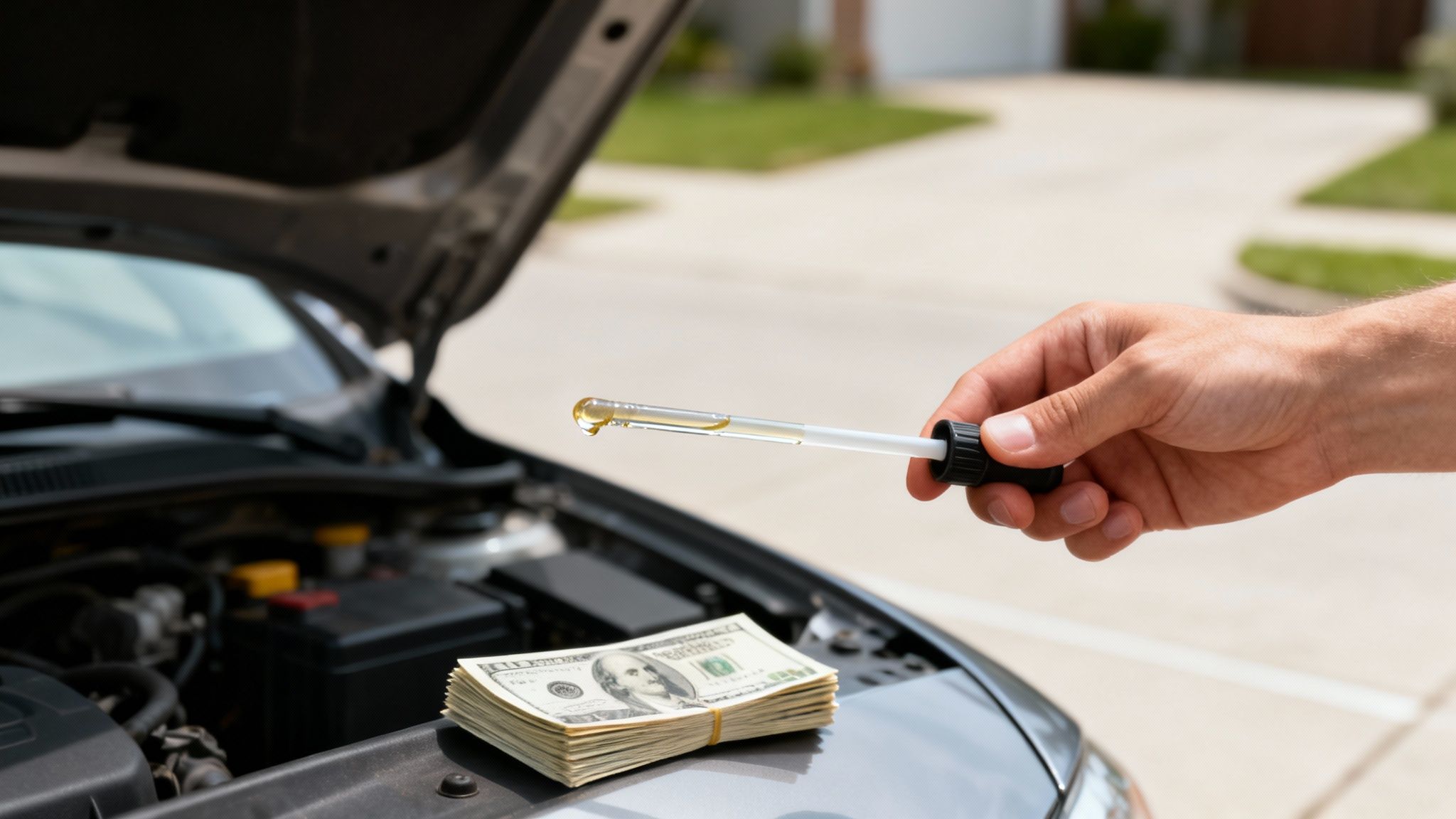
Think of your engine oil as its lifeblood. It’s constantly working to lubricate moving parts, cut down on friction, keep components clean, and pull heat away from the engine core. When that oil level gets too low, all those critical jobs stop getting done, leading to rapid wear and tear.
Ignoring a low oil light or skipping this simple check is one of the fastest ways to cause catastrophic engine damage. Without enough lubrication, metal parts start grinding against each other. This can quickly lead to overheating, warped components, and eventually, a completely seized engine. The cost to replace an engine can easily run into the thousands of dollars, completely dwarfing the tiny amount of effort it takes to check your oil once a month.
The Real-World Impact of Low Oil
It’s surprising how many roadside breakdowns are tied directly to low or empty oil levels. This isn’t just a minor inconvenience; it’s an almost entirely preventable problem that has serious consequences. By proactively checking your oil, you can spot issues early on, whether it’s a slow leak you didn’t know you had or just an engine that naturally burns a little oil between changes.
This small habit is a smart investment in your vehicle’s longevity and your own peace of mind. Knowing your engine is properly lubricated provides confidence on every drive, from daily commutes to long road trips.
This guide will walk you through both the classic dipstick method and how to read modern electronic monitors. We’ll also touch on the recommended oil change interval with synthetic blend oils to help you stay on top of your maintenance schedule. Mastering this one skill gives you the confidence to keep your engine running smoothly, no matter what you drive.
Getting Set for an Accurate Reading
Before you even pop the hood, a few simple prep steps can make all the difference between a good oil reading and a bad one. Getting this right is the key to knowing exactly what’s happening inside your engine.
First things first: make sure your car is parked on a level surface. This is non-negotiable. If you’re on even a slight incline, the oil will pool to one side of the pan, and the dipstick will give you a completely inaccurate reading—either way too high or way too low. Your driveway might look flat, but it’s worth taking an extra second to find the flattest spot you can.
The Great Debate: Hot or Cold?
Now, let’s talk about engine temperature. You can check your oil when the engine is cold, but for the most reliable measurement, you want a warm engine that’s been turned off for about 5 to 10 minutes.
Why the wait? It’s simple:
- Driving warms the oil, letting it thin out and circulate properly.
- Letting it sit for a few minutes allows all that oil to drain back down into the pan where the dipstick can actually measure it.
If you check a totally cold engine, the reading might be a bit high. Check it the second you turn it off, and it’ll look low because a good amount of oil is still sitting in the top half of the engine.
Giving a warm engine a few minutes to settle is the pro-level trick. It takes out all the guesswork and gives you a true picture of your engine’s health.
Finally, have your tools ready. You don’t need much—just a clean, lint-free cloth or a paper towel. Having it in your hand before you pull the dipstick saves you from fumbling around later. And if you think you might need to add a quart, grabbing a funnel now will save you from a messy spill. Just be careful around the engine bay, as parts like the exhaust manifold can stay dangerously hot for a while.
Mastering the Classic Dipstick Method
For many of us, the trusty dipstick is still the best way to check engine oil. It’s simple, reliable, and gives you a direct look at what’s happening inside your engine. Once your car is prepped and ready, it’s time to get your hands a little dirty.
First things first, you need to find the dipstick. It’s almost always near the front of the engine, and carmakers make it easy to spot with a brightly colored O-ring handle, usually yellow or orange.
Pull it out, but don’t bother checking the level on this first go. Oil gets splashed all over the place while the engine is running, so that first reading is totally useless. Instead, grab a clean, lint-free rag or paper towel and wipe the entire metal end clean. This is the secret to getting a clear, accurate measurement.
Now, slide the clean dipstick all the way back into its tube until it’s fully seated. This is the real test. Pull it out again, holding it horizontally so the oil doesn’t run and skew your reading.
Reading the Markings Correctly
Every dipstick has markings that show the safe operating range, but they can look a little different depending on your car:
- Two Dots or Holes: The ideal oil level is somewhere between these two points.
- Crosshatched Area: This textured section is the “safe zone.” As long as the oil level is in this area, you’re good.
- L and F Lines: “L” means low and “F” means full. You want the level to be at or just below the “F” line, but never over it.
This quick visual guide shows just how simple the prep work is.
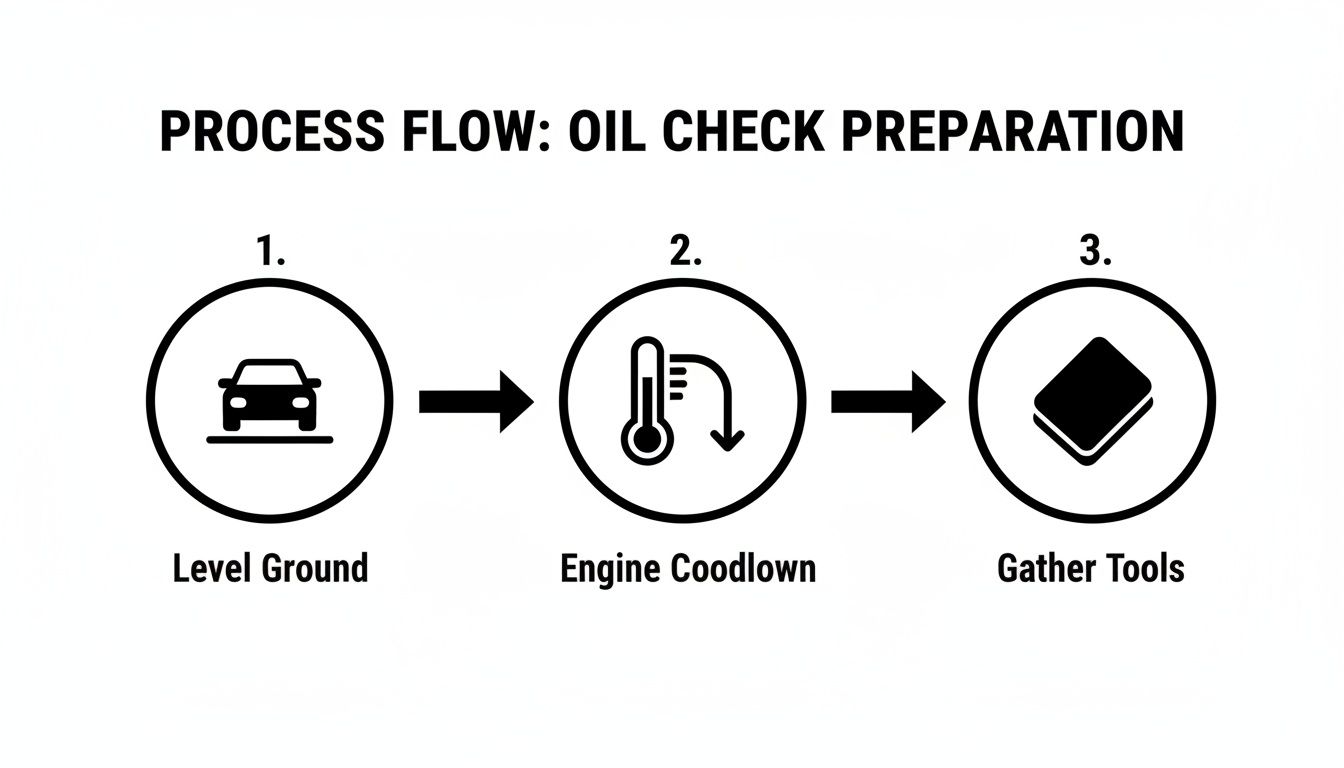
Nailing these three steps—parking on level ground, letting the engine cool down, and having a rag handy—takes all the guesswork out of the process.
Becoming a Driveway Detective
The dipstick tells you more than just the oil level; it’s a window into your engine’s health. Good, healthy engine oil should have a translucent, amber-brown color. If what you see is dark, gritty, or milky, you’ve got a problem brewing.
A milky, coffee-colored appearance, for instance, is a classic sign that coolant is leaking into your oil. That’s a serious issue that needs a professional mechanic right away.
To help you figure out what you’re seeing, here’s a quick reference guide.
Interpreting Your Dipstick Reading
| Dipstick Reading | What It Means | Recommended Action |
|---|---|---|
| Clean, amber oil at “Full” | Your oil level and condition are perfect. | No action needed. Check again next month. |
| Oil level below “Low” / “Add” | Your engine is low on oil and needs it ASAP. | Top off with the correct type of oil. |
| Dark or black oil | The oil is old and dirty, losing its ability to protect. | Schedule an oil change soon. |
| Milky or foamy oil | Coolant is likely leaking into your oil. | Stop driving. Get your car to a mechanic immediately. |
| Oil with metal specks | There may be internal engine damage. | This is a serious sign. Visit a repair shop for diagnosis. |
This quick look can save you a ton of headaches down the road.
Neglecting this simple check can have huge consequences. Engine failure from low oil is behind roughly 5% of all vehicle breakdowns in the U.S., which adds up to over 1.2 million roadside incidents every year. You can learn more about the data behind vehicle maintenance trends.
If the oil is just a bit low, you can top it off. But if it looks dirty or you spot glittery metal specks, don’t just add more—that’s a clear signal it’s time for a full oil change. This is exactly how you catch small problems before they turn into major, wallet-draining repairs.
Navigating Your Car’s Electronic Oil Monitor
More and more, carmakers are ditching the old-school dipstick for a slick electronic oil monitor. Instead of popping the hood, you can now see your oil level right on the dashboard. It’s a convenient piece of tech that uses a sensor down in the oil pan to give you a real-time reading.
Of course, every manufacturer does it a little differently. In a BMW or Audi, you’ll probably find it tucked inside a “Vehicle Status” or “Car Service” menu. Hop into a newer Ford or Honda, and you might have to cycle through options on your instrument cluster using the steering wheel buttons.
Finding and Trusting the Reading
Your owner’s manual is your best friend here, since the exact steps can vary so much. But generally, you’ll do something like this:
- Turn the ignition on, but don’t start the engine. Some cars require the engine to be warm, so check your owner’s manual.
- Use your infotainment knob or steering wheel controls to get to the vehicle info screen.
- Look for an “Oil Level” option and select it.
While these systems are handy, they’re not perfect. Sensors can fail, and a bad sensor can give you an incorrect reading. You still have to pay attention to your car.
If the screen suddenly shows your oil level dropped from full to empty overnight, be skeptical. Or if you get a low oil warning but the car is running normally with no other symptoms, the sensor may need to be checked.
When something seems unusual, it’s best to have a mechanic you trust take a look. They can verify the oil level and determine whether you’re dealing with a sensor issue or an actual engine problem.
So You’ve Checked the Oil… What’s Next?
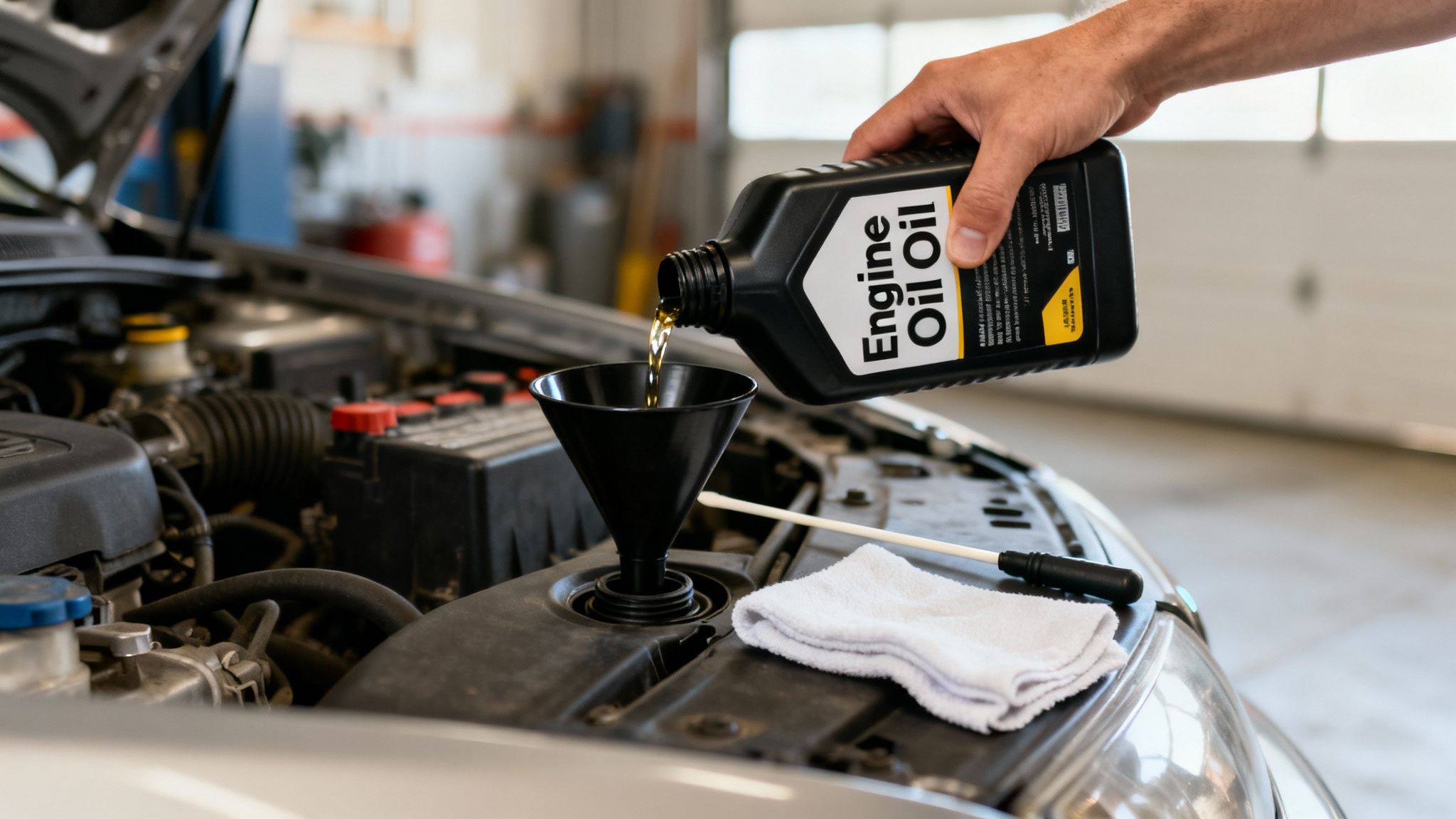
Alright, you’ve pulled the dipstick and have your reading. But that’s just step one. What you do next is what really protects your engine. If the level is low, it’s time for a top-off—but there’s a right way to do it.
First things first: you must use the right type of oil. Grab your owner’s manual and find the exact weight your engine needs, like a 5W-30 or 0W-20. Using the wrong oil can affect performance and potentially cause damage.
How to Add Oil Without Overdoing It
When you’re ready to pour, go slow. Add just a little at a time—about a quarter of a quart is a good start. Give it a minute to drain down into the oil pan, then wipe the dipstick and check the level again. Keep this up until you hit the “Full” mark.
Never overfill your engine. Too much oil can be churned into foam by the crankshaft, potentially affecting lubrication and causing engine problems.
This kind of careful maintenance is more important than ever. Americans are holding onto their cars for a record 12.8 years on average. That longevity doesn’t happen by accident; it’s the result of routine maintenance and care. You can discover more insights from the Auto Care Factbook.
When Topping Off Is Just a Band-Aid
Sometimes, just adding more oil isn’t the answer. Take a closer look at the oil on the dipstick.
- Is it dark, thick, or gritty? The oil may be due for replacement.
- Is the level shockingly low? You could have a leak or your engine might be burning oil.
In either case, a top-off may only be a temporary fix. Consider scheduling professional oil change services so the vehicle can be inspected and the old oil and filter replaced when needed.
Common Questions About Checking Car Oil
Even after you get the hang of checking your oil, a few questions always seem to pop up. Let’s tackle some of the most common ones so you can feel confident about what you’re seeing on that dipstick.
A good rule of thumb is to check your oil once a month. If you have an older car that’s known to burn oil, or if you take a lot of long road trips, checking it more frequently can be a smart habit.
What Does Milky Oil Mean?
If you pull out the dipstick and see oil that looks milky, frothy, or like a creamy cup of coffee, that can indicate coolant contamination and should be professionally diagnosed.
If you find milky oil, avoid driving the vehicle until the cause has been properly diagnosed, as coolant contamination can potentially lead to serious engine damage.
Another thing people often wonder about is whether they should use conventional or synthetic oil. Both have their place, but knowing the difference can help you make a better choice for your car’s long-term health. You can learn more by exploring whether synthetic oil is better for your car in our detailed guide.
Finally, what if you accidentally add too much oil? Don’t ignore it. Overfilling can cause problems, so excess oil should be drained until the engine is at the manufacturer’s specified level.
Checking your oil between services can help identify a low oil level, but it doesn’t replace scheduled maintenance. Learn more about our professional oil change and preventive maintenance service in Richland Hills.