

That alarming metallic ping, rattle, or deep thump coming from under your hood is more than just a background noise—it’s your car’s way of screaming for help. An engine knocking sound is a clear warning that something isn’t right inside your engine.
What Is That Engine Knocking Sound Telling You?
Think of it like pushing a child on a swing. When you push at just the right moment, the swing flies high and smooth. That’s a healthy engine, with controlled combustion pushing the piston down powerfully and cleanly.
But if you push at the wrong time, the swing jerks and the chains rattle. That awkward jolt is exactly what happens inside your engine during a knock. It’s also called detonation or pinging.
Instead of one smooth, controlled burn, the fuel ignites in multiple, uncontrolled bursts. These mini-explosions collide, creating a shockwave that hammers against the piston and cylinder walls. That’s the “knock” you hear, and it’s a sound you should never ignore.
Decoding The Different Types Of Knocks
Not all knocks sound the same, and the specific noise is a huge clue about the root cause and how serious it is. A light pinging when you accelerate is a world away from a deep, heavy thump that gets louder as the engine revs.
Let’s say you’re driving around Richland Hills, Texas, and you hear a faint, metallic pinging sound when you step on the gas. One of the most common culprits is using the wrong fuel. In fact, industry data from sources like ModernAutoService.net suggests that 25-30% of knocking issues in modern cars come from using low-octane gas in an engine that requires a higher grade.
Key Takeaway: An engine knock is the sound of one or more uncontrolled explosions inside your engine’s cylinders. Ignoring it is like ignoring a fire alarm—the problem will only get worse.
To help you figure out what you might be hearing, we’ve put together this quick reference table. It matches common engine noises with their likely causes and tells you how quickly you need to act.
Quick Guide to Engine Knocking Sounds
| Type of Knocking Sound | Most Likely Cause | Recommended Action |
|---|---|---|
| Light pinging on acceleration | Low-octane fuel or carbon buildup | Low Urgency: Try higher-octane gas. If it persists, schedule an inspection. |
| Consistent light tapping | Worn spark plugs or low oil level | Medium Urgency: Check your oil and schedule a diagnostic visit soon. |
| Deep, rhythmic thumping | Worn rod bearings or internal damage | High Urgency: Stop driving immediately and have your vehicle towed for repair. |
While this table is a good starting point, any persistent engine noise is worth getting checked out by a professional. Catching a problem early can save you from a catastrophic and expensive failure down the road.
The 5 Most Common Causes of Engine Knock
So, you can hear that dreaded knock. Now let's figure out why it's happening. Knowing what's going on under the hood helps you have a smarter conversation with your mechanic and understand what to expect. Most knocking problems come down to one of these five common issues.
1. The Wrong Fuel (Low-Octane Gas)
Think of octane rating as your engine's specific diet. If your car is designed for premium, high-octane fuel, feeding it regular gas is like asking a professional athlete to perform on a diet of junk food. It just doesn't work right.
The lower-octane fuel can ignite too early under the engine's compression, creating a premature "ping" or light metallic knock, especially when you accelerate. This is one of the easiest problems to fix—often, just filling up with the manufacturer-recommended fuel grade is all it takes to quiet things down.
2. Carbon Buildup in the Engine
Just like a fireplace chimney collects soot, your engine's combustion chambers build up carbon deposits over thousands of miles. These are the leftovers from countless tiny explosions that power your car.
These deposits can create "hot spots" on the pistons or cylinder heads that glow red hot. These glowing spots can ignite the fuel before the spark plug even gets a chance, causing a separate, uncontrolled explosion. The result is often a light, rattling knock that’s more common in older, higher-mileage vehicles.
3. Worn or Faulty Spark Plugs
Spark plugs are the heart of your ignition system, responsible for delivering a precise, powerful spark at exactly the right millisecond. But when they get old, dirty, or the gap is wrong, that spark becomes weak or poorly timed.
A weak spark struggles to ignite the fuel-air mixture properly, leading to incomplete combustion and knocking. Worn-out plugs are a huge contributor to engine knock, often making a sound like marbles rattling around in a tin can. While schedules suggest replacement every 30,000 to 100,000 miles, studies show that over 35% of U.S. drivers exceed this by 20,000+ miles, making this a very common problem. You can learn more about the signs of bad spark plugs in our detailed guide.
4. Low Oil Pressure or Poor Lubrication
Engine oil isn't just a fluid; it's a protective cushion between fast-moving metal parts. When that oil gets too low or breaks down from age and heat, the cushion disappears. Metal starts grinding on metal.
A deep, rhythmic knock that gets louder and faster as you rev the engine often points to a lubrication failure. This isn't just a noise; it's the sound of your engine's internal components actively damaging themselves.
This is a serious red flag. Driving with a knock caused by low oil pressure can quickly turn a repairable issue into a catastrophic engine failure. Pull over and check your oil immediately.
5. Damaged Internal Components
This is the one no one wants to hear. Sometimes, a knock is a cry for help from deep within the engine, signaling that a critical component has failed. This usually involves:
- Rod Bearings: These small bearings let the connecting rods spin smoothly on the crankshaft. When they wear out from high mileage or oil starvation, they leave too much clearance, creating a heavy, deep thudding noise that follows engine RPM.
- Piston Slap: This happens when a piston is too loose inside its cylinder. As it moves up and down, it "slaps" against the cylinder wall. This creates a hollow knocking sound that is often loudest when the engine is cold and may quiet down as it warms up.
If you suspect the knock is coming from a bad bearing or piston, stop driving. Continuing to run the engine can turn a major repair into a full engine replacement.
How to Diagnose an Engine Knock at Home
That unnerving knock from under the hood doesn’t always mean a trip straight to the shop. Before you panic, a few simple checks you can do right in your driveway can give you a much clearer picture of what’s going on.
Playing detective yourself helps you have a more informed conversation with a technician, which can save you time and money on diagnostics.
First, Listen Closely
Your first job is to pay attention to when the knock happens. Different sounds under different conditions point to very different problems.
- Knocking on a cold start? If you hear a knock right after starting the car that fades as the engine warms up, it could be something like piston slap.
- Pinging when you hit the gas? A light, almost metallic pinging noise that shows up when you accelerate is a classic sign of a fuel octane or engine timing issue.
- A deep thud at a stoplight? A heavy, rhythmic thump while you’re idling is more concerning and could point to a serious internal issue like worn rod bearings.
Check Your Engine Vitals
Next, it’s time to check two of the most common culprits. First, park on a level surface and check your engine oil. Pull out the dipstick, wipe it clean, put it all the way back in, and pull it out again. Low or very dirty oil is a major cause of engine knocking, as it can’t properly lubricate all the moving parts.
Second, check your car's recommended fuel octane rating. You can almost always find this printed on a small label inside the fuel door or in your owner's manual. Using fuel with a lower octane than your engine needs is a frequent cause of that light pinging sound, also known as pre-ignition.
This flowchart is a great way to visualize how the sound you're hearing can guide your diagnosis.
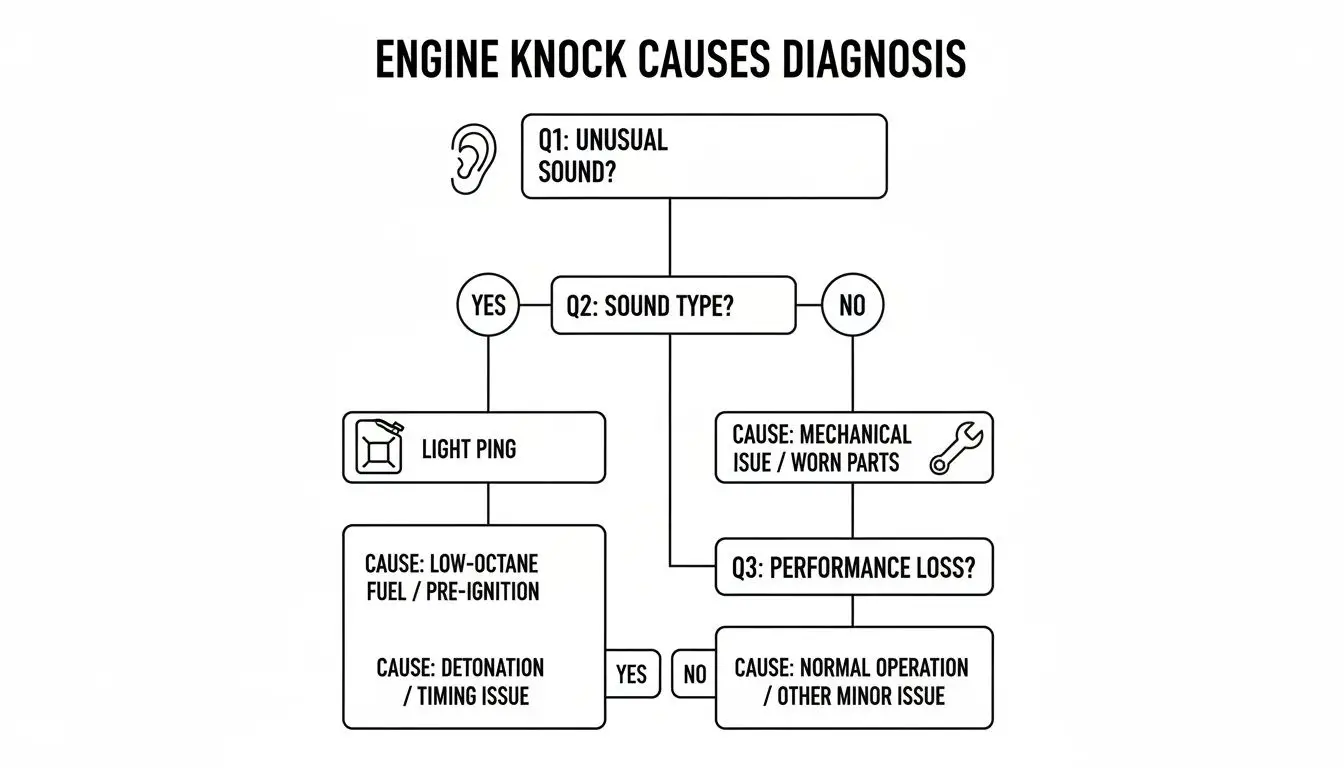
As you can see, a light "ping" often traces back to fuel, while a deeper "thump" usually suggests a mechanical problem that needs a professional eye.
DIY Engine Knock Diagnostic Checklist
Before calling a mechanic, run through these simple checks. The details you gather will help a technician diagnose the problem much faster.
| Diagnostic Check | What to Observe | What It Might Indicate |
|---|---|---|
| Check Oil Level & Condition | Is the oil level low? Is the oil black, gritty, or sludgy? | Low oil, lack of lubrication, internal wear. |
| Note When Knock Occurs | Cold start, accelerating, idling, cruising at a steady speed? | Piston slap (cold), pre-ignition (accelerating), bearing wear (idling). |
| Identify the Sound | Is it a light ping, a sharp tap, a deep thud, or a heavy knock? | Fuel/timing issue (ping), valvetrain problem (tap), bearing/rod issue (thud/knock). |
| Check Fuel Type | Are you using the octane rating recommended in your owner’s manual? | Using lower-octane fuel can cause pre-ignition (pinging). |
| Note Performance Issues | Is the check engine light on? Is the engine overheating or losing power? | A combination of symptoms points to more serious mechanical failures. |
Taking a few minutes to observe these symptoms turns a vague, stressful noise into a clear set of clues.
You’ve Got Your Clues, Now What?
By noting when the knock happens and checking your oil and fuel, you’ve already done some important legwork. You’ve helped narrow down a long list of possibilities to just a few likely suspects.
Key Insight: Being able to tell a mechanic, “I hear a light tapping noise only when I’m accelerating uphill, and my oil is full” is infinitely more helpful than just saying, “my engine is making a noise.”
If you’ve run through these checks and the sound persists—or if it’s a heavy, deep knock—it’s time to let a professional take over. Our expert team provides a thorough and honest car engine diagnosis. Bring us the information you’ve gathered, and we’ll get to the bottom of it fast, getting you back on the road safely.
When to See a Pro and Understand Repair Costs
That unsettling engine knock doesn’t just ruin your drive; it immediately brings up worries about your wallet. The good news is that not every knock means a catastrophic failure is around the corner. Knowing how to gauge the urgency and what potential costs look like can help you make a smart decision instead of a panicked one.
A faint, high-pitched ping that only shows up when you’re accelerating hard is a world away from a deep, heavy thump that you can feel at a stoplight. The first might just mean you can drive cautiously to the shop, but the second is a clear sign to pull over immediately and call for a tow. Gambling with a severe knock is gambling with the life of your engine.
Breaking Down Potential Repair Costs
The cost to fix an engine knock is all over the map because it depends entirely on the cause. Sometimes, the fix is as simple as a different choice at the gas pump. Other times, you could be looking at thousands in repairs. Having a ballpark idea of the costs helps you prepare for the conversation with your mechanic.
Here’s a look at what you can generally expect for the common causes we’ve covered:
- Wrong Fuel Type: The fix is simply using the octane level your car’s manufacturer recommends. Your only cost is the price difference, usually $5-$15 per tank.
- Carbon Buildup: A professional fuel system or induction cleaning service is designed to dissolve these stubborn deposits. Expect this to run between $100 and $300.
- Worn Spark Plugs: This is a routine maintenance job. Depending on your vehicle, a full spark plug replacement typically costs from $150 to $400.
Important: These repairs address those lighter, “pinging” or “tapping” sounds. If you’re hearing a heavier, deeper thud, you are almost certainly dealing with a more serious mechanical issue.
The High Cost of Ignoring Serious Knocks
Those deeper, rhythmic knocking sounds are often the engine’s cry for help, pointing to a lack of lubrication or worn-out internal parts. This is where ignoring the problem gets incredibly expensive. Low oil is a silent killer, causing that dreaded knock as metal grinds against metal. This can lead to a sudden breakdown and a repair bill from $2,000 to $5,000. In fact, technician data shows a 12% yearly rise in these oil-related failures, partly because modern cars go longer between oil changes. You can read more about the impact of oil on engine health to see just how critical it is.
When the knock comes from worn-out rod bearings or a piston that’s seen better days, the costs climb fast:
- Rod Bearing Replacement: This is a labor-intensive job that usually requires pulling the engine. The cost can easily range from $1,500 to $3,500+.
- Full Engine Replacement: If the internal damage is too widespread, a complete engine replacement may be the only realistic solution, costing $4,000 to $8,000 or more.
If you’re worried about a significant repair, our guide on what to expect with engine repair in Richland Hills can give you some more local perspective. No matter the sound, catching an engine knock early is always the cheapest way out.
Preventive Maintenance to Keep Your Engine Healthy
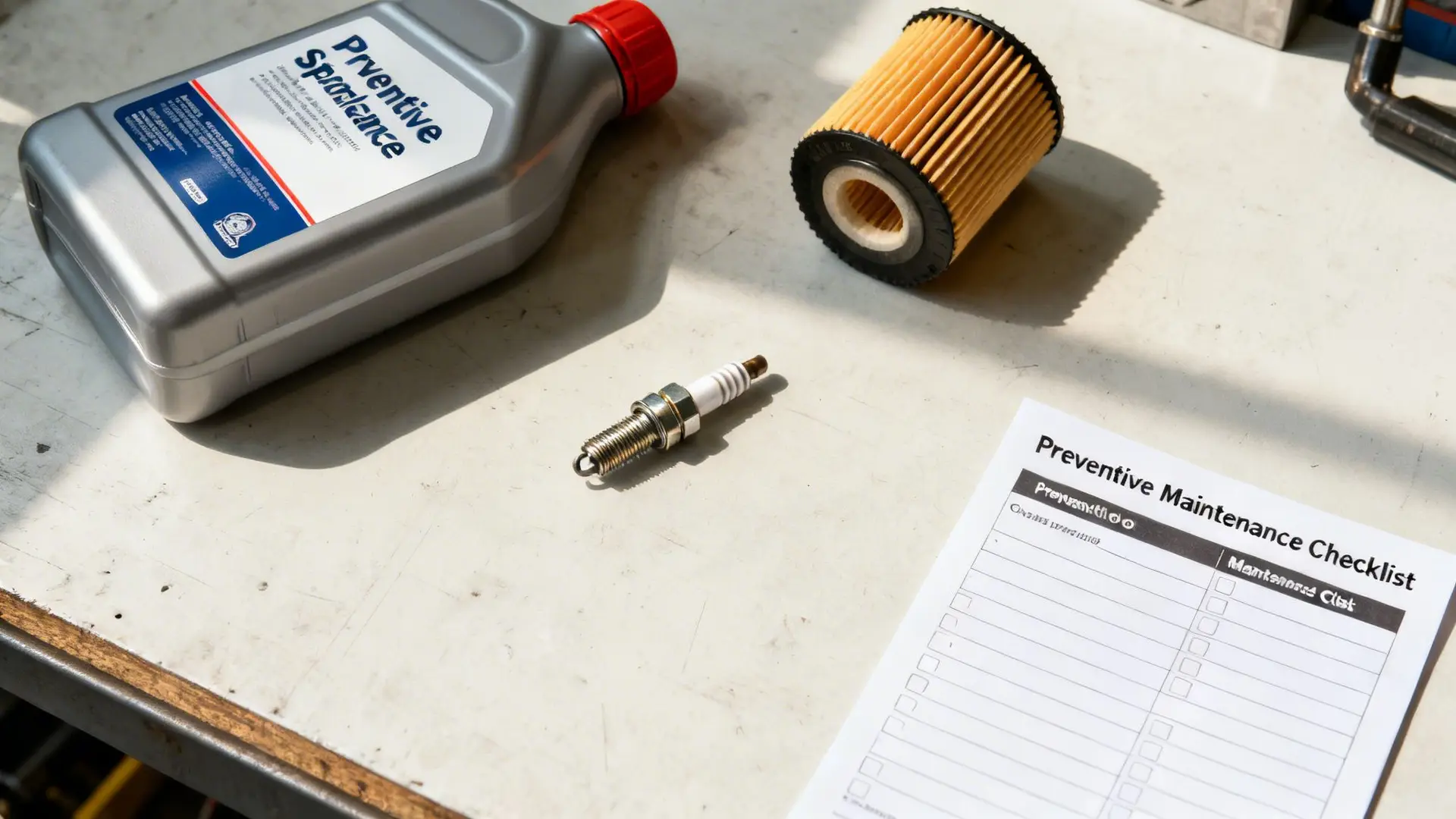
When it comes to engine knock, the best defense is a good offense. Instead of waiting for a problem to show up, a little proactive care keeps your engine running smoothly and quietly for the long haul.
Think of it this way: spending a little on routine maintenance now can save you from a massive, multi-thousand-dollar repair bill down the road. An ounce of prevention is truly worth a pound of cure, especially for your car’s most important component.
Stick to Your Oil Change Schedule
Engine oil is your motor’s lifeblood. It’s what lubricates, cleans, and cools all those critical moving parts. When oil breaks down, it loses its ability to cushion metal-on-metal contact, leading to the kind of friction that causes serious engine knock.
Sticking to your manufacturer’s oil change schedule isn’t optional—it’s essential. Just as important is using the correct type and weight of oil. A modern, high-compression engine has very different needs than an older one, and the wrong oil is almost as bad as no oil.
Expert Tip: Consistent, on-time oil changes are the single best thing you can do to prevent the deep, rhythmic knocks caused by worn bearings and other major internal damage. It’s a simple task that guards against catastrophic failure.
Use the Right Fuel for Your Engine
That light, metallic pinging noise is often caused by one simple mistake: using a lower octane fuel than your engine was designed for. Octane isn’t about power; it’s all about stability and preventing the fuel from igniting too early under pressure.
Always check the sticker inside your fuel door or look in the owner’s manual for the right octane level. Saving a few cents per gallon with a lower grade might feel smart at the pump, but it can lead to pre-ignition and that annoying knocking sound. It’s just not worth the potential strain on your engine.
Keep Up with Other Key Maintenance
Beyond oil and fuel, a few other routine checks are crucial for keeping your engine happy and knock-free. These all work together to make sure the combustion cycle happens exactly when and how it should.
- Spark Plug Replacement: Fouled or worn-out spark plugs can’t deliver a strong, consistent spark. This leads to misfires and incomplete combustion, which can sound like a knock. Check your manual, but they typically need replacing every 30,000 to 100,000 miles.
- Engine Air Filter: A dirty, clogged air filter starves your engine of oxygen, throwing off the air-fuel ratio. This can cause carbon buildup and inefficient performance—both common culprits behind engine knock.
- Keep It Clean: Getting familiar with your engine is always a good idea. When you learn how to clean your engine bay safely, you’re more likely to spot small leaks or other issues before they become big problems.
By staying on top of these simple tasks, you’ll protect your engine from the most common causes of knocking and drive with a lot more peace of mind.
Frequently Asked Questions About Engine Knocking
We get a lot of questions about that mysterious “knock” drivers hear. Here are some of the most common ones we answer right here in the shop.
Can Using a Fuel Injector Cleaner Fix Engine Knock?
Can a bottle of fuel injector cleaner really fix an engine knock? Sometimes, it can. If the noise is a light, faint pinging sound, it might be from carbon deposits gumming up your fuel injectors or combustion chamber. A good quality cleaner can dissolve that buildup and get things running smoothly again.
But it’s definitely not a magic bullet. That bottle won’t do a thing for mechanical problems like a worn-out bearing or a failing lifter. It’s a cheap and easy first thing to try, but if the knock doesn’t go away, you need a professional to take a look.
Is It Safe to Drive My Car if the Engine Is Knocking?
This is a critical question, and the answer really depends on the specific sound you’re hearing.
A faint, high-pitched “pinging” that only shows up when you accelerate hard might get you to our shop safely. But a deep, heavy “thud” or “clunk” that gets faster as you rev the engine is a serious problem.
If you hear that loud, deep knock, it’s a major red flag. Pull over as soon as it’s safe and call for a tow. Driving on it is gambling with your entire engine.
Will Engine Knocking Cause Permanent Damage?
The risk of permanent damage is extremely high. If you accidentally put the wrong octane fuel in your tank and hear a brief, light knock, you’ll probably be fine once you refill with the correct gas.
Any knock that sticks around, though—especially a heavy one—is actively hurting your engine with every single rotation. Ignoring what causes an engine knocking sound is the fastest way to turn what could be a straightforward repair into a bill for a complete engine replacement.
Don’t let a strange noise turn into a massive repair bill. The ASE-certified technicians at Express Lube & Car Care can diagnose your engine knock fast and give you an honest, clear recommendation. Stop by today for a professional inspection! Find out more.