

Yes, you absolutely can—and should—wash your car in freezing weather. But doing it the right way is critical to avoid causing damage. A good winter wash is one of the best things you can do for your vehicle, protecting it from the rust and corrosion caused by road salt and de-icing chemicals.
The Real Reason You Must Wash Your Car in Winter
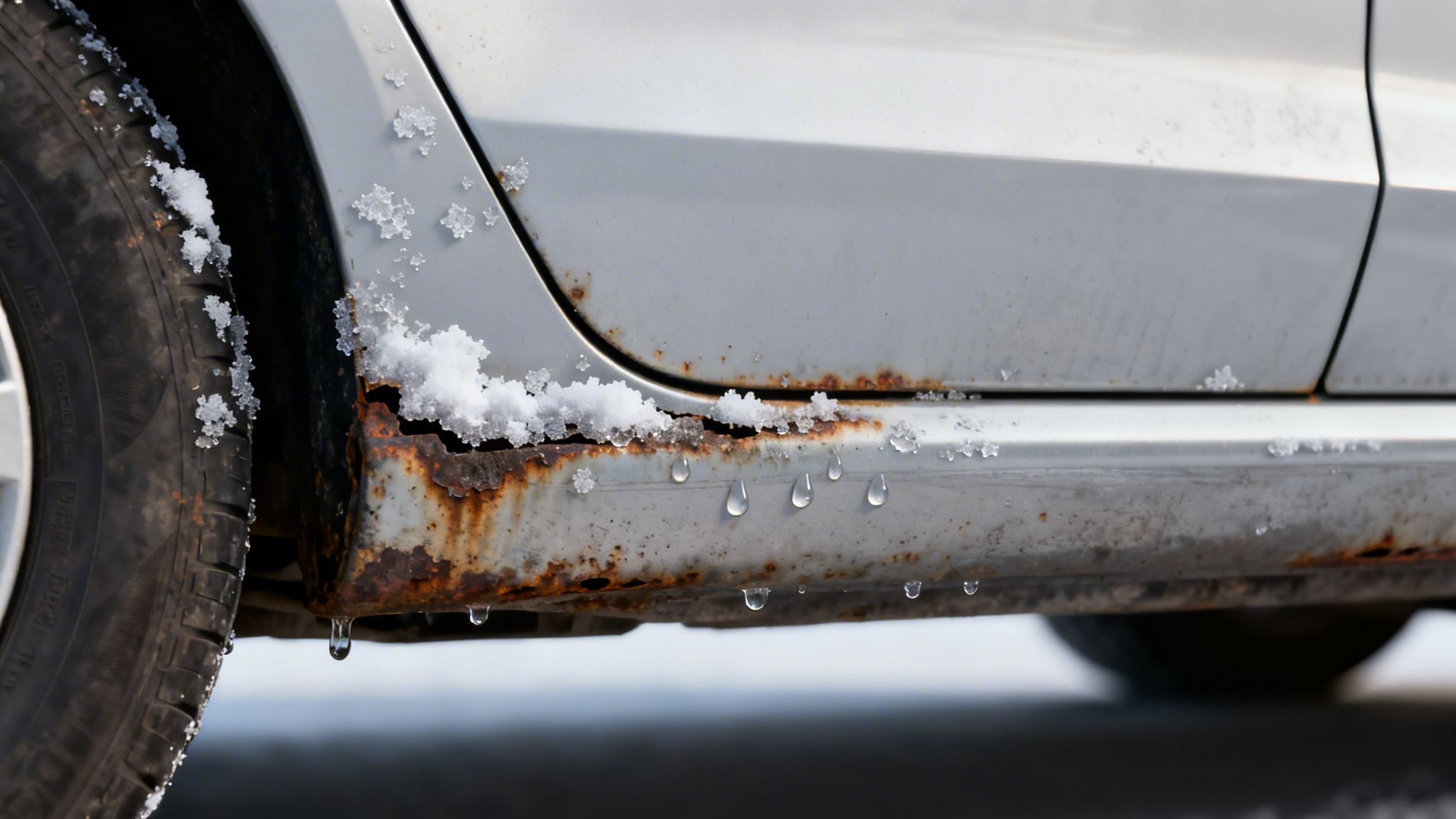
It sounds backward, right? Dousing your car with water when the temperature is dropping feels wrong. But leaving it caked in winter grime is a guaranteed recipe for long-term, expensive damage. The real problem isn't the snow or ice—it's what the road crews use to melt it.
The Science of Salt and Rust
Road salt and chemical de-icers are your car’s worst enemies in winter. These chemicals are incredibly corrosive and don't just wash away with melting snow. They're hygroscopic, which is a fancy way of saying they attract and hold onto moisture.
This creates a nasty, salt-filled brine that sticks to your paint, undercarriage, and every metal part it touches. This corrosive goo goes to work immediately, accelerating rust even when it's well below freezing.
For drivers in areas like Richland Hills, where we get those sudden cold snaps and icy roads, this is about more than just looks. It’s about preventing serious corrosion that can eat away at everything from your brake lines to the car’s frame.
A Smart Financial Decision
Think of a winter car wash as a small, smart investment. Ignoring that salty buildup can lead to major repair bills down the road—we’re talking hundreds or even thousands to fix rusted-out body panels and undercarriage components.
A regular cleaning strips those damaging chemicals off before they can cause permanent harm. This is essential cold weather care for vehicles of all kinds, protecting vital mechanical parts from freezing and corrosion.
Getting your vehicle ready for the season is a big part of the battle. For more on that, check out our guide on how to winterize your vehicle. At the end of the day, a clean car in winter is a healthier, safer, and more valuable car.
How to Pick the Right Time and Place
When you're washing a car in freezing weather, your success really comes down to two things: when you do it and where you do it. Get either one wrong, and you'll end up with a car encased in a sheet of ice, which is a much bigger problem than the salt and grime you started with.
Your best weapon against the cold is timing. You have to plan your wash for the warmest part of the day, which is almost always between noon and 3 p.m.
That little window is your best shot. The sun is at its strongest, and the ambient temperature is at its daily peak. This buys you precious time, slowing down how fast water flash-freezes on your car’s paint and glass. A few degrees makes all the difference.
Find the Best Location
Where you wash the car is just as critical as when. Your location dictates how much you can control the environment and prevent ice from forming.
- At Home (With a Garage): This is the gold standard. An unheated garage still offers priceless protection from the wind, which is a huge factor in how quickly things freeze. If you have a floor drain, you can do the whole wash inside. If not, use the garage for the most important step: drying.
- At Home (Outdoors): If you have to wash outside, find a spot that gets as much direct sun as possible and is blocked from the wind. Even just parking on the sheltered side of your house makes a massive difference in the surface temperature of your vehicle.
- A Professional Car Wash: For most people, this is the safest and easiest option. I'd recommend a touchless car wash that uses high-pressure jets instead of harsh brushes. The most important feature, though, is a powerful, heated drying cycle to blast water from all the tight spots.
The goal is to get the water off your car before it has a chance to freeze. A good commercial car wash is built for this, using high-powered blowers to clear water from behind mirrors, around door handles, and in the trim.
Plan for Other Winter Tasks
This same kind of careful planning applies to other outdoor cleaning chores when the temperature drops. If you're tackling more than just the car, learning the right techniques for cleaning windows in the winter can save you a lot of frustration.
Ultimately, it doesn't matter if you're in your driveway or at a pro wash. The strategy is the same: create a small, controlled window to get the car clean and—most critically—completely dry before the cold takes over.
Your Essential Cold Weather Washing Toolkit
Trying to wash your car in freezing weather with summer supplies is just asking for trouble. Using the wrong gear can lead to frozen locks, damaged paint protection, and a mess of new scratches. Putting together a specific winter toolkit isn't just about being prepared—it’s about actively preventing damage while you clean.
Your first and most important defense against scratches is the two-bucket method. Honestly, this is non-negotiable when you're dealing with all the grime winter throws at your car. One bucket is for your soapy water, the other for plain rinse water. After you wash a single panel, rinse the dirty mitt in the plain water bucket. This simple step traps all that abrasive salt and grit before you dip back into the soap, so you aren't dragging it all over your car's finish.
The Right Soap and Water Temperature
The soap you choose is just as important. You absolutely need a pH-neutral car soap. Harsher stuff like dish soap will completely strip off any wax or sealant you have on your paint—and that’s the very barrier protecting your car from salt and road grime.
The water itself is also a big deal. Never, ever use hot water on a freezing cold car.
The wild temperature swing can cause thermal shock, which could crack your windshield or damage your paint’s clear coat. You want to use lukewarm water—cool enough to touch but warm enough that it won't freeze on contact.
This one adjustment makes a huge difference in keeping your wash safe and effective.
Must-Have Drying and Finishing Tools
Drying is probably the most critical part of a winter wash. Any water you leave behind will freeze, which can seal your doors shut or ruin the rubber seals.
Here’s what you need to have on hand for a successful, freeze-free finish:
- Plenty of Microfiber Towels: Don't be stingy here. You need several large, plush microfiber drying towels. They soak up a ton of water without leaving lint or scratches behind.
- Gentle Wash Mitts: A soft microfiber or chenille wash mitt is much safer than an old-school sponge, which is notorious for trapping grit and rubbing it into your paint.
- Wheel and Tire Cleaner: Your wheels get hammered with road salt. A dedicated, non-acidic wheel cleaner is made to break down that caked-on brake dust and grime way better than car soap can.
- Spray Sealant or Wax: Once the car is dry, hitting it with a quick spray sealant adds a fresh layer of protection. It makes your next wash easier and gives your paint an extra shield against corrosive salt.
- De-icer Spray: Make sure you keep a can of lock de-icer outside of your vehicle. A quick shot in each lock after you’re done will push out any hidden moisture and stop them from freezing solid. This also helps if your wiper blades are frozen to the windshield; check out our guide to wiper blades to see which ones are best for winter.
Getting the Wash Done Right in the Cold
Alright, you’ve got your gear ready. Now for the wash itself. When you’re trying to wash a car in freezing weather, you’re racing the clock. The whole game is about getting it clean and—more importantly—bone dry before the water turns to ice.
Start with a gentle pre-rinse using lukewarm water. Your goal isn't to blast the grime off, just to loosen up all that caked-on salt and road sludge. High pressure can chip frozen paint, so stick to a wider fan spray to soften everything up. This one small step makes the actual hand wash much safer for your car's finish.
Work from the Top Down in Small Sections
The cardinal rule of winter washing is simple: start at the top and work your way down. This keeps dirty water from dripping onto panels you just cleaned. Just as crucial, you have to tackle the car one small section at a time. Think a single door panel, then the next.
If you try to soap up the entire driver's side at once, the soap on the front fender will be a frozen mess by the time you reach the back door. The only way to win is to wash, rinse, and immediately dry one panel before you even think about starting the next.
It might feel slower, but this method ensures no soap or water sits on any part of your car for more than a minute or two. It’s the only way to guarantee you won’t create a bigger problem than you started with.
This isn’t complicated. You just need the right tools used in the right order.
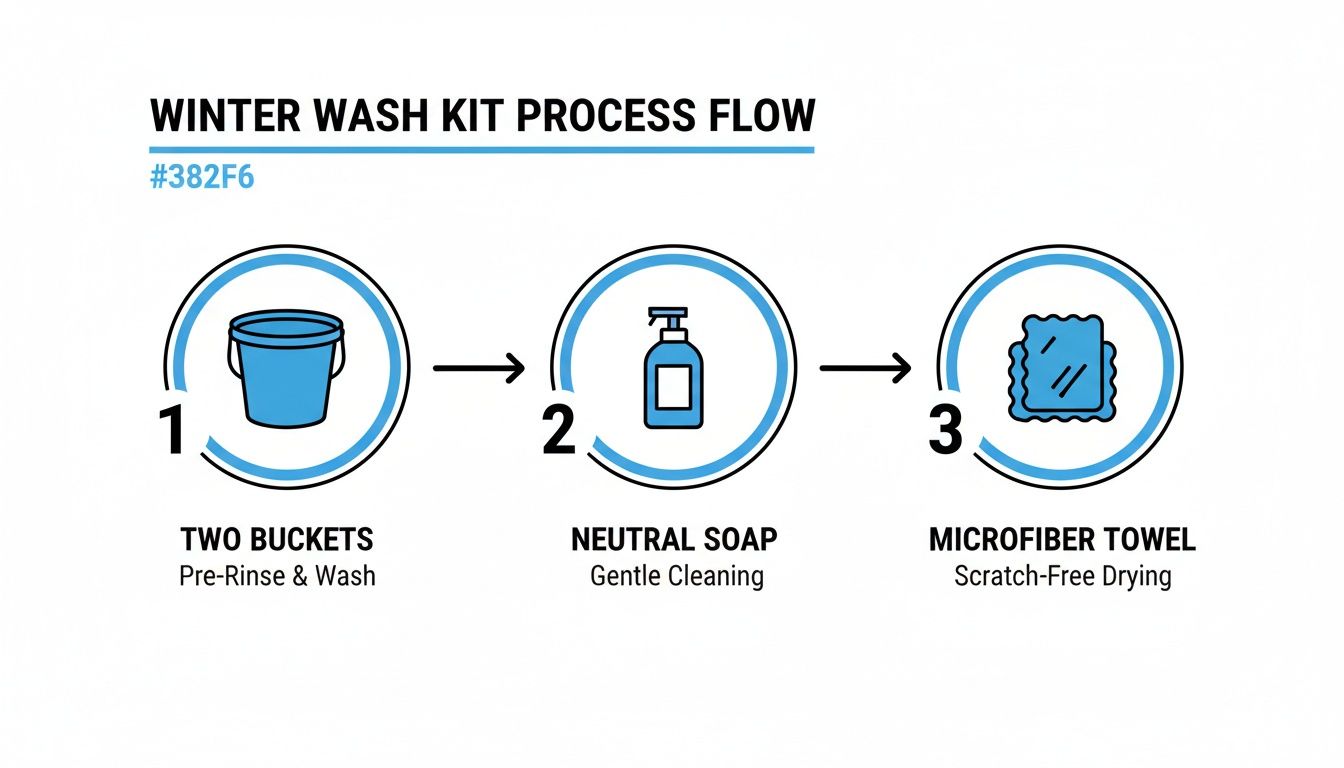
This process shows the essentials for a scratch-free winter wash, with each tool playing a role in protecting your paint from dirt and contamination.
The Ultimate Drying Checklist
Drying isn't just about wiping down the hood and roof. In freezing temps, it's the little details that will make or break your effort. Any water you leave behind will turn to ice, and that can mean frozen doors, damaged seals, and a whole lot of frustration.
Here’s what you absolutely have to dry to avoid an icy mess:
- Body Panels: Use a big, plush microfiber towel. Lay it flat and drag it across the surface to soak up the water without rubbing.
- Door Jambs & Sills: This is critical. Open every single door and dry the jambs, sills, and the inner edges of the doors. This is the #1 spot that causes doors to freeze shut.
- Window & Sunroof Seals: Carefully trace every inch of the rubber seals around your windows, sunroof, and trunk. Water loves to pool in these channels.
- Mirrors, Handles & Gas Cap: Give extra attention to your folding mirrors, door handles, and the fuel door recess. You don't want any of those mechanisms freezing up.
Just when you think you’re finished, grab a second, completely dry microfiber towel and do one final pass. You’ll be surprised how much moisture you missed.
Break the Hidden Ice Seals
Here’s a pro tip that’s saved me more than once. After the car is totally dry, go around and open and close every door, the trunk, and even roll the windows down an inch and back up.
This tiny action breaks any invisible ice bonds that might be forming in the jambs or window tracks.
Finally, a quick shot of de-icer into each door lock and keyhole is cheap insurance. It pushes out any water that snuck in and guarantees you’ll be able to get back into your car later. That’s the last piece of the puzzle for washing your car the right way in the cold.
Costly Winter Washing Mistakes to Avoid
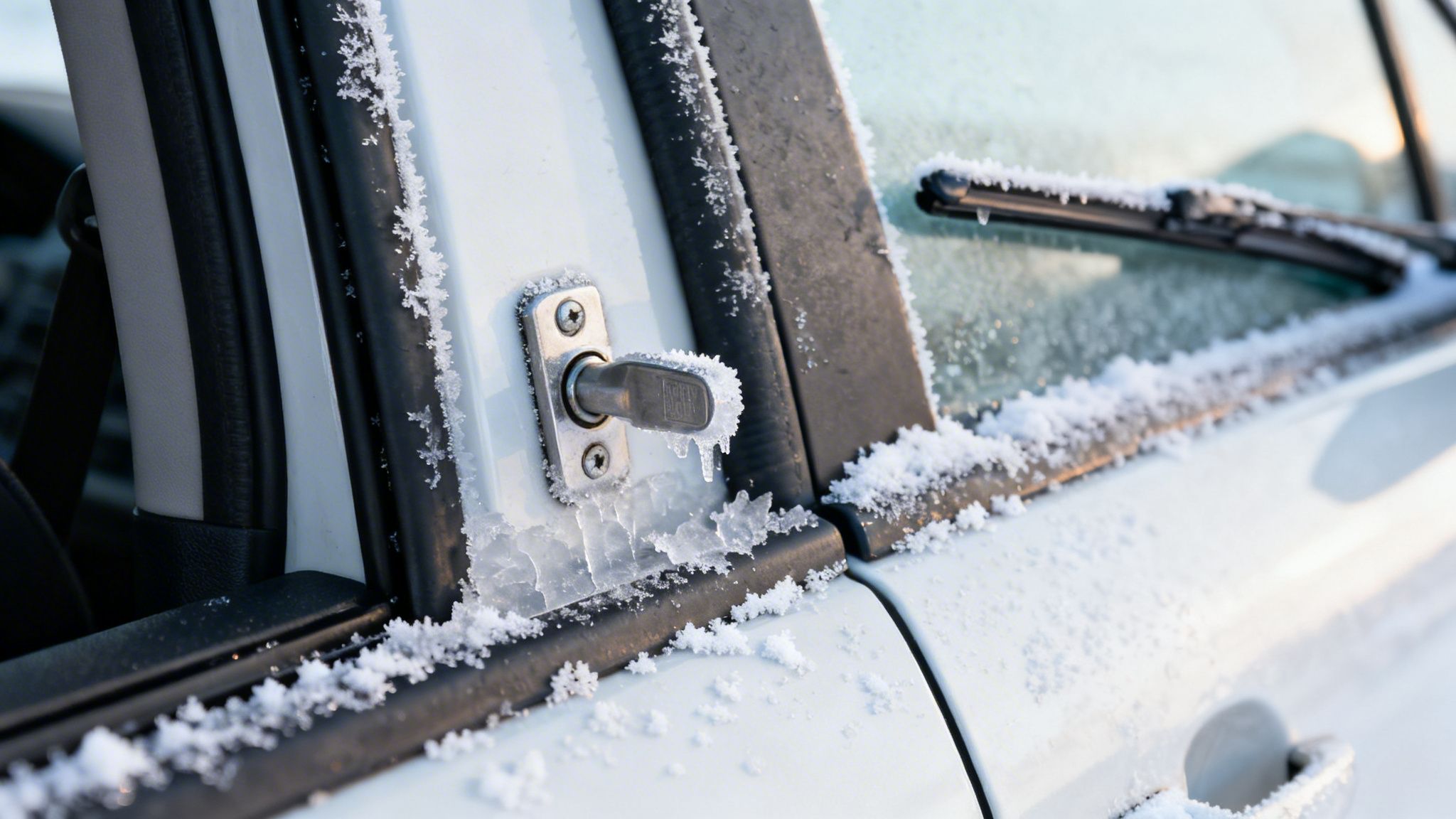
Washing your car in the winter is one of the best things you can do to protect it from salt and grime. But a few common missteps can turn a good intention into an expensive headache.
Knowing what not to do is just as important as knowing the right steps. Here are the biggest blunders we see people make every year.
Using Hot Water on Frozen Surfaces
It might seem like a smart shortcut to melt away ice, but pouring hot water on a freezing car is a recipe for disaster.
This creates thermal shock—a rapid temperature change that can easily crack your windshield or damage your paint’s clear coat. A simple wash can quickly turn into a costly repair. Always, always stick to lukewarm water.
Washing Too Late in the Day
Timing is everything. You might start your wash in the mild afternoon sun, but if you're still working as temperatures plummet, you're setting yourself up for failure.
Any water left on the car will flash-freeze, covering your freshly cleaned car in a new layer of ice. Worse, it can freeze your doors and locks shut.
Not Drying Meticulously
This is probably the most common—and frustrating—mistake of all. Rushing the drying process is a guaranteed way to cause problems.
Imagine this: You spend an hour getting your car spotless, but you skip drying the door jambs and locks. The next morning, your key won't turn and the handle won't budge. The entire mechanism is frozen solid. Forcing it can break the handle or tear the rubber seals.
Take the extra ten minutes. Use your microfiber towels to get into every nook, cranny, and seal. It makes all the difference.
Ignoring the Temperature "Sweet Spot"
While you can wash in the cold, there's a point where it's just too risky to do it at home.
Most professionals agree that the ideal temperature range for a winter wash is between 35°F and 50°F. This window is warm enough to prevent flash-freezing but still cool enough for the soap to work without drying too fast.
Washing below 32°F is asking for trouble. Water can freeze almost instantly on contact, creating a dangerous, slick mess on your driveway and potentially damaging your vehicle. You can learn more about ideal washing temperatures on HogwashCarWash.com.
Avoid these common pitfalls, and your efforts to protect your car this winter won't backfire.
Your Winter Car Wash Questions Answered
Washing your car when the temperature drops below freezing can feel a little risky. We get it—ice and paint don't mix. Here are answers to the most common questions we hear from drivers trying to keep their cars clean all winter long.
Is a Touchless Car Wash a Better Choice in Winter?
Yes, a touchless car wash is often your safest bet. Winter roads cover your car in an abrasive mix of salt, sand, and grime. A wash that uses brushes can drag those gritty particles across your paint, leaving behind fine scratches and swirl marks.
Touchless systems avoid this entirely. Just make sure the one you choose has powerful, heated dryers. You need to blast water out of every crack and crevice to prevent it from freezing solid later.
Should I Use a Waterless Wash Product Instead?
Waterless wash sprays are great for light dust or a few fingerprints, but they are not recommended for a car caked in winter sludge.
Think of it this way: trying to wipe away thick layers of salt and mud without a proper rinse is like taking sandpaper to your clear coat. You’ll almost certainly cause scratches. Stick to a proper wash with plenty of water to rinse away the heavy stuff first.
How Often Should I Really Be Washing It?
As a general rule, plan to wash your vehicle every 10 to 14 days during the winter. It’s especially critical to get it washed right after a snow or ice storm, when road crews have laid down tons of de-icing agents.
Staying on top of this prevents corrosive chemicals from eating away at your paint, undercarriage, and even electrical components. It's a simple step that helps prevent car battery corrosion and other costly winter damage.
What if my car door or lock freezes shut after a wash?
Don't force it or pour hot water on the glass—you could crack it or damage the paint. The best solution is a commercial de-icer spray designed for car locks. If a door is frozen shut, try pushing firmly into the door frame to break the ice seal before pulling the handle.
At Express Lube & Car Care, our ASE-certified technicians can help with all your winter maintenance needs, from fluid checks to brake service. If you need reliable auto care to keep your vehicle running smoothly all season long, stop by our shop in Richland Hills. No appointment necessary! https://www.expressluberichlandhills.com