

That little red or amber oil can symbol on your dashboard is your engine's way of screaming for help. Seeing it flicker on is an immediate signal to pull over. The most common reason for what can cause low oil pressure is usually the simplest: your engine is running low on oil. Ignoring this warning, even for a short drive, can cause catastrophic engine damage.
Why Is My Oil Pressure Light On
Think of your engine's lubrication system like your own circulatory system. The oil is the blood, the oil pump is the heart, and the tiny passages inside your engine are the arteries. When the pressure drops, it means this life-giving fluid isn't reaching critical parts, leading to metal-on-metal friction, intense heat, and rapid wear.
While a low oil level is the most common culprit, it’s not the only one. Knowing the different possibilities will help you figure out what to do next instead of panicking.
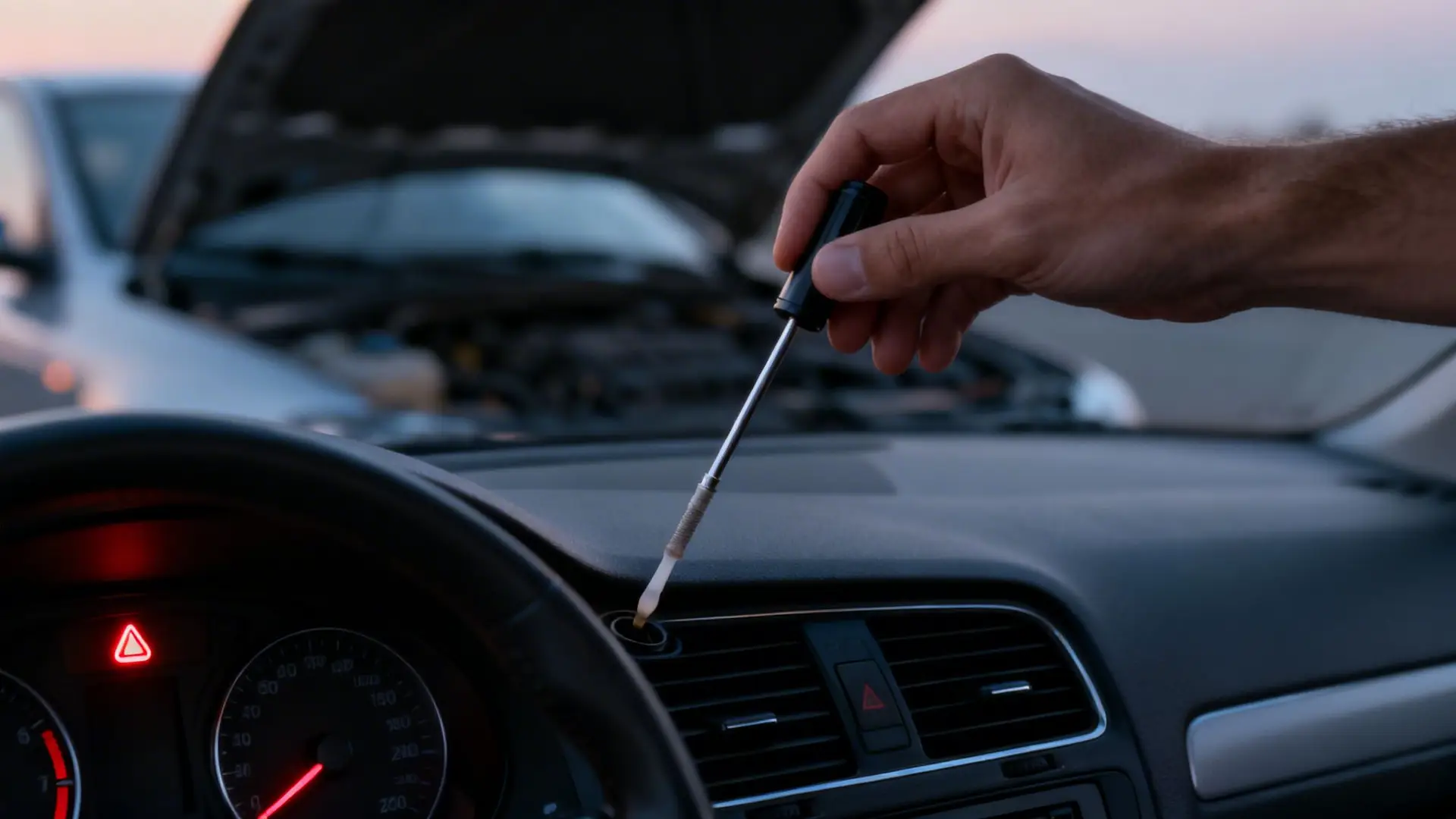
The Most Common Cause: An Insufficient Oil Level
Far and away, the number one reason that oil light comes on is simply not having enough oil in the engine. This happens either from natural oil consumption between changes or from a small, undetected leak. It's a surprisingly common problem; an estimated 1 in 10 vehicles on the road are driving around with their oil level below the safe mark.
Many drivers just aren't aware of how much oil their car uses. You can learn how to check it yourself by following our guide on how to check your car oil level.
Quick Guide to Low Oil Pressure Causes
To help you quickly figure out what you might be dealing with, we put together this simple table. It breaks down the most common causes, the symptoms to look for, and how urgently you need to act.
| Potential Cause | Common Symptoms | Urgency Level |
|---|---|---|
| Low Oil Level | Oil light flickers on turns or braking; no other sounds | High: Pull over, check oil, and top off immediately. |
| Worn/Failing Oil Pump | Consistent low pressure reading; engine knocking or whining noise | Critical: Stop driving immediately and have the vehicle towed. |
| Clogged Oil Filter | Low pressure after thousands of miles; sluggish performance | High: Needs an oil and filter change as soon as possible. |
| Faulty Pressure Sensor | Light is on but mechanical gauge shows normal pressure | Moderate: Get it diagnosed to rule out a real pressure problem. |
This guide can help you determine if you're facing a simple top-off or a more serious issue that needs a professional technician right away.
Understanding Your Engine's Lubrication System
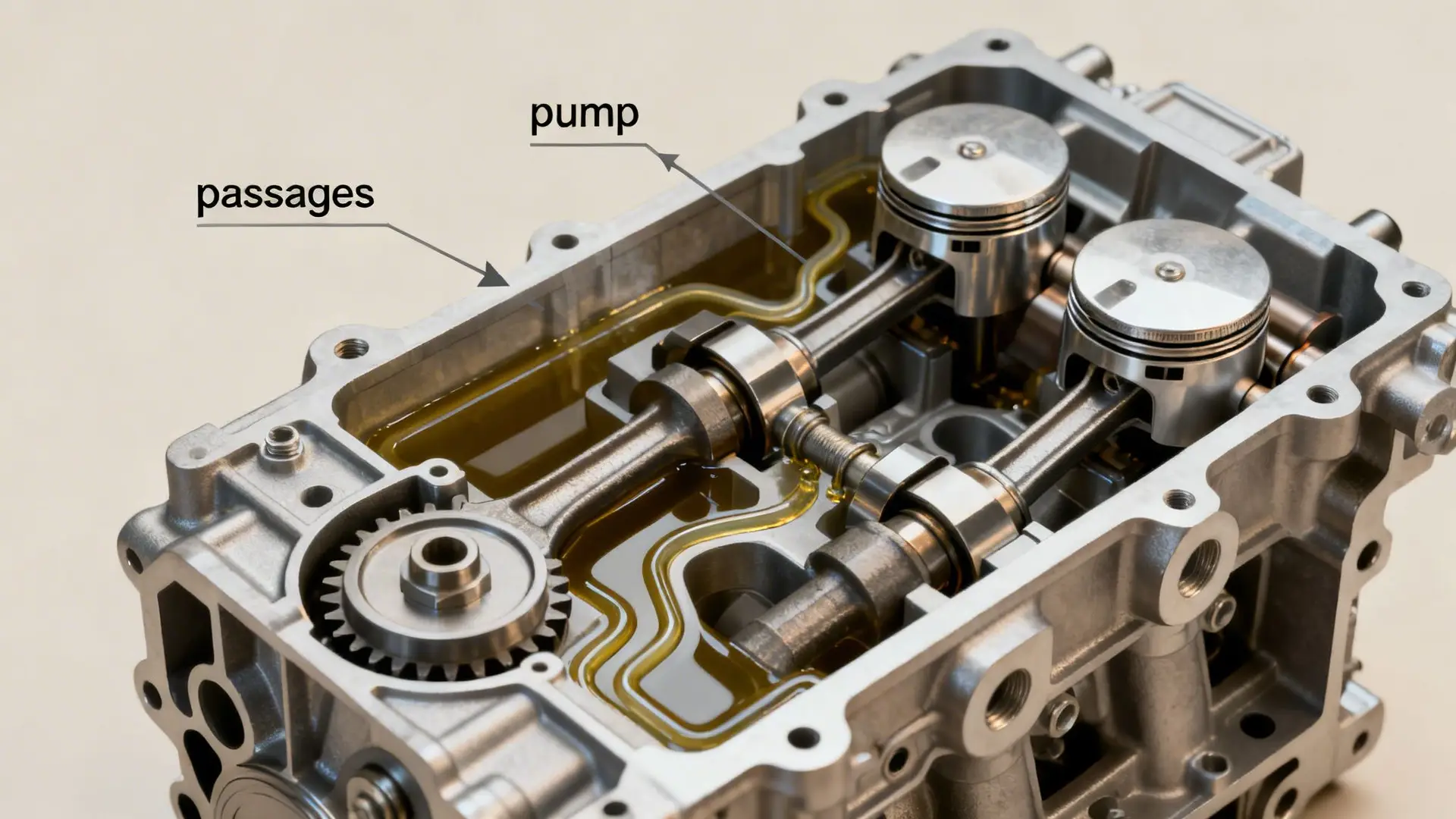
Before we can get into what can cause low oil pressure, we need to pop the hood and look at how your engine’s lubrication system actually works. It helps to think of it like your own circulatory system—a complex network that’s absolutely essential for survival.
The oil pump is the heart of it all. It sits down low, pulling oil from the oil pan (think of it as a reservoir) and forcing it under pressure through a maze of tiny passages and channels drilled throughout the engine block.
These passages are the arteries, delivering that pressurized oil to every single moving part. This flow of oil is your engine's lifeblood, and it’s doing a few critical jobs all at once.
The Three Core Jobs of Engine Oil
Most people know oil’s main job is lubrication. It creates an incredibly thin, yet tough, film between fast-moving metal parts like pistons, bearings, and the crankshaft. Without that cushion, you’d have direct metal-on-metal grinding, which generates catastrophic heat and friction that can destroy an engine in minutes.
But oil also acts as a primary coolant. It pulls a huge amount of heat away from the hottest parts of your engine—like the bottom of the pistons—and carries it back down to the oil pan to cool off. Your radiator can’t do this job alone; the oil is constantly working to prevent overheating from the inside out.
Finally, engine oil is a cleaning agent. As it circulates, it picks up and suspends microscopic metal particles, bits of carbon, and other gunk. It then carries all that debris to the oil filter, which traps it and keeps the lifeblood of your engine clean.
A healthy lubrication system doesn't just cut down on friction—it actively cools and cleans your engine's most sensitive components. When oil pressure drops, all three of these jobs fail at once, putting your entire engine on the line.
What Is Oil Pressure?
So, what exactly is oil pressure? It’s simply the force pushing the oil through the engine, measured in pounds per square inch (PSI). This pressure is what ensures oil can fight against gravity to reach the highest points of the engine and squeeze into the tightest spaces between moving parts.
If that pressure gets too low, the protective film of oil breaks down, allowing metal to grind against metal. The flow also becomes too weak to carry heat away effectively or to transport contaminants to the filter.
Understanding this system is the key to figuring out what’s wrong. When the pressure drops, it tells you there's a breakdown somewhere in this vital circulatory process. It could be the pump, the oil itself, or the passages. Now, instead of just seeing a scary warning light, you can start thinking like a mechanic and pinpointing the real problem.
Common Culprits Behind Low Oil Pressure
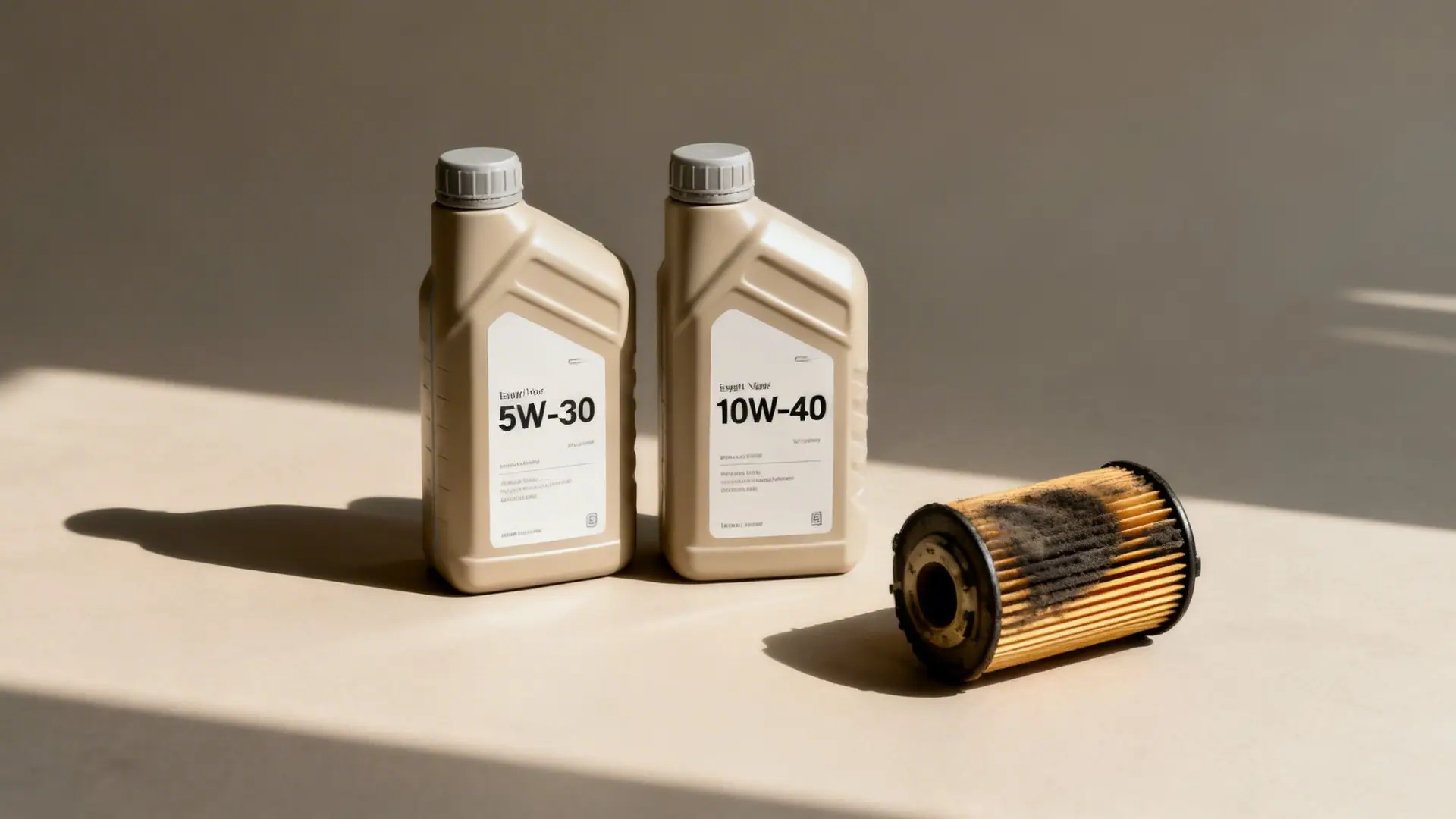
While an empty dipstick is the number one cause of low oil pressure, it's certainly not the only one. Sometimes, your engine has plenty of oil, but another problem is stopping it from circulating correctly. Knowing what can cause low oil pressure beyond just the oil level is the first step in a proper diagnosis.
Here at our Richland Hills shop, two of the most frequent issues we see are using the wrong kind of oil and running a dirty, clogged oil filter. Both problems are simple to prevent, yet they can cause a world of hurt for your engine if you let them slide.
The Wrong Oil Viscosity
Using the wrong motor oil in your car is like trying to cook with the wrong ingredients—the end result just won't be right. That number on the bottle (like 5W-30 or 10W-40) is its oil viscosity, which is just a fancy term for how thick it is. Think of the difference between pouring thin water versus thick honey.
Your car’s manufacturer specifies a certain viscosity because it's engineered to work perfectly with your engine's parts, creating the right amount of flow and protection. If the oil is too thin, it simply can’t build up enough pressure to do its job, especially when things get hot.
This is a big deal for drivers here in the Texas heat. In fact, service data shows that using the wrong oil accounts for roughly 15-20% of low oil pressure cases. Our ASE-certified technicians can make sure you have the right grade for your car and our climate. For a deeper dive, check out this guide to understanding low oil pressure from Machinery Lubrication.
A Clogged Oil Filter
Your oil filter has a tough job. It catches all the gunk, metal shavings, and sludge that the oil picks up on its journey through the engine. But eventually, that filter gets completely saturated and clogged.
Think of a clogged oil filter like a dam in a river. It severely restricts the flow of oil from the pump to the rest of the engine, causing a significant pressure drop on the other side.
Most filters have a built-in bypass valve that opens when it gets too clogged, preventing total oil starvation. That sounds good, but it means unfiltered, dirty oil is now flowing freely through your engine's most sensitive parts. This not only causes low pressure but also accelerates wear, completely defeating the purpose of the filter. That’s why we always say a new filter with every oil change is non-negotiable.
When The Problem Is More Than Just Oil
So, you've checked the dipstick and you’re using the right kind of oil, but that dreaded pressure light is still glowing. This is your engine’s way of telling you the problem is mechanical and runs deeper than just the oil itself.
Ignoring this warning can quickly turn a repairable issue into a catastrophic engine failure. At this point, it’s time to look at the hardware responsible for moving that oil around.
The oil pump is the heart of your engine's lubrication system, pushing oil through all the tight passages where it's needed most. These pumps are tough, but they aren't invincible. Over many miles, they can wear out or fail completely, causing oil flow to drop to a trickle. When that happens, pressure plummets, and your engine is starved.
A Faulty Sensor or Something More Serious
Sometimes, the problem isn’t the pressure itself, but the part that reports it. A faulty oil pressure sensor can trigger a false alarm, making you think you have a major issue when everything is perfectly fine. It's the ultimate "crying wolf" scenario.
While replacing a sensor is a relatively easy fix, you can’t just assume that's the problem. The only way to know for sure is to have a technician test the actual pressure with a mechanical gauge.
The most severe cause of chronically low oil pressure is worn internal engine parts, specifically the engine bearings. These small but critical pieces support the spinning crankshaft, and they need a high-pressure film of oil to survive.
Think of it like a garden soaker hose. A new hose weeps water evenly while holding good pressure. An old, cracked hose gushes water from large holes, causing the pressure inside to drop to almost nothing. Worn engine bearings do the same thing, letting too much oil escape too quickly.
This massive internal "leak" means the oil pump can no longer keep up, and the rest of the engine pays the price. Repairing worn bearings is a major, expensive engine-out job, which is why acting fast on any pressure warning is so important.
While your mind is on oil, remember that other mistakes—like putting the wrong fuel in your tank—can also cause serious engine trouble with their own unique symptoms. You can learn more about diesel in petrol engine symptoms and potential damage from fuel system specialists. Ultimately, diagnosing these complex mechanical failures requires the tools and expertise of a certified technician to find the real source of your oil pressure problem.
How We Diagnose And Repair Low Oil Pressure
When that low oil pressure light flashes, it’s a stressful moment. But when you bring your car to us, our ASE-certified technicians know exactly where to start. We don’t believe in guesswork. We follow a straightforward process that starts with the simplest checks first, making sure you understand what’s happening every step of the way.
First things first, we check the basics. This means a quick look under the hood for obvious oil leaks and, of course, checking the oil level and condition on the dipstick. You’d be surprised how many times the problem is solved right there.
Confirming The Real Pressure
If the oil level is fine, our next job is to figure out if that dashboard warning is telling the truth. Is it a real pressure problem, or just a faulty sensor crying wolf?
To find out, we hook up a mechanical pressure gauge directly to the engine. This old-school tool gives us a precise, undeniable reading of the actual oil pressure, completely bypassing your car’s electronics.
This one test is the most important part of the whole diagnostic. It tells us whether we’re chasing an electrical gremlin or staring down a serious mechanical issue that could harm your engine.
If the mechanical gauge shows healthy pressure, we can all breathe a sigh of relief. The culprit is likely a bad oil pressure sensor—a simple and relatively inexpensive fix. But if our gauge confirms the pressure is dangerously low, our work is just getting started.
This flowchart maps out the diagnostic path we take, showing how that initial pressure test directs our entire strategy.
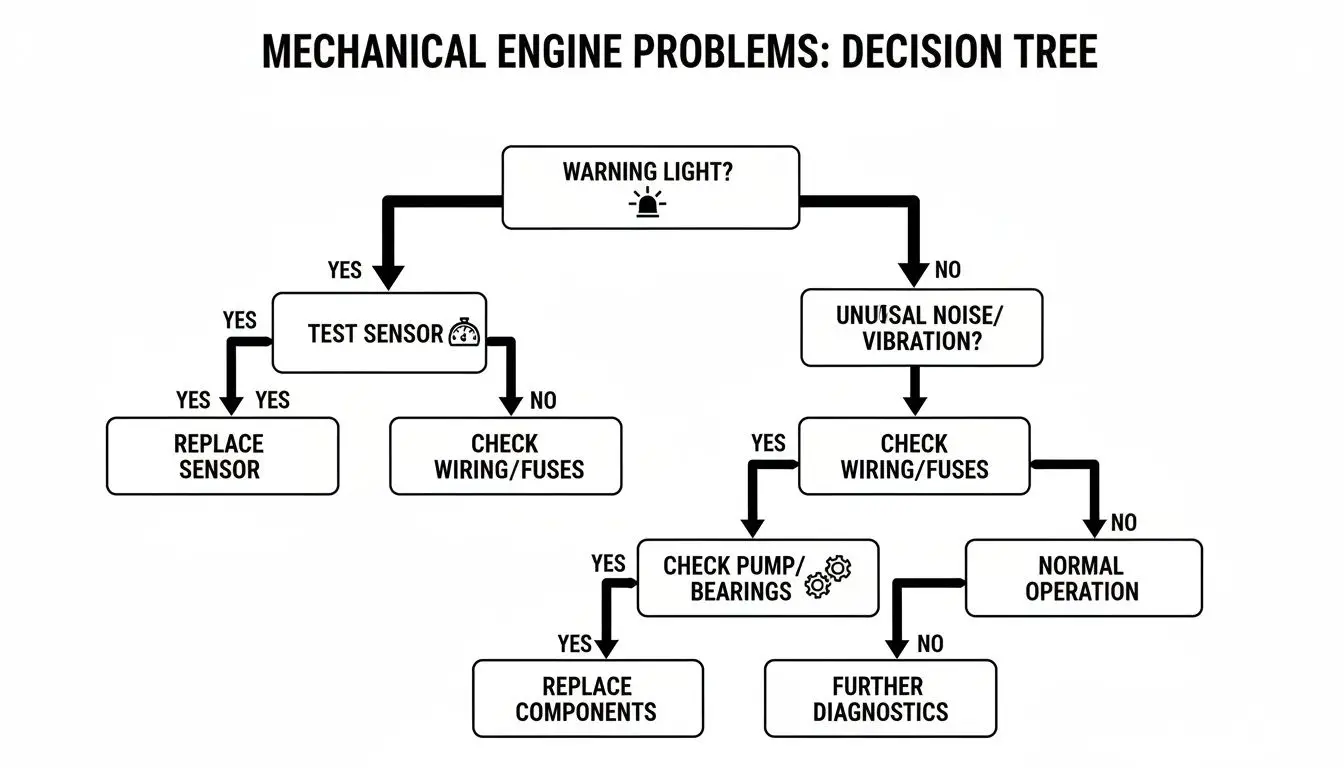
As you can see, confirming that sensor reading is the critical fork in the road.
Identifying The Cause And Planning The Repair
With low pressure confirmed, we start digging deeper. A common culprit we see is a clogged oil filter. This is a completely preventable problem, but it pops up in about 8-12% of cars that come in with pressure warnings. A dirty filter can choke the system, causing a pressure drop of 15-20% or more.
If it’s not the filter, we’ll investigate more serious possibilities like a worn-out oil pump or, in the worst cases, failing internal engine bearings. Our technicians have the experience to trace the problem to its source. For a closer look at our systematic approach, check out our guide on professional car engine diagnosis.
Once we’ve pinpointed the issue, we’ll give you a clear explanation of what’s wrong, what it takes to fix it, and a straightforward estimate.
The table below gives you a general idea of the costs and urgency for common repairs so you can make an informed decision.
Low Oil Pressure Repair Guide Cost And Urgency
| Repair Service | Estimated Cost Range | Repair Urgency |
|---|---|---|
| Oil and Filter Change | $45 – $100 | High |
| Oil Pressure Sensor Replacement | $100 – $250 | Medium |
| Oil Pump Replacement | $500 – $1,500+ | Critical |
| Engine Bearing Replacement | $2,500 – $5,000+ | Critical |
No matter the cause, we’re here to give you honest answers and get you back on the road safely.
Preventive Maintenance: Your Best Defense
When it comes to low oil pressure, the best fix is preventing it from ever happening. Proactive maintenance is, without a doubt, your engine’s best line of defense, and it all starts with one simple, crucial service: regular oil and filter changes.
Think of it this way: your car needs clean oil to survive just as much as it needs fuel to run. Over time, heat and contaminants break down your oil, turning it into the sludge and gunk that causes the very blockages we've been talking about. A fresh supply of the right oil, along with a quality filter, keeps everything flowing freely.
Your Monthly At-Home Inspection Checklist
You don't need to be a mechanic to stay ahead of major problems. A simple five-minute check in your driveway once a month can make all the difference.
- Check the Dipstick: Make sure the engine is cool and turned off. Pull the dipstick, wipe it clean, push it all the way back in, and pull it out again. Your oil level should sit between the "Full" and "Add" marks.
- Inspect for Leaks: Take a quick look under your car where you normally park. Any dark, oily spots on the pavement are a red flag.
- Note the Oil Color: Fresh oil is a clean amber color. If the oil on your dipstick looks dark, gritty, or milky, it’s long overdue for a change.
The most powerful tool against engine damage isn't found in a repair shop—it's the habit of regularly checking your oil. This simple action can save you from thousands of dollars in repairs down the road.
At Express Lube Richland Hills, we make this vital service fast and easy—no appointment necessary. To learn more about this cornerstone of car care, take a look at our guide on the importance of your oil and filter change service. Staying on top of maintenance lets you drive with confidence, knowing your engine is protected.
Frequently Asked Questions About Low Oil Pressure
Seeing that red oil light pop up on your dash is never a good feeling. It usually brings up a few urgent questions, so we've put together the answers our technicians give customers every day.
Can I Drive With The Low Oil Pressure Light On?
Absolutely not. Driving with the oil pressure warning light on is one of the fastest ways to destroy your engine.
Continuing to drive, even for just a few minutes, can cause catastrophic, permanent damage. Pull over somewhere safe as soon as you can, shut the engine off, and don't try to restart it. If you're able, check the oil dipstick. Unless you can see it’s just low and you have the right oil to top it off, your safest move is to call for a tow.
How Often Should I Check My Engine Oil?
We recommend checking your oil once a month and definitely before any long road trip. It's a simple, two-minute habit that can save you from a major headache.
This is the single best way to catch a low oil level before it gets bad enough to trigger the warning light and put your engine in danger.
Is A Flickering Oil Light Less Serious Than A Solid One?
No, a flickering light is just as critical. It’s a huge red flag that your oil pressure is already at a dangerously low level and is bouncing around.
This usually happens when the oil level is so low that the oil in the pan sloshes away from the pump’s pickup tube when you turn, brake, or accelerate.
Treat any oil pressure warning—flickering or solid—as an emergency. It's your engine's last call for help before things get very expensive, very fast.
If you're dealing with an oil pressure warning or just want a professional to take a look, the ASE-certified technicians at Express Lube & Car Care are ready to help. No appointment is needed, so just drive on in for fast, reliable service. Visit us online at https://www.expressluberichlandhills.com to learn more.