

Your vehicle’s engine oil is its lifeblood, protecting vital components from friction, heat, and contaminants that can cause serious damage. Over time, this crucial fluid degrades, losing its ability to lubricate and cool effectively. While many drivers simply wait for a dashboard light to illuminate, a car often sends subtle, and sometimes not-so-subtle, warnings long before that point. Ignoring these important signals can lead to reduced fuel efficiency, poor performance, and eventually, catastrophic engine failure.
This guide is designed to help you recognize the most important signs your car needs an oil change, moving beyond just the obvious alerts. We will detail seven key indicators, from common symptoms like dark, dirty oil to overlooked signs like unusual engine noises or a drop in fuel economy. Understanding what to look, listen, and smell for allows you to take proactive steps to protect your engine’s health.
By learning to spot these warnings, you can save money on costly repairs and keep your vehicle running reliably for years to come. We will also cover how to perform quick DIY checks, determine the urgency of each sign, and explain what to expect when you visit a professional, like the ASE-certified technicians at Express Lube & Car Care.
1. Oil Change Light or Service Engine Soon Warning
The most straightforward and immediate of all signs your car needs an oil change is a direct notification from the vehicle itself. When an icon like a dripping oil can or a message like "Service Engine Soon" illuminates your dashboard, it's your car’s built-in monitoring system demanding attention. This isn't just a simple mileage-based reminder anymore; it's a sophisticated alert.

How Modern Oil Life Systems Work
Modern vehicles don't just count miles. They use intelligent Oil Life Monitoring (OLM) systems that analyze your actual driving habits to determine when the oil has degraded. These systems track variables like engine revolutions, operating temperatures, and trip duration. For example, a vehicle used for frequent short trips in city traffic will likely trigger the light sooner than one used for long, steady highway commutes, even if they've traveled the same distance.
- Honda’s Maintenance Minder displays oil life as a percentage, starting at 100% and triggering a warning when it drops to 15%.
- Toyota’s Maintenance Required light is another common example, signaling that a scheduled service interval is due.
- General Motors vehicles often use a similar percentage-based system tied into their OnStar diagnostic reports.
It's important to distinguish this light from the low oil pressure warning, which is a red light shaped like an oil can. The oil pressure light indicates a far more severe, immediate problem that requires you to stop driving instantly. The service light is a proactive warning, not a critical failure alert. If you're ever unsure about what your dashboard lights mean, you can find a good overview of what your check engine light is telling you to help differentiate.
Actionable Steps When the Light Appears
Once this light comes on, the clock is ticking. While not a "pull over now" emergency, delaying service can lead to sludge formation and increased engine wear.
Expert Insight: Think of the oil change light as a definitive appointment your car has made for you. Ignoring it is like skipping a critical doctor's visit; the underlying condition will only worsen.
When you see the light, take a quick photo with your phone for your records. Then, make a plan to visit a trusted shop. At Express Lube & Car Care, we welcome walk-ins, so you can stop by at your convenience. Our ASE-certified technicians will not only perform the oil change but will also properly reset your vehicle’s maintenance minder system, ensuring you get an accurate and timely notification for your next service.
2. Dark, Dirty, or Sludgy Oil on the Dipstick
Beyond dashboard warnings, one of the most reliable and hands-on signs your car needs an oil change is the oil's physical appearance. Checking your dipstick gives you a direct look at the health of your engine's lifeblood. Fresh, clean oil is typically a translucent, amber color. Over time, as it lubricates, cleans, and cools your engine, it accumulates contaminants and begins to break down, turning dark and opaque.
What Your Oil's Color and Texture Reveal
Dark oil isn't automatically a crisis, but it is an indicator of change. As oil heats and circulates, it traps dirt, soot, and tiny metal particles produced by normal engine wear. This process is exactly what the oil is designed to do. However, when it becomes excessively dark, black, or develops a thick, sludgy consistency, it has reached its saturation point. At this stage, it can no longer effectively protect your engine components.
- Oxidation: The hot climate here in Richland Hills, Texas, accelerates oil oxidation, which is a primary cause of darkening and thickening.
- Contaminants: Vehicles driven in dusty conditions or making frequent short trips accumulate more contaminants and moisture, leading to darker, sludgy oil more quickly.
- Fuel Dilution: Short commutes can prevent the engine from reaching optimal temperature, allowing unburned fuel to mix with the oil and degrade its viscosity.
- Additive Depletion: Dark, sludgy oil signifies that the vital detergents and dispersants within the oil have been used up, leaving your engine vulnerable.
Checking the oil on the dipstick is a simple, proactive diagnostic test taught by automotive maintenance experts and detailed in nearly every owner's manual. It gives you a real-time status report straight from the source.
Actionable Steps for Checking Your Oil
A monthly check takes only a few minutes and can save you from costly engine repairs. The goal is to spot degradation before it becomes a severe problem.
Expert Insight: Don't just check the oil level; analyze its condition. Rub a small amount between your thumb and forefinger. If it feels gritty or looks like sludge, its protective qualities are gone. It’s time for an immediate change.
For an accurate reading, park your car on level ground and wait for the engine to cool down. Pull the dipstick, wipe it clean with a paper towel, reinsert it fully, and then pull it out again to inspect the oil. If you notice the oil is significantly darker than new oil or has a thick texture, it’s a clear signal to act. At Express Lube & Car Care, our technicians can evaluate your oil's condition and advise if a standard service or a more intensive engine flush is needed to clear out harmful sludge.
3. Engine Knocking or Ticking Noises
One of the more alarming signs your car needs an oil change is the sudden appearance of new engine sounds. A metallic knocking, rhythmic ticking, or a low-end rumble often indicates that the engine oil has broken down and can no longer provide the necessary lubrication. When oil loses its viscosity and protective qualities, it creates a scenario where metal components grind against each other, causing these distinct and damaging noises.
Why Old Oil Causes Engine Knock
Clean engine oil forms a thin, protective film between moving parts like pistons, bearings, and valvetrain components. As oil ages, it becomes contaminated with dirt, metal particles, and combustion byproducts, and its additives deplete. This degraded oil is less effective at maintaining that crucial lubricating barrier, especially under high heat and pressure, leading to direct metal-on-metal contact.
- Ticking Noises: Often originate from the top of the engine (the valvetrain) and can signal that oil isn't reaching the lifters properly.
- Knocking or Rumbling: Usually comes from the lower end of the engine and can indicate worn rod bearings, a much more serious condition.
- High-Mileage Engines: These are particularly susceptible, as worn components have less tolerance for poor lubrication, making noises more pronounced.
- Texas Heat: The intense heat in our climate accelerates oil breakdown, making it crucial to listen for these sounds as an early warning.
These noises are often confused with low oil pressure, and while related, they are distinct issues. Knocking specifically points to a failure in lubrication quality, whereas low oil pressure indicates a lack of oil flow. You can learn more about the critical differences in our guide that explains what low oil pressure means for your vehicle.
Actionable Steps When You Hear Knocking
Engine knocking is a severe symptom that requires immediate attention. Continuing to drive can rapidly escalate from a simple oil issue to catastrophic engine failure, such as a seized engine or scored cylinder walls.
Expert Insight: Consider engine knocking the final, most urgent cry for help from your vehicle. It's a direct signal that internal damage is actively occurring. Ignoring it is gambling with the life of your engine.
If you hear these sounds, stop driving as soon as it is safe to do so. Record audio of the noise with your phone to help our technicians diagnose the problem accurately. At Express Lube & Car Care, our ASE-certified technicians can perform an urgent diagnostic. An immediate oil and filter change is often the first step to see if fresh oil resolves the sound, but a deeper inspection may be needed to assess for any damage already done.
4. Oil Leaks or Spots Under Your Vehicle
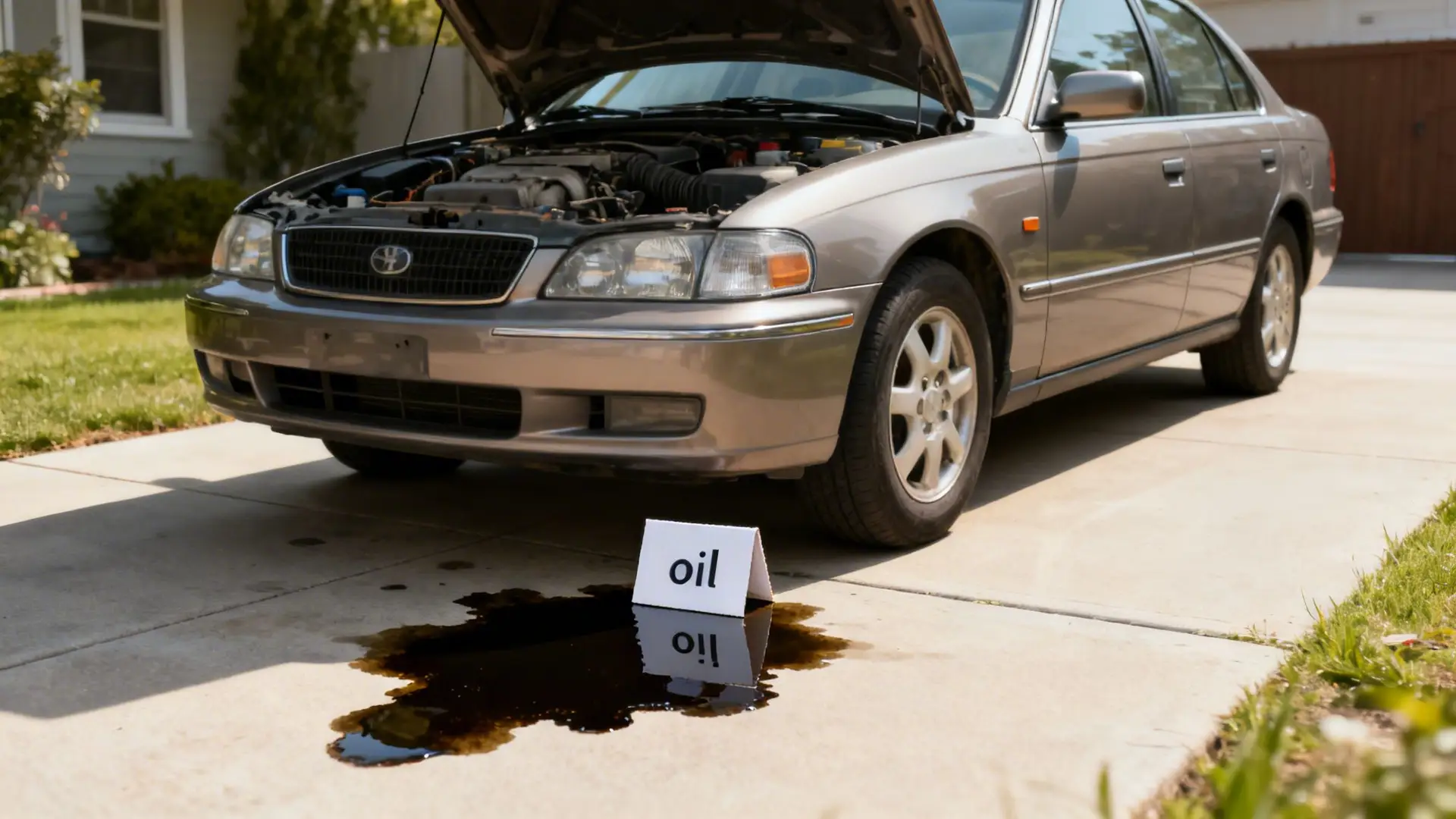
Finding a dark puddle or mysterious spots on your driveway or garage floor is more than just an unsightly mess; it's a clear signal from your car that something is wrong. An active oil leak is one of the most visible signs your car needs an oil change and, more importantly, an inspection. These drips mean your engine is losing its vital lubricant between services, which can accelerate wear and tear.
What Causes Oil Leaks?
Oil leaks typically happen when seals, gaskets, or hoses degrade over time. The constant exposure to heat and pressure causes these components to become brittle, crack, or shrink, allowing oil to seep out. Even a small leak can become a big problem, as the gradual loss of oil can lead to a dangerously low level before your next scheduled oil change.
- Aging Gaskets: The valve cover gasket and oil pan gasket are common culprits, especially on high-mileage vehicles. They dry out and can no longer create a tight seal.
- Worn Seals: Crankshaft or camshaft seals can wear down from constant rotation, allowing oil to escape from the front or rear of the engine.
- Damaged Oil Pan: Striking road debris can crack or puncture the oil pan, leading to a significant and immediate leak.
Distinguishing oil from other fluids is key. Engine oil is typically black or brown, while transmission fluid is often red, and coolant can be green, pink, or orange. Noticing the color and location of the leak provides valuable clues for a technician.
Actionable Steps When You Spot a Leak
Ignoring an oil leak is a gamble. What starts as a few drips can quickly escalate, potentially leaving you with a seized engine and a massive repair bill.
Expert Insight: Think of a small oil spot as a crack in a dam. It may seem insignificant at first, but the constant pressure will eventually cause a major failure. Addressing it early prevents a catastrophe.
If you notice a leak, place a large piece of cardboard under your car overnight. This will help you confirm the leak's source, size, and color. Check your oil level with the dipstick more frequently and be prepared to add oil as needed to maintain a safe level. Most importantly, bring your vehicle to a professional for diagnosis. At Express Lube & Car Care, our ASE-certified technicians can pinpoint the exact source of the leak, whether it's a simple gasket replacement or a more complex seal repair, ensuring your engine remains protected.
5. Burning Oil Smell, Visible Exhaust Smoke, or Reduced Fuel Efficiency
Your senses of smell and sight, combined with a little tracking, can reveal some of the most serious signs your car needs an oil change. A sharp, burning oil smell inside or outside your car, visible blue smoke from the exhaust, or a noticeable drop in your miles per gallon (MPG) are all red flags. These symptoms indicate that old, degraded oil is causing problems or that oil is leaking and burning where it shouldn't be.

Unpacking the Symptoms
These sensory warnings point to different underlying issues, all tied back to your engine oil's health and containment. Worn internal components or failing seals can allow oil to enter the combustion chamber or leak onto hot engine and exhaust parts, creating smoke and odors. Furthermore, oil that has lost its viscosity increases friction, forcing the engine to work harder and consume more fuel.
- Blue Exhaust Smoke: This is a classic sign that oil is being burned in the combustion chambers. It often points to worn piston rings or valve seals, a common issue in higher-mileage vehicles.
- Burning Oil Smell: If you smell hot or burning oil, it could be leaking from a valve cover gasket or another seal and dripping onto the hot exhaust manifold.
- Reduced Fuel Efficiency: When oil degrades, it can no longer lubricate parts effectively. This increased internal friction makes your engine less efficient, resulting in a measurable decline in your MPG.
These are not subtle hints; they are direct communications from your vehicle that its most vital fluid is failing to do its job or is escaping its proper channels. Ignoring them can lead to rapid and expensive engine damage.
Actionable Steps for Sensory Warnings
If you notice any of these signs, prompt action is critical. These symptoms often progress from minor annoyances to major failures if left unaddressed.
Expert Insight: Blue smoke and burning smells are your engine’s cry for help. Think of it like this: smoke means something is burning that shouldn't be. In your engine, that's a serious problem that old, ineffective oil can no longer prevent or may even be causing.
Start by tracking your fuel economy at each fill-up. If you see a consistent drop of 10% or more, it’s a strong indicator that service is needed. If you see blue smoke or smell burning oil, check your oil level immediately. If it's low, top it off, but make a plan to visit a professional right away. At Express Lube & Car Care, our ASE-certified technicians can diagnose the source of the leak or burn-off, perform a crucial oil change with high-quality oil, and recommend any necessary seal or gasket repairs to prevent further damage.
6. Overdue Oil Change Intervals Based on Time or Mileage
Among the most reliable signs your car needs an oil change is simply knowing you’ve passed the recommended service date or mileage. Unlike other warnings that appear once a problem has started, tracking your service intervals is a proactive measure that prevents issues from developing. Oil degrades chemically over time through oxidation and additive depletion, even if the car isn’t driven frequently.
The Duality of Time vs. Mileage
Vehicle manufacturers provide specific service intervals for a reason, and they always include both a mileage and a time component (e.g., 5,000 miles or six months, whichever comes first). Ignoring either one accelerates wear and shortens engine life. A vehicle that sits in a garage still experiences oil degradation, while a high-mileage commuter car breaks down oil through constant heat and friction.
- Conventional Oil: Typically requires changing every 3,000 to 5,000 miles or every six months.
- Synthetic Blend: Can often extend the interval to 5,000 to 7,500 miles.
- Full Synthetic Oil: The most robust option, allowing for intervals of 10,000 to 15,000 miles or even once a year in some vehicles.
In the Texas heat, oil is subjected to more thermal stress, which can cause it to break down faster. For drivers in Richland Hills and the surrounding areas, paying close attention to these intervals is especially important. You can learn more about deciding between oil change mileage or time to better protect your engine in our local climate.
Actionable Steps for Staying on Schedule
Keeping track of your last service is simple and highly effective. Neglecting this basic maintenance is a direct path to preventable, and often expensive, engine repairs.
Expert Insight: Think of your oil change interval as the engine's expiration date. Using oil past this point means you're no longer giving your engine the protection it was designed to have.
The easiest way to stay on top of this is to place the service sticker from your last oil change in the top-left corner of your windshield. When you visit Express Lube & Car Care, our technicians will apply a new sticker with the date and mileage for your next due service. This simple visual cue removes all the guesswork, ensuring your car gets the attention it needs, right on time.
7. Rough Idle, Hesitation, or Engine Vibration
One of the less obvious but important signs your car needs an oil change is a change in how smoothly your engine runs. If you notice your car shaking or vibrating at a stoplight (rough idle) or stumbling when you try to accelerate (hesitation), old, degraded oil could be the culprit. These symptoms occur because the oil has lost its ability to properly lubricate critical internal components.
How Old Oil Causes Performance Issues
Clean motor oil creates a thin, protective film between moving parts, reducing friction and allowing them to glide smoothly. As oil ages, it breaks down and picks up contaminants, becoming thicker and less effective. This increased friction forces parts like valve lifters and camshafts to work harder, leading to the vibrations and hesitation you feel.
- Cold Starts: Symptoms are often most noticeable during a cold startup, as the thick, old oil struggles to circulate. The roughness may improve as the engine warms up.
- High-Mileage Vehicles: Cars with many miles on the clock are especially sensitive to oil condition. A severely overdue oil change can make a high-mileage engine idle very roughly.
- Fleet Vehicles: Business vehicles on extended service intervals often exhibit hesitation under load, a direct result of oil degradation impacting performance over thousands of miles.
This is a clear indicator that your engine isn't getting the lubrication it needs for optimal function. Ignoring these vibrations can lead to premature wear on sensitive engine components.
Actionable Steps for Engine Roughness
If you notice your engine’s performance has become rough, inconsistent, or shaky, don't ignore it. While other issues like spark plugs or fuel injectors can cause similar symptoms, checking your oil is the fastest and most affordable first step.
Expert Insight: Think of your engine's smoothness as its vital sign. A sudden rough idle is like a fever; it's a symptom that something is wrong internally. Often, a simple oil and filter change is the immediate cure.
When you notice these signs, document when they happen (e.g., only on cold mornings, during city driving) and bring your vehicle in. At Express Lube & Car Care, our ASE-certified technicians can quickly assess your oil's condition. An immediate oil change often restores smooth operation. If the problem persists, we can then perform a more in-depth diagnostic to check the fuel or ignition systems, ensuring your car is safe and reliable.
7-Point Comparison: Signs Your Car Needs an Oil Change
| Indicator | 🔄 Complexity | Resources Required | ⭐ Effectiveness | 📊 Expected Outcomes | 💡 Ideal Use Cases / Key Advantages |
|---|---|---|---|---|---|
| Oil Change Light or Service Engine Soon Warning | Low — automated onboard logic, simple to read | Vehicle sensors/OBD; technician to interpret/reset | ⭐ High — predictive but model-dependent | Timely service, reduced sludge risk, warranty compliance | Best for modern cars; eliminates guesswork; reset after service |
| Dark, Dirty, or Sludgy Oil on the Dipstick | Low — visual check, user interpretation needed | Dipstick access, visual comparison, basic knowledge | ⭐ Medium-High — immediate but subjective | Early detection of degradation; prompts service before symptoms | Ideal for routine monthly checks and drivers in harsh climates |
| Engine Knocking or Ticking Noises | Moderate–High — audible warning requiring quick diagnosis | Immediate inspection, technician diagnosis, possible urgent service | ⭐ High — strong indicator of lubrication failure | Prevents catastrophic failure if addressed promptly; may reveal damage | Stop driving and seek urgent service; record sound for technicians |
| Oil Leaks or Spots Under Your Vehicle | Low detection / variable repair complexity | Visual inspection, clean surface/paper, mechanic for repairs | ⭐ High (visible) — clear sign of fluid loss, source may be complex | Prevents oil loss and environmental contamination; identifies seals/gaskets | Park on clean surface to document; brings customers to comprehensive shops |
| Burning Oil Smell, Exhaust Smoke, or Reduced Fuel Efficiency | Moderate — sensory + measurable, needs diagnostic confirmation | Fuel-economy records, smoke observation, compression/engine tests | ⭐ High — often signals oil burning or advanced wear | Identifies ring/seal wear or leaks; may require major repair | Track MPG and stop if heavy smoke; high priority diagnostic |
| Overdue Oil Change Intervals (Time or Mileage) | Low — objective scheduling, easy to track | Service records, reminders, access to quick-lube service | ⭐ High — preventive and widely recommended | Consistent engine protection, warranty preservation, longer life | Best for routine maintenance; use reminders and walk-in services |
| Rough Idle, Hesitation, or Engine Vibration | Moderate — multiple potential causes, needs diagnosis | OBD-II scan, oil check, technician diagnostics | ⭐ Medium — can indicate oil issues but also other faults | Improved drivability after remedy; may prevent escalation | Check oil first; document when symptoms occur for accurate diagnosis |
Drive with Confidence: Your Next Steps for a Healthy Engine
Your vehicle is a complex machine, but its fundamental needs are often straightforward. Recognizing the signs your car needs an oil change is a crucial skill for any driver, turning you from a passive passenger into a proactive owner. This article has guided you through the most common indicators, from the obvious dashboard warnings and dipstick readings to the more subtle clues like engine noises, unusual smells, and a drop in fuel efficiency. Each sign is your engine’s way of communicating a critical need.
Mastering this knowledge moves routine maintenance from a chore to a strategy. Instead of reacting to a problem, you can anticipate your engine's needs, preventing the accelerated wear and tear that leads to costly and inconvenient breakdowns. Clean, effective oil is the lifeblood of your engine, providing lubrication, cooling, and cleaning. Ignoring the need for an oil change is like asking a marathon runner to compete without water; eventually, the system will break down from stress and heat.
Key Takeaways for Proactive Engine Care
The most important takeaway is that your vigilance matters. A quick five-minute check of your oil level and condition once a month can save you thousands in potential repairs. Don't dismiss a small oil spot on your driveway or a new ticking sound under the hood; these are early warnings.
Here are the actionable steps to take starting today:
- Establish a Routine: Mark your calendar based on your manufacturer's recommended interval or your last service date. For many drivers in the Richland Hills area, the high heat and stop-and-go traffic mean following the "severe driving conditions" schedule is a wise choice.
- Trust Your Senses: Pay attention to how your car sounds, smells, and feels. A rough idle or a burning oil smell are not normal and warrant immediate investigation.
- Act on Warnings: An illuminated oil light is an urgent call to action. Pull over safely as soon as possible and check your oil level. Continuing to drive could cause catastrophic engine failure.
Ultimately, these practices aren't just about avoiding repairs; they are about ensuring reliability. A well-maintained vehicle gives you the freedom and peace of mind to handle daily commutes, family road trips, and business needs without the looming anxiety of a potential breakdown. By investing a small amount of time and money into regular oil changes, you are protecting a significant asset and ensuring the safety of yourself and your passengers.
Don't wait for a warning light to dictate your schedule. If you've noticed any of the signs your car needs an oil change, the ASE-certified team at Express Lube & Car Care is ready to help with fast, walk-in service. Visit us in Richland Hills for a professional oil change that protects your engine and keeps you driving with confidence.