

Your vehicle's spark plugs are the unsung heroes of your engine, delivering the critical spark that ignites the fuel-air mixture and brings your car to life. Though small, their role is immense, and when they begin to wear out, the effects on performance are anything but subtle. Ignoring the early warnings can lead to a cascade of problems, from poor gas mileage and sluggish acceleration to expensive catalytic converter damage and even a complete no-start situation.
This guide is designed to help you decode your engine's distress signals. We'll detail the seven most common signs of bad spark plugs, providing actionable insights to help you identify the problem before it escalates. Understanding what symptoms like engine misfires, a rough idle, or a sudden drop in fuel economy mean is the first step toward a reliable repair. For drivers in Richland Hills and Northeast Tarrant County, knowing when to seek a professional diagnosis from the ASE-certified technicians at Express Lube & Car Care can save you time, money, and the headache of a roadside breakdown. Let’s dive into what your engine is trying to tell you.
1. Engine Misfiring and Hesitation During Acceleration
One of the most common and noticeable signs of bad spark plugs is an engine that misfires or hesitates. A misfire happens when one or more of your engine's cylinders fails to ignite the fuel-air mixture at the correct time. This results in a jarring stutter, a noticeable loss of power, or a stumbling sensation, especially when you press the gas pedal.
The reason this happens is simple: worn, fouled, or damaged spark plugs cannot produce the strong, consistent spark needed for efficient combustion. This incomplete burn process leaves unspent fuel in the cylinder, causing the engine to run erratically. For drivers in Richland Hills, this might feel like a sudden jolt when accelerating from a stoplight or a dangerous lack of power when merging onto a busy highway like NE Loop 820.

Why Misfires Matter
An occasional, minor hiccup might not seem serious, but persistent misfiring is a critical warning sign. Ignoring it can lead to more significant and costly engine problems, including damage to your catalytic converter, a key component of your vehicle's exhaust system. A misfiring engine also burns more fuel, drastically reducing your vehicle's fuel economy and increasing emissions.
Key Insight: Engine hesitation is not just an annoyance; it’s a direct indicator that your engine's combustion process is compromised. The spark plug is often the primary culprit.
Actionable Tips for Drivers
If you suspect your vehicle is misfiring, it's crucial to take note of the specific conditions to help technicians diagnose the problem quickly and accurately.
- Note the Conditions: Pay attention to when the hesitation occurs. Does it happen during a cold start, under heavy acceleration, or at a specific RPM range? This information is invaluable for a technician.
- Ease Off the Pedal: If your engine is struggling, avoid aggressive driving. Hard acceleration puts extra strain on a compromised ignition system.
- Schedule a Diagnostic Check: Misfires can trigger your check engine light. Don't ignore it. The team at Express Lube & Car Care can run a diagnostic scan to pinpoint the exact cylinder that's failing and determine if a bad spark plug is the cause.
2. Difficulty Starting or Hard Cold Starts
Another one of the most frustrating signs of bad spark plugs is difficulty starting your vehicle, especially during a cold start. This happens when the engine cranks but takes much longer than usual to turn over and ignite. You might find yourself turning the key for several seconds, or even making multiple attempts before the engine finally rumbles to life.
The issue stems from the spark plugs' inability to generate a strong enough spark in a cold engine. Worn or fouled plugs struggle to ignite the fuel-air mixture when temperatures are lower, a common scenario on cooler Texas mornings or after your car has been parked overnight. For busy professionals in Richland Hills, this can mean an unpredictable and frustrating start to the daily commute, turning a simple key turn into a moment of uncertainty.

Why Hard Starts Matter
A hard start is more than just an inconvenience; it puts excessive strain on other critical components of your vehicle. The prolonged cranking can wear out your starter motor and drain your battery, potentially leading to multiple system failures. Many drivers mistakenly blame the battery for starting issues when the real culprit is a weak spark from failing plugs. Addressing this early prevents a cascade of more expensive electrical and starting system repairs down the road.
Key Insight: While a weak battery can cause starting problems, a healthy battery with bad spark plugs will still result in a hard start. The engine turns over, but the ignition is delayed.
Actionable Tips for Drivers
If your car is becoming difficult to start, don't wait for it to leave you stranded. These steps can help you manage the situation and get the right diagnosis.
- Rule Out the Obvious: Many drivers confuse a bad battery with bad plugs. If your battery is more than three years old, it's wise to have it tested first. You can learn more about how to know if your battery is failing to help distinguish between the two issues.
- Avoid Excessive Cranking: If the engine doesn't start after a few seconds, give the starter a rest for a minute before trying again. Continuous cranking can overheat and damage the starter motor.
- Schedule a Diagnostic Check: The most reliable way to identify the cause is with a professional inspection. The technicians at Express Lube & Car Care can perform a comprehensive ignition system diagnostic to check your spark plugs, coils, and wiring to find the root cause of your hard starts.
3. Reduced Fuel Economy and Increased Gas Consumption
One of the most financially impactful signs of bad spark plugs is a sudden and unexplained drop in your vehicle's fuel economy. If you find yourself visiting the gas station more frequently despite your driving habits remaining the same, inefficient spark plugs are a likely culprit. This happens because worn-out plugs can't effectively ignite the fuel-air mixture in the cylinders.
This incomplete combustion forces your engine to burn more gasoline to produce the same amount of power, directly wasting fuel with every mile driven. For budget-conscious families in Richland Hills tracking their expenses, this can mean a noticeable increase in monthly fuel costs. What seems like a minor issue quickly adds up, making a simple spark plug replacement a cost-effective solution in the long run.
Why Fuel Efficiency Matters
Poor fuel economy isn't just about the extra money spent at the pump; it's a clear indicator that your engine is working harder than it should. This added strain can accelerate wear on other critical components and increase harmful exhaust emissions. Addressing the root cause, often the spark plugs, not only saves you money but also contributes to better overall engine health and a smaller environmental footprint. Keeping your vehicle running efficiently is a key part of a comprehensive car tune-up.
Key Insight: A significant drop in your MPG is your engine's way of telling you it's wasting fuel. Failing spark plugs are a primary cause of this inefficiency, turning gasoline into wasted energy instead of power.
Actionable Tips for Drivers
If you suspect your fuel economy has taken a hit, being proactive can help diagnose the problem and prevent further waste.
- Track Your MPG: Start manually tracking your fuel consumption. Note your mileage when you fill up and divide the miles driven on that tank by the number of gallons you add. A consistent drop of 10% or more is a strong signal to get your ignition system checked.
- Mention It During Service: When you bring your car in for a routine oil change at Express Lube & Car Care, mention your concerns about fuel consumption. Our ASE-certified technicians can inspect the spark plugs as part of a diagnostic check.
- Consider Other Factors: While spark plugs are a common cause, other issues like incorrect tire pressure or a clogged air filter can also affect MPG. A full vehicle inspection can ensure all systems are optimized for peak efficiency.
4. Check Engine Light Illumination
One of the most definitive signs of bad spark plugs is the illumination of your vehicle's check engine light (CEL). This warning light is your car's primary way of telling you that its onboard diagnostic (OBD-II) system has detected a problem with the engine, ignition, or emissions systems. Worn-out spark plugs are a frequent cause, triggering specific diagnostic trouble codes (DTCs) that point directly to combustion issues.
A failing spark plug can lead to misfires, which the OBD-II system logs immediately. You might see codes like P0300 for a random misfire or P0301-P0308, each indicating a misfire in a specific cylinder. For busy commuters in Richland Hills, a steady or flashing check engine light on their dashboard is a clear signal that professional attention is needed right away to prevent more serious damage.

Why the Check Engine Light Matters
Ignoring the check engine light is a costly gamble. A steady light indicates a problem that needs attention, but a flashing light signals a severe misfire that is actively damaging your catalytic converter by dumping unburned fuel into the exhaust. This can turn a simple spark plug replacement into a repair costing thousands of dollars. Addressing the root cause promptly preserves engine health, maintains fuel efficiency, and ensures your vehicle can pass its state emissions test.
Key Insight: The check engine light isn't just a generic warning; it's a data-driven alert. The codes stored in your vehicle's computer provide a precise roadmap for technicians to diagnose issues like failing spark plugs.
Actionable Tips for Drivers
When that amber light appears, don't panic. Instead, take clear, methodical steps to get the problem resolved quickly and affordably.
- Note Any Other Symptoms: Is the light on in conjunction with a rough idle, poor acceleration, or decreased fuel economy? Providing these details to a technician can speed up the diagnosis.
- Don't Assume It Will Go Away: While some minor issues can cause the light to turn off, an ignition-related problem rarely fixes itself. Prompt action is always the best course.
- Get a Professional Code Scan: The ASE-certified technicians at Express Lube & Car Care can perform a diagnostic scan to retrieve the specific trouble codes. This eliminates guesswork and pinpoints whether bad spark plugs are the problem. You can learn more about what triggers the check engine light on our blog.
5. Rough Idle and Vibration at Stop Lights
One of the most distracting and uncomfortable signs of bad spark plugs is a rough idle. This symptom makes its presence known when your vehicle is stopped but the engine is running, such as at a red light or in park. You'll feel a noticeable shaking, shuddering, or vibration coming from the engine bay, which can often be felt through the steering wheel or the entire car frame.
The root cause is inconsistent combustion. When spark plugs are worn out or fouled, they can't reliably ignite the fuel-air mixture in every cylinder at idle speed. This causes some cylinders to fire correctly while others misfire intermittently. This imbalance in power delivery creates the uneven, rough sensation. For commuters stopped at busy Richland Hills intersections, this can turn a routine traffic light wait into a very unsettling experience.
Why a Rough Idle Matters
A rough idle is more than just an annoyance; it's a clear signal that your engine isn't operating smoothly. Prolonged rough idling puts extra stress on engine mounts and other components. It also indicates poor fuel efficiency, as the engine is struggling to maintain a steady RPM, often burning more gasoline than necessary just to keep from stalling. Ignoring this can mask more serious underlying issues.
Key Insight: A smooth idle is a sign of a healthy engine. If your car shakes and vibrates at a standstill, it’s a direct symptom of an imbalanced combustion process, with faulty spark plugs being a very common culprit.
Actionable Tips for Drivers
If your car feels like it's trembling at every stop sign, pay close attention to the details to help our technicians at Express Lube & Car Care diagnose the issue efficiently.
- Note When It Happens: Does the vibration occur when the engine is cold and then smooth out as it warms up? This often points directly to ignition system components like spark plugs.
- Test Electrical Loads: Turn on your air conditioning, headlights, or radio. If the shaking gets worse, mention this to your technician, as it indicates the engine is struggling under additional load.
- Schedule a Diagnostic Check: Don't wait for the problem to worsen. A rough idle is a clear sign that your vehicle needs attention. We can quickly inspect your spark plugs and ignition system to identify the source of the problem and recommend a solution.
6. Wet or Fouled Spark Plugs with Visible Carbon Buildup
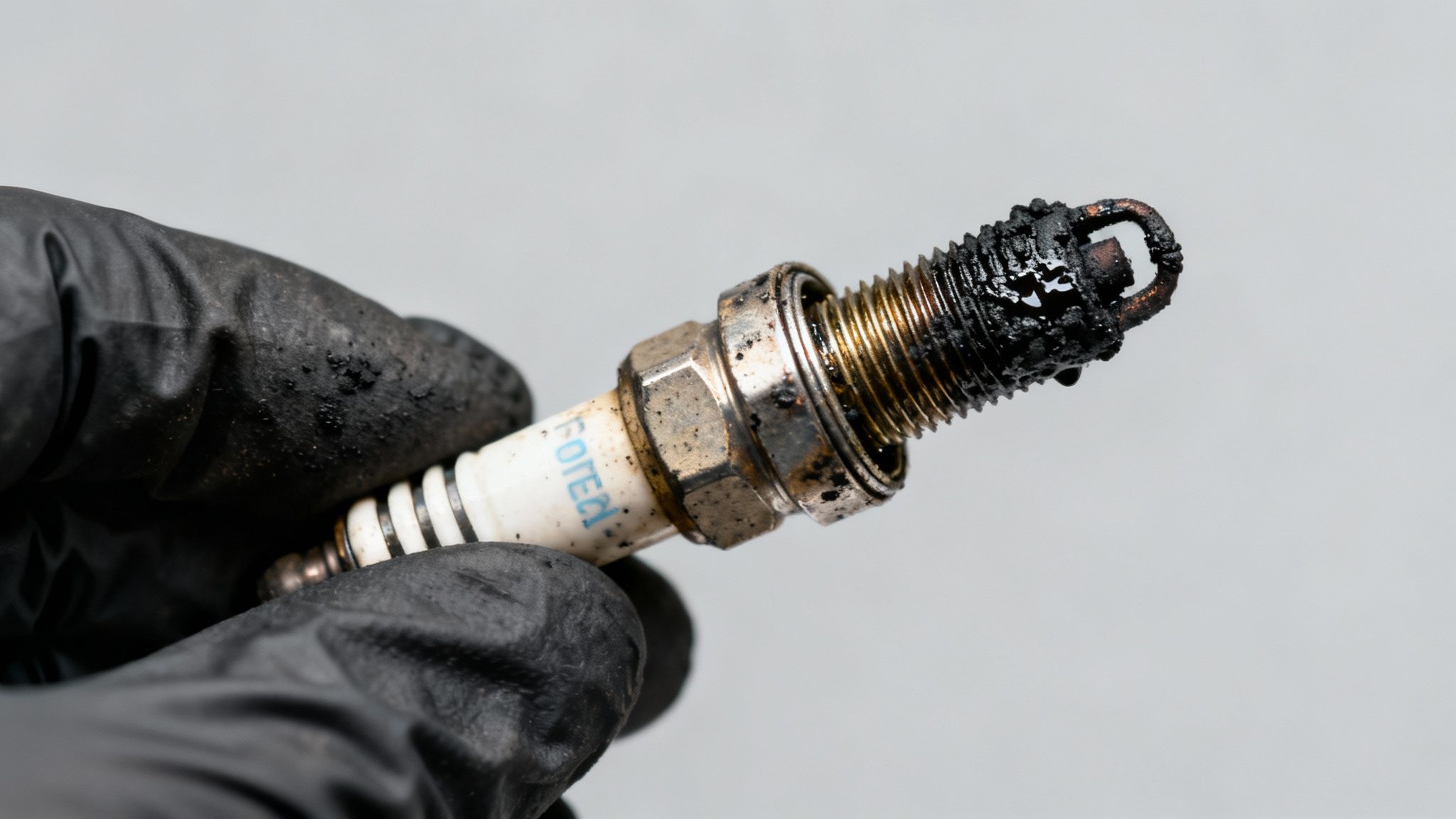
Sometimes, the most definitive signs of bad spark plugs are the ones you can see with your own eyes. A visual inspection that reveals a fouled, wet, or excessively worn spark plug provides concrete proof of an ignition system problem. This physical evidence often confirms the performance issues you've been experiencing on the road.
A fouled spark plug will be covered in heavy black carbon deposits, which act as an insulator and weaken the spark. If the plug appears wet or oily, it often points to unburned fuel or oil entering the combustion chamber. Both conditions prevent the strong, clean spark necessary for efficient combustion, leading directly to many of the other symptoms on this list, like misfires and poor fuel economy. For Richland Hills drivers, this physical check can turn suspicion into a clear diagnosis.
Why Visual Inspection Matters
Unlike interpreting symptoms like a rough idle, which could have multiple causes, a physically fouled spark plug is undeniable evidence. This direct visual confirmation allows technicians to move past guesswork and make a precise recommendation. For fleet managers needing to justify maintenance costs or a budget-conscious family wanting to prevent bigger issues, seeing the damaged part removes all doubt about the need for replacement.
Key Insight: A visual inspection of a spark plug is the most reliable diagnostic step. It provides direct evidence that is far more conclusive than interpreting performance symptoms alone.
Actionable Tips for Drivers
While removing spark plugs is best left to a professional, you can be proactive in managing their condition and ensuring they are inspected at the right time.
- Request an Inspection: Ask the technicians at Express Lube & Car Care to pull and inspect a spark plug during your next oil change. It's a quick and effective way to gauge the health of your ignition system.
- Understand Your Driving Habits: Frequent short trips (under 3 miles) are a primary cause of carbon fouling because the engine doesn't get hot enough to burn off deposits. Try to take your vehicle on a longer drive occasionally to help clean them out.
- Address Fouling Early: Don't wait for fouling to cause a complete misfire. Addressing it at the first sign of trouble prevents cascading damage to other expensive components like your catalytic converter and O2 sensors.
7. Engine Knocking or Pinging Under Acceleration and Load
Another alarming and potentially damaging sign of bad spark plugs is a distinct metallic knocking or pinging sound coming from your engine. This sound is most noticeable when the engine is under strain, such as during hard acceleration, while climbing a hill, or when towing a heavy load. This isn't just a random noise; it's the sound of uncontrolled combustion inside your engine cylinders.
This "knock" happens when the fuel-air mixture ignites prematurely or unevenly instead of in a controlled burn initiated by the spark plug. A worn or incorrect-heat-range spark plug can fail to create a reliable spark, leading to these pockets of uncontrolled explosions. For drivers in Northeast Tarrant County, this might sound like marbles rattling inside your engine as you accelerate onto I-820 or try to climb a steep incline.
Why Knocking Matters
Engine knocking, also known as detonation, is extremely harmful to your engine's internal components. The shockwaves created by this abnormal combustion can damage pistons, cylinder walls, and bearings over time. Ignoring this symptom can lead to catastrophic and expensive engine failure, turning a simple spark plug issue into a major repair. It's a critical warning that your engine's combustion process is dangerously out of sync.
Key Insight: Engine knocking is not just an annoying sound; it's a sign of abnormal combustion that can cause severe internal engine damage if left unaddressed.
Actionable Tips for Drivers
If you hear a knocking or pinging sound, it's essential to act quickly to prevent damage. Pay close attention to the details to help our technicians diagnose the issue.
- Note the Conditions: Tell your mechanic exactly when the noise occurs. Is it only during acceleration, when going uphill, or when the engine is hot? The more specific you are, the faster we can find the root cause.
- Reduce Engine Load: Immediately avoid aggressive driving, heavy towing, and hard acceleration. Driving gently reduces the strain on the engine and can minimize the knocking until you can get it serviced.
- Schedule Comprehensive Diagnostics: Don't delay. The team at Express Lube & Car Care can perform a full ignition system diagnostic to determine if faulty spark plugs are the cause. We'll also check for other potential issues, such as carbon buildup or fuel system problems, that can contribute to engine knock.
7-Point Comparison of Bad Spark Plug Symptoms
| Symptom | 🔄 Implementation complexity | ⚡ Resource requirements & speed | 📊 Expected outcomes / impact | 💡 Ideal use cases / tips | ⭐ Key advantages |
|---|---|---|---|---|---|
| Engine Misfiring and Hesitation During Acceleration | 🔄 Medium — OBD-II scan + cylinder testing | ⚡ Moderate — diagnostic scan, possible plug/coil replacement (1–2 hrs) | 📊 Restored acceleration, prevents catalytic damage and power loss | 💡 Urgent for highway merging, towing, uphill driving | ⭐ Highly noticeable symptom that directs ignition inspection |
| Difficulty Starting or Hard Cold Starts | 🔄 Medium — distinguish ignition vs battery/fuel | ⚡ Low–Moderate — quick tests; plug replacement often resolves | 📊 Faster, more reliable cold starts; fewer crank attempts | 💡 Common in cold mornings or after long sits; check before winter | ⭐ Predictable pattern that prompts timely service |
| Reduced Fuel Economy and Increased Gas Consumption | 🔄 Low — track MPG then inspect ignition/fuel | ⚡ Low — monitoring + plug/service (0.5–2 hrs) | 📊 Improved MPG and lower running costs after repair | 💡 Useful for budget-conscious drivers and fleet managers | ⭐ Quantifiable metric to justify maintenance |
| Check Engine Light Illumination | 🔄 Low — OBD-II scan yields targeted DTCs | ⚡ Low — scan is fast; may lead to simple plug/coil fixes | 📊 Identifies misfires; prevents converter damage when addressed | 💡 Any vehicle with CEL; scan immediately to prioritize repair | ⭐ Objective alert with diagnostic codes for technicians |
| Rough Idle and Vibration at Stop Lights | 🔄 Medium — multiple potential causes to isolate | ⚡ Moderate — inspection; may need plugs, mounts, vacuum fixes | 📊 Smoother idle, improved comfort and reduced wear | 💡 Important for urban/stop-and-go driving and passenger comfort | ⭐ Easily noticed symptom that motivates prompt checks |
| Wet or Fouled Spark Plugs with Visible Carbon Buildup | 🔄 Low — visual inspection is definitive | ⚡ Moderate — plug removal (30–60 min); may reveal deeper issues | 📊 Clear justification for replacement; reveals underlying faults | 💡 Ideal during routine service or when fuel richness suspected | ⭐ Definitive, visual confirmation of plug condition |
| Engine Knocking or Pinging Under Acceleration and Load | 🔄 High — knock needs comprehensive diagnostics | ⚡ Moderate–High — may require plugs, fuel/octane change, cleaning | 📊 Eliminates damaging detonation; protects engine longevity | 💡 Immediate attention when towing, climbing hills, or heavy loads | ⭐ Audible, urgent warning that prevents catastrophic damage |
Your Next Step: Get Expert Diagnostics at Express Lube & Car Care
Navigating the various signs of bad spark plugs can feel like deciphering a complex code. From a sputtering engine and rough idle to dwindling fuel economy and that dreaded check engine light, your vehicle has a distinct way of communicating when something is wrong. Throughout this guide, we've broken down the seven most common symptoms, providing you with the knowledge to recognize the early warnings of ignition system trouble.
The key takeaway is that these tiny components have a massive impact on your vehicle's overall health, efficiency, and reliability. Ignoring a misfiring engine or a hard start isn't just an inconvenience; it's an open invitation for more severe and costly problems, such as catalytic converter failure or internal engine damage. Recognizing these signals early empowers you to take proactive steps, saving you from expensive repairs and ensuring your daily drive remains smooth and predictable.
Why Professional Diagnostics Matter
While the signs we've discussed are strong indicators, they aren't definitive proof. Modern vehicles are intricate systems where symptoms can overlap. For instance, a rough idle could be caused by failing spark plugs, but it could also point to a faulty fuel injector, a vacuum leak, or a dirty mass airflow sensor. This is where professional expertise becomes invaluable.
Attempting a DIY diagnosis without the right tools can lead to wasted time, money spent on unnecessary parts, and the potential for overlooking the true root cause. At Express Lube & Car Care, our ASE-certified technicians utilize advanced diagnostic scanners that read your vehicle’s computer codes and provide real-time data. This technology allows us to pinpoint the exact source of the problem with precision, confirming whether the issue lies with the spark plugs or another component entirely. This ensures you only pay for the repairs you genuinely need, with no guesswork involved.
Your Local Solution for Engine Health
For drivers in Richland Hills and across Northeast Tarrant County, a reliable vehicle is a necessity, not a luxury. Whether you're a commuter, a busy parent, or a small business owner managing a fleet, you need fast, dependable service. We understand that you can't afford downtime. That’s why our no-appointment-needed model is designed to fit your schedule, getting you back on the road quickly without compromising on quality. Don't let the subtle signs of bad spark plugs escalate into major engine trouble. Take the crucial next step and let our trusted team provide the clarity and expert service your vehicle deserves.
Is your car showing symptoms of failing spark plugs? Don't wait for a small issue to become a major repair bill. Visit Express Lube & Car Care in Richland Hills today for a comprehensive diagnostic check, or explore our services online at Express Lube & Car Care to see how we can restore your vehicle's performance and reliability.