

That dreaded flicker of a dashboard light usually kicks off a two-part panic. First, what’s wrong with my car? And second, who can I possibly trust to fix it without getting ripped off?
Finding a reliable mechanic can feel like searching for a needle in a haystack, especially when you're already stressed out. The real secret is to find your go-to shop before you're stuck on the side of the road.
Starting Your Search for a Trusted Mechanic

The U.S. has over 300,000 auto repair businesses, and the global industry is massive—projected to hit around $664.3 billion by 2028. That's a staggering number of options. You can dive deeper into the auto repair industry's scale with these detailed market insights on AAMCO.com.
With so many choices, you need a smart strategy to cut through the noise. It’s not about finding just any mechanic; it's about finding the right one for you and your car.
To get started, let's break down the initial steps into a simple checklist. This will help you organize your search and quickly build a list of promising local shops.
Your Initial Mechanic Search Checklist
| Action Step | What to Look For | Where to Look |
|---|---|---|
| Gather Recommendations | Firsthand, positive experiences from people you trust. | Friends, family, coworkers, and local community groups (Facebook, Nextdoor). |
| Check Digital Reviews | Consistent positive feedback on honesty, quality, and communication. | Google Maps, Yelp, and specialized sites like RepairPal. |
| Verify Certifications | Look for signs of professional standards and expertise. | Shop websites, front office displays for ASE or RepairPal logos. |
This simple process of gathering word-of-mouth tips and then backing them up with online research is the most effective way to start filtering out the bad apples.
Leverage Local Knowledge
Your search should always start with the people who drive the same Richland Hills roads you do. Nothing beats a good old-fashioned word-of-mouth recommendation.
Tap into your local network by asking:
- Friends, Family, and Coworkers: Who do they trust with their cars? They'll give you the unfiltered truth about their experiences with local shops.
- Local Community Groups: Neighborhood forums on Facebook or Nextdoor are absolute goldmines. A quick post asking, "Who's the most honest mechanic in the area?" can generate a ton of candid feedback in just a few hours.
- Your Roadside Assistance Provider: If you have a service like AAA, check their network. They often have a list of approved and pre-vetted auto repair facilities that meet their standards.
A strong recommendation from someone who was recently happy with their service is your best starting point. It helps you sidestep shops that have flashy ads but deliver subpar work.
Use Digital Tools Wisely
Once you have a handful of names, it's time to hit the internet to vet them. This is where you separate the truly great shops from the merely average ones.
Use platforms like Google Maps, Yelp, and RepairPal to dig into reviews, look at photos of the shop, and confirm their hours and location. Don’t just look at the star rating—read the actual reviews. Are customers praising the shop for its honesty, fair pricing, and clear communication?
Pay special attention to how the shop owner or manager responds to negative reviews. A defensive or dismissive reply is a huge red flag. A professional, calm, and solution-oriented response, on the other hand, is a fantastic sign of good customer service.
Finally, look for proof of their qualifications. Reputable shops proudly display their credentials. Certifications like ASE and RepairPal are more than just logos on a window—they signal a serious commitment to ongoing technician training, high-quality repairs, and customer satisfaction.
How to Vet a Mechanic from Home
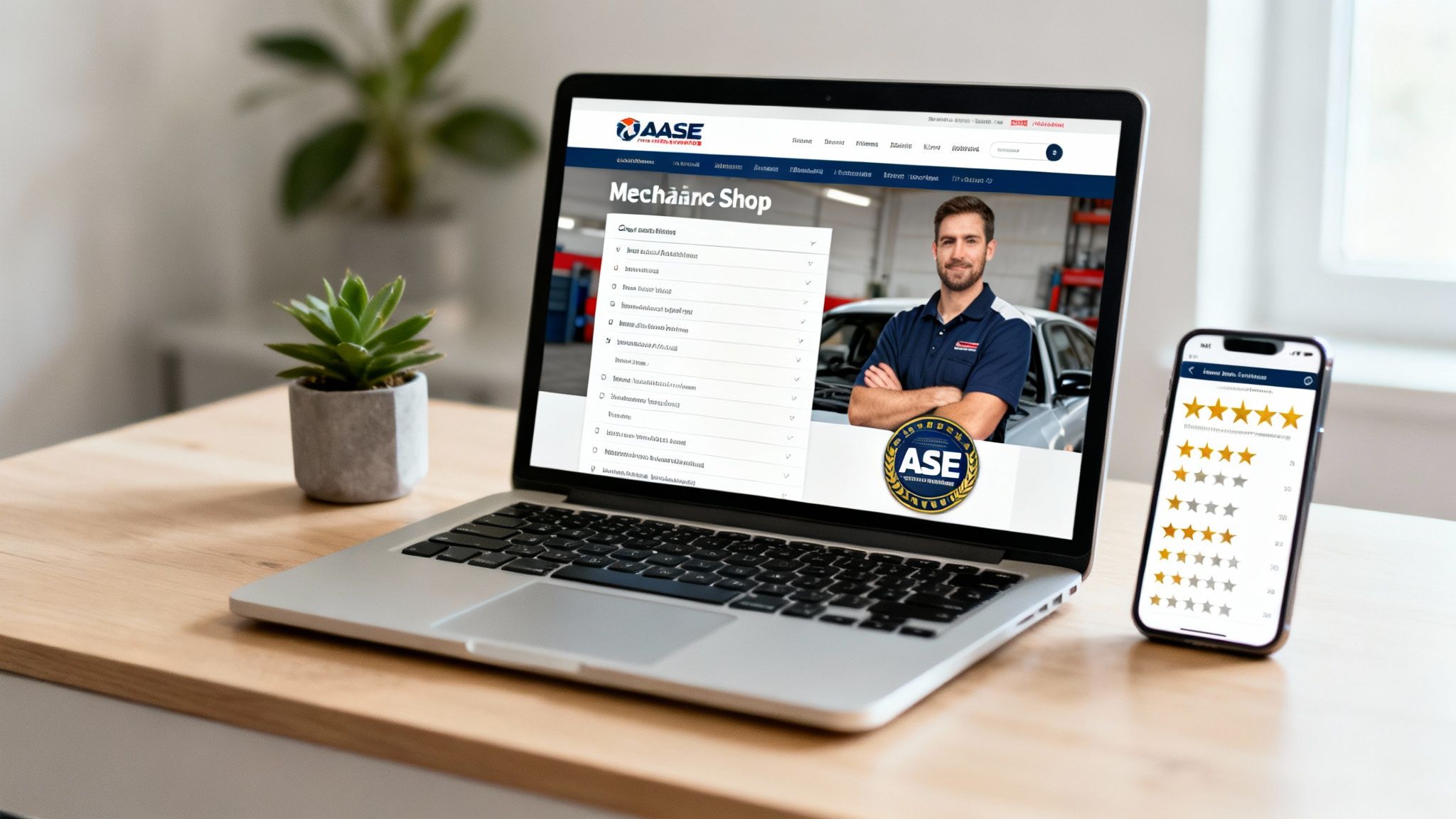
You’ve got your shortlist. Now the real digging begins—and you can do most of it right from your couch. A shop's website is your first stop, and it tells you a lot more than just their address. Think of it as a window into how they run their business.
A professional, easy-to-navigate site is a good sign. You’re looking for a clear, detailed list of services. "Auto repair" is way too vague. You want to see specifics like brake service, transmission work, or A/C repair. This shows they know what they’re doing.
Also, take a peek at photos of the shop itself. Is it clean, organized, and well-lit? That level of care usually translates directly to the quality of their work. A messy, chaotic garage can be a major red flag for how they'll treat your vehicle.
Verifying Professional Credentials
Next, it's time to check their qualifications. The single most important thing to look for is the ASE (Automotive Service Excellence) blue seal. This isn't just a sticker; it's proof that their technicians have passed tough exams and have real-world experience. It’s the industry standard for competence.
A reputable shop will be proud of its certifications and display them prominently on their homepage or "About Us" page. If you have to hunt for any mention of credentials—or can't find them at all—that’s a serious problem. Don’t be afraid to immediately cross a shop off your list if they aren't upfront about their team's qualifications.
How to Read Online Reviews Critically
Online reviews are a goldmine of information, but you have to know how to read between the lines. The overall star rating doesn't tell the whole story. You need to dive into what people are actually saying, both good and bad.
As you sort through reviews, keep these things in mind:
- Look for patterns. Are multiple customers talking about the shop's honesty and great communication? That’s a great sign. On the flip side, if you see repeated complaints about surprise fees, missed deadlines, or the same problem coming back, steer clear.
- Check how the shop responds. Pay close attention to how the owner or manager replies to negative reviews. A professional, helpful response shows they care about customer service. A defensive or nasty reply tells you everything you need to know.
- Focus on the details. A one-word review like "Great!" isn't very helpful. Look for reviews that tell a story—describing the initial problem, what the shop did to fix it, and the final outcome. Reviews can reveal a lot about a shop's ability to accurately diagnose car problems, which is a critical skill.
Doing this homework from your computer helps you weed out the questionable shops before you even pick up the phone. It ensures that by the time you're ready to make a call or visit in person, you're only dealing with top-tier candidates.
Alright, let's get into the nitty-gritty of what really matters: communication. A mechanic can have all the technical skills in the world, but if they can't explain what’s wrong with your car in plain English, you’re in for a frustrating experience.
This is where you separate the wrenches from the true professionals. You're not just looking for a one-time fix; you're looking for a long-term partner who will help you keep your car running safely and reliably.
Your first phone call or visit is a huge tell. Are they patient? Do they actually listen as you describe that weird clunking sound your car only makes on Tuesdays? Or do they cut you off and just say, "bring it in"? A great mechanic knows that you drive the car every day, and your observations are the first and most valuable clues.
Putting Them to the Test: Key Questions to Ask
When you make that first call, having a few smart questions in your back pocket can tell you everything you need to know about their business practices.
Think of it as a quick, informal interview. You're hiring them for a critical job, so you have every right to understand how they work before you hand over the keys.
Here are a few questions I always recommend starting with. Their answers will speak volumes.
-
"Can you walk me through your diagnostic process?" A pro will have a clear, step-by-step method. They should be able to explain how they'll track down the problem, what tools they use, and whether there's a set fee for the initial diagnosis. If you get a vague answer like, "We'll just pop the hood and look," that's not a good sign.
-
"Will I get a written estimate before you start any work?" The only acceptable answer here is a confident "yes." Verbal quotes are a massive red flag and can lead to nasty surprises later on. A professional shop will always provide a detailed, itemized estimate for you to approve first.
-
"What’s your take on using OEM versus aftermarket parts?" This question immediately shows you’ve done your homework. Original Equipment Manufacturer (OEM) parts come directly from your car's maker, while aftermarket parts are from other companies. A trustworthy mechanic will gladly explain the pros and cons of each—like cost, quality, and warranty—and let you make the final call.
Key Takeaway: A mechanic’s willingness to answer your questions without making you feel dumb is one of the biggest green flags you can get. If they use a bunch of technical jargon or seem annoyed by your questions, turn around and walk out.
What a Good, Honest Conversation Looks Like
Let's play this out. Say your car is making that rattling noise we talked about. A transparent mechanic won't just hit you with, "That's your suspension. It'll be $800."
Instead, a conversation with a good mechanic sounds more like this:
"Okay, so we found the rattle is coming from your sway bar links—they've gotten pretty worn out. When you come by, I can actually show you how much play they have. We can replace them with the factory OEM parts for about $800, or we have some high-quality aftermarket ones for around $650. Both options come with a two-year warranty, so it’s really up to you."
See the difference? That kind of communication educates you, gives you control, and shows respect. That's the gold standard you're looking for.
Questions to Ask a Potential Mechanic
To make it even easier, I've put together a quick cheat sheet. These are the essential questions to ask during that first contact to quickly gauge a shop's expertise, transparency, and overall approach to customer service.
| Question Category | Specific Question to Ask | What a Good Answer Sounds Like |
|---|---|---|
| Process & Diagnosis | "What's your process for diagnosing an issue like mine, and is there a fee for that?" | "We'll start with a road test and then use our scanner to check for codes. Our diagnostic fee is X, which we'll apply to the repair if you approve the work." |
| Estimates & Approval | "Will I get a detailed, written estimate for approval before any repairs are done?" | "Absolutely. We never start any work without your signed approval on an itemized estimate. No surprises." |
| Parts & Options | "Do you use OEM or aftermarket parts? Will I have a choice?" | "We can use either. We'll give you quotes for both, explain the differences in warranty and price, and let you decide what works best for your budget." |
| Warranty & Guarantees | "What kind of warranty do you offer on your parts and labor?" | "We stand by our work with a 24-month, 24,000-mile nationwide warranty on both parts and labor." |
| Technician Expertise | "Are your technicians ASE-certified or trained for my specific vehicle brand?" | "Yes, all of our techs are ASE-Certified, and a few specialize in European/Asian/Domestic models. Your car will be in good hands." |
Having these questions ready helps you take control of the conversation and quickly identify the mechanics who are committed to honesty and quality work.
Navigating Repair Costs and Fair Pricing
Let’s talk money. Understanding auto repair costs can feel like trying to read a foreign language, but a good mechanic will always make transparency a priority. A fair price isn't just about the number on the final bill—it's about the honesty and clarity that gets you there.
You want to feel confident you're paying for quality work, not hidden fees or services you never needed in the first place.
When you look at a typical estimate, you'll see it broken down into three main parts: labor rates, parts costs, and shop fees. Labor is usually the biggest chunk, and it reflects the technician’s time and skill. Parts can vary a ton in price, and those small shop fees cover things like properly disposing of old fluids.
A trustworthy shop won't hesitate to walk you through each line item. They’ll explain why a specific part is needed or what a certain service entails. That kind of open dialogue is the hallmark of a mechanic who wants to earn your business for the long haul.
Understanding Fair Market Rates
Cost transparency is a huge green flag, especially with repair prices climbing across the country. According to CCC Intelligent Solutions, the average collision repair now tops $4,730, a 3.8% jump from last year, thanks to rising costs for both parts and labor.
It’s not just body shops, either. Nearly half of all general repair shops now charge labor rates between $120 and $159 per hour. For drivers here in Northeast Tarrant County, this means a price that seems too good to be true probably is. Good mechanics are upfront about these costs, providing clear, written estimates and having honest conversations—not hitting you with a surprise bill. You can dig into the numbers yourself in the CCCis.com Crash Course report.
Why the Cheapest Quote Is Rarely the Best
It's so tempting to go with the lowest estimate, but that’s often a recipe for disaster. An unusually low price is usually a red flag that corners are being cut somewhere. It could mean they're using subpar parts, rushing the job, or—worst of all—making an incomplete diagnosis that will just lead to more problems down the road.
Think of a quality repair as an investment in your car's safety and lifespan. Paying a fair price for an experienced, ASE-certified technician and high-quality parts almost always saves you money and a major headache in the long run.
This chart shows just how much confidence you can gain by simply asking the right questions.
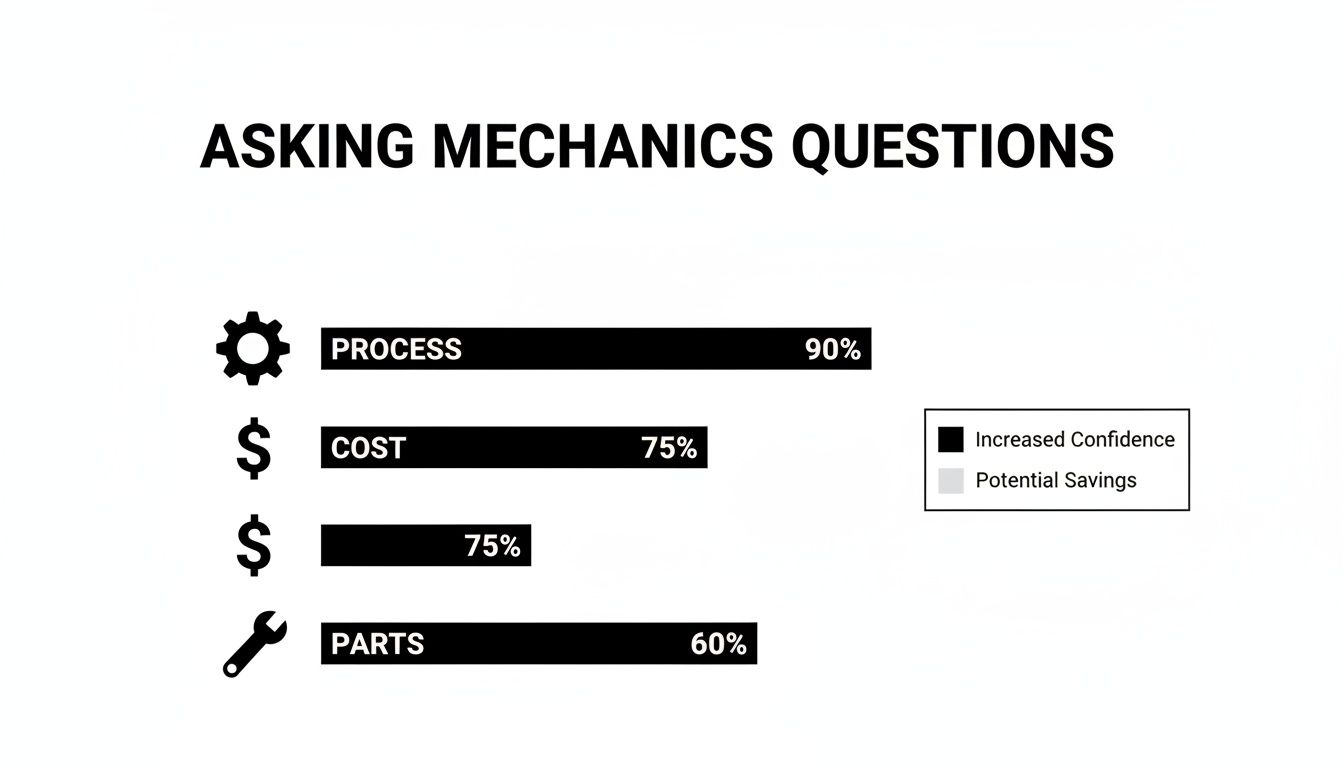
When you feel empowered to ask about the process, the costs, and the parts, you can make a much more informed decision.
How to Spot Fair and Transparent Pricing
A good mechanic makes pricing easy to understand. They build trust by being upfront from the very beginning, making sure you feel in control of the entire repair process.
Here are the signs of fair pricing you should always look for:
- Detailed Written Estimates: You should always get an itemized quote before any work starts. It needs to clearly list all parts, labor costs, and any fees.
- Willingness to Explain Charges: The mechanic or service advisor should be happy to answer your questions without making you feel rushed or silly for asking.
- Options for Parts: A great shop will often give you choices, like between OEM (Original Equipment Manufacturer) and quality aftermarket parts, and explain the pros and cons of each.
A fair price reflects the real value of skilled work, quality components, and a guarantee that the job was done right. It's about building a relationship, not just completing a transaction.
Many local shops that care about their community also find ways to make their services more affordable. For instance, keeping an eye out for monthly specials and community discounts can help you save a few bucks without ever sacrificing quality. It’s a great sign that a shop is committed to taking care of its local drivers.
Common Red Flags to Watch Out For
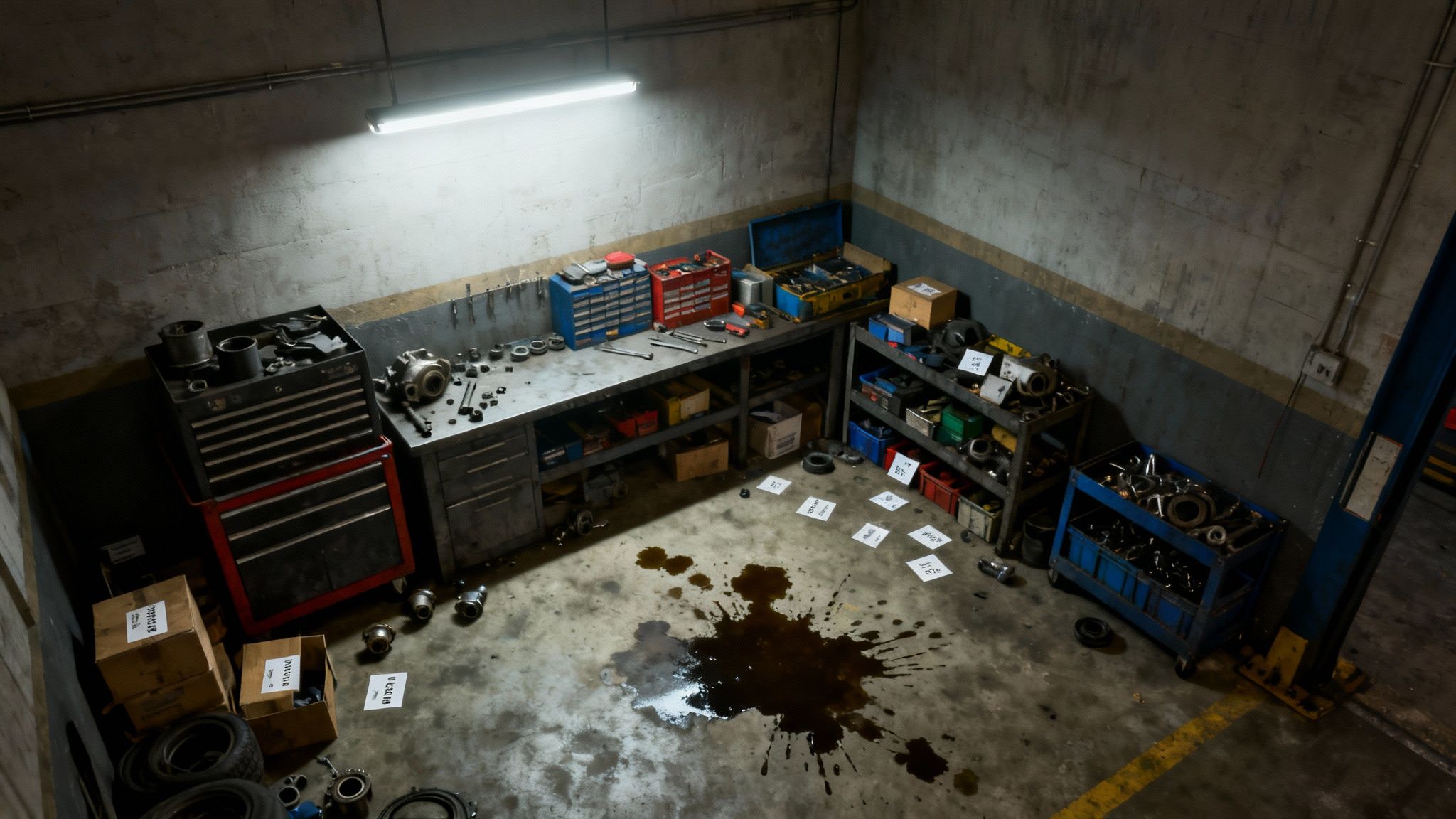
Knowing what to look for in a good mechanic is half the battle. Knowing what to avoid is the other, arguably more important, half.
Your ability to spot the warning signs of a bad shop can save you a world of headaches and a lot of money. These red flags aren't always obvious, but once you know them, you can steer clear of trouble before you ever hand over your keys.
The first and most obvious warning sign is high-pressure sales tactics. A mechanic's job is to advise you, not to hit a sales quota. If you come in for a simple oil change and suddenly feel pressured into an expensive engine flush you don't need, it’s a bad sign.
A professional technician will explain potential issues, help you prioritize what needs fixing now, and respect your decision. They won't use scare tactics like, "If you don't do this today, you'll be stranded tomorrow."
Communication Breakdowns and Vague Estimates
A huge red flag is a lack of clear communication, especially about cost. A professional shop will always give you a detailed, written estimate before starting any work. If all you get is a verbal quote or a vague number scribbled on a notepad, walk away.
This is often a setup for surprise charges and add-ons later. You should never feel uncertain about what you're paying for.
Also, listen to how they explain the repair itself. If they can’t break down the problem and the fix in simple terms you can understand, it’s a problem. Either they don’t truly understand it themselves, or they're being intentionally confusing to justify a higher bill.
Physical and Professional Warning Signs
Sometimes you can spot trouble just by looking around the shop. Yes, auto repair is a messy job, but there's a difference between a busy workspace and total chaos. An extremely disorganized, filthy shop often reflects the quality of their work and a general lack of professionalism.
Beyond the shop's appearance, ask about their credentials. If they can't—or won't—show you proof that their technicians hold ASE certifications, consider it a major problem. This is the industry standard for proving a mechanic’s skill and knowledge.
Keep an eye out for these other critical red flags:
- Refusing to Show You Old Parts: A reputable mechanic will gladly show you the old parts they replaced. If they claim they "already threw them out," they might not have replaced anything at all.
- No Clear Warranty: Every quality repair should be backed by a warranty covering both parts and labor. A shop that doesn’t stand behind its work with a clear, written guarantee isn't one you can trust.
- "Secret" or Special Fixes: If a mechanic claims they have a proprietary technique they can't explain, run. Real auto repair is based on proven, established procedures, not trade secrets.
The bottom line is this: trust your gut. A good mechanic makes you feel confident and informed, not pressured and suspicious. Finding a professional you can rely on means avoiding these red flags and choosing a shop that puts honesty first.
Building a Long-Term Relationship with Your Mechanic
Finding a good mechanic isn't about a one-time fix. It’s about starting a partnership you can count on for years to come. When you stick with one shop, they get to know your car inside and out—its history, its quirks, and its maintenance needs.
That kind of familiarity is invaluable. A technician who knows your vehicle's service record can often spot a small issue before it snowballs into an expensive, inconvenient breakdown. They can give you preventative maintenance advice that actually fits your driving habits, saving you money and stress down the road.
Think of it like having a primary care doctor for your car. You don't have to re-explain the entire patient history every time something feels off; you have an expert who already knows the full story.
Be the Kind of Customer a Great Mechanic Wants to Keep
Of course, this relationship is a two-way street. You expect honesty and expertise, but there are a few simple things you can do to be a great customer yourself. This helps ensure you always get the best possible service.
When you make a mechanic’s job easier, they're in a much better position to help you.
Here are a few tips to make that happen:
- Communicate Clearly: Don't just say "it's making a weird noise." Be specific. Note when it happens ("only when I turn right at low speeds"), where it’s coming from, and any other symptoms you’ve noticed. That context is gold for a technician.
- Keep Good Records: A simple folder with your service receipts goes a long way. It provides a clear history of what’s been done, prevents redundant work, and helps your mechanic see the big picture.
- Ask Questions, Then Listen: Show you’re engaged. If you don't understand something, ask for clarification. Once you have your answer, trust the expert advice you’re paying for.
The Real-World Benefits of a Lasting Partnership
The payoff for building this kind of relationship goes far beyond simple repairs. It translates into tangible benefits that give you true peace of mind.
When a mechanic knows you and your vehicle, they're more invested in its long-term health. They shift from being just a service provider to a trusted advisor.
Let's say you're facing a major repair on an older car. A mechanic who knows your vehicle's history can give you an honest take on whether the investment is even worth it. They can help you weigh the cost against the car's overall condition and your future plans. You’ll never get that kind of personalized guidance from a shop that just sees you as another transaction.
Ultimately, it’s about having a reliable expert in your corner who keeps your vehicle safe and dependable. You’re not just finding a good mechanic—you’re gaining a crucial ally for your car’s entire lifespan.
When you're ready to build that kind of lasting relationship with a team that values honesty and expertise, visit Express Lube & Car Care. We're dedicated to providing reliable, transparent service to keep our Richland Hills community driving safely. Learn more about our full range of auto care services at https://www.expressluberichlandhills.com.